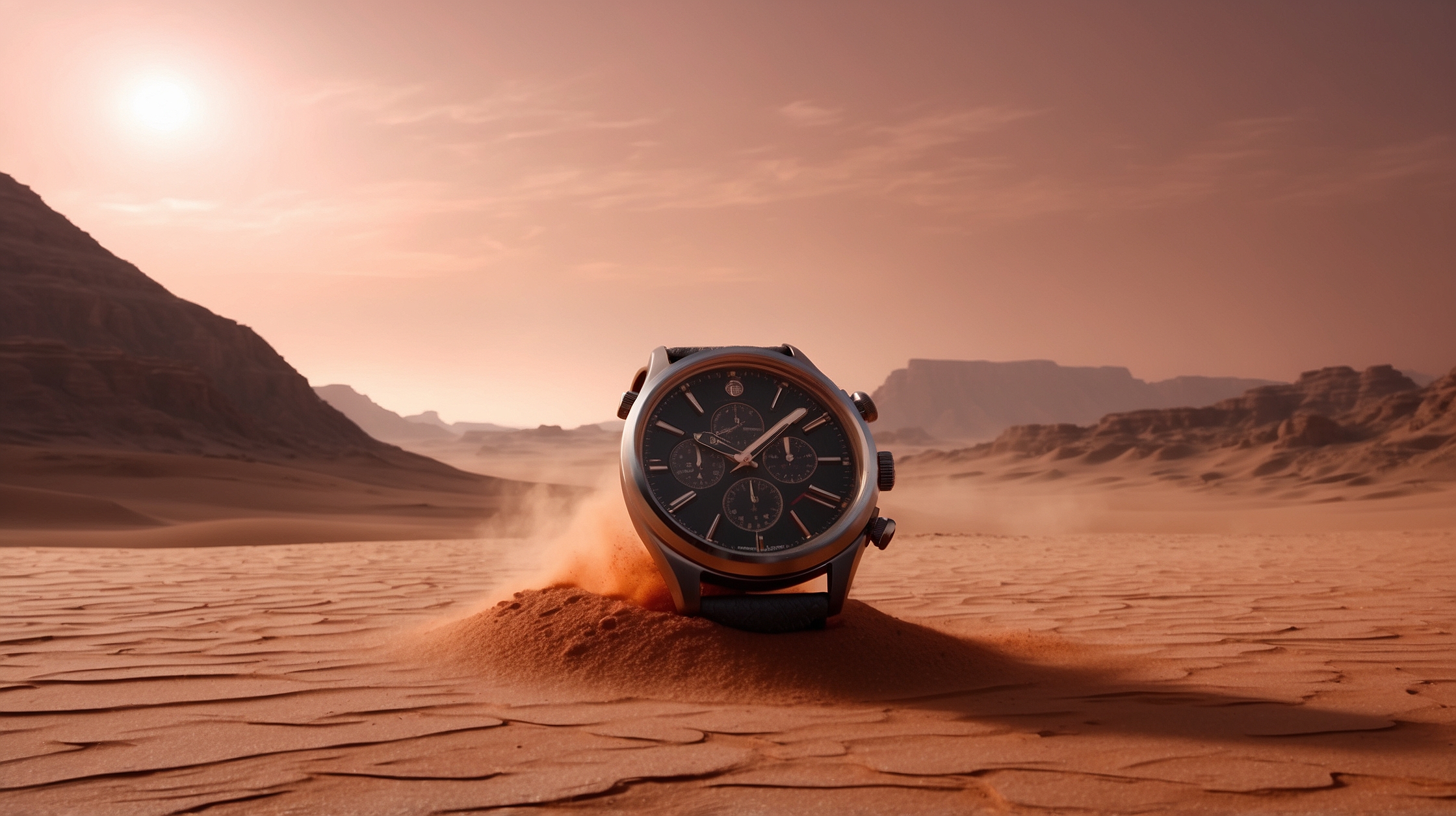

Timekeeping on Earth is something we take for granted. The seconds tick by, the minutes accumulate, and each day ends with the confidence that tomorrow will begin precisely when our clocks expect it to. However, what if you were millions of miles away, standing on the rough, ruddy surface of Mars? Time exists there too, but it flows—ever so slightly—differently. This discrepancy isn’t just a poetic metaphor. Thanks to a quirk of Einstein’s theories, **time on Mars actually runs at a different rate** than it does on Earth.

This isn’t science fiction; it’s science fact. Due to a combination of factors including Mars’ lower gravitational pull and reduced velocity compared to Earth, time on Mars ticks ahead of Earth’s clocks by just a tiny fraction. This effect, known as **time dilation**, has major implications for future astronaut missions, satellite synchronization, and broader human habitation on other planets. The liminal dance between physics and perception challenges how we understand everything—from aging to interplanetary communication.
Summary of Why Time Runs Differently on Mars
| Key Concept | Time dilation due to gravity and motion |
| Primary Factors | Mars’ weaker gravity and slower orbital velocity |
| Einstein’s Theory | General and Special Relativity |
| Impact on Missions | Minor clock differences over long durations |
| Measurement Difference | Mars runs faster by ~39 microseconds per day |
How general relativity influences time on Mars
Gravity, in Einstein’s General Theory of Relativity, is not so much a force as it is a warping of spacetime. The stronger the gravitational field, the slower time passes for someone affected by it. That’s why, **on Earth—being larger and more massive than Mars—time moves marginally slower** than it does on the Red Planet. In other words, a highly sensitive clock on Mars would gain a few extra ‘ticks’ relative to the same clock on Earth.

This effect is subtle, but measurable. Estimates place the difference at about **39 microseconds per Martian day**. That’s around 39 millionths of a second—far from noticeable to humans, but certainly significant for scientists managing spacecraft telemetry, robotic rovers, and planning for potential human habitats.
The role of velocity and special relativity
Speed also matters. According to Einstein’s Special Theory of Relativity, the faster an object moves, the slower its time flows relative to a stationary observer. Because **Mars orbits the Sun more slowly than Earth**, the time-offset scales in Earth’s favor when we consider velocity alone. However, when combined with the effects of weaker Martian gravity, the balance tips back, allowing time on Mars to push slightly ahead overall.

This difference, although fractional, could pile up over months or years—enough to distort synchronization systems if not properly compensated. It’s already routine for scientists to adjust for time dilation effects in satellites orbiting Earth, such as the ones enabling GPS services. **Future Martian colonies and orbital infrastructure** will need the same kind of correctional foresight.
Why this matters for space missions and colonization
You might wonder: does a few dozen microseconds per day really change anything? The answer is yes—especially when you’re **navigating rovers remotely**, managing data transmission between planets, or operating mission-critical equipment that relies on precise clock coordination. Over the span of a month, the time discrepancy would reach over a millisecond. Over a year, you’d be off by more than a hundred milliseconds.

This could disrupt synchronized operations with Earth-based systems or between Martian colonies. And when it comes to **long-duration human spaceflights**, keeping track of time across planets isn’t just a theoretical concern. Timekeeping affects sleep schedules, shifts, coordination, and ultimately, safety on space missions.
Future implications for interplanetary travel
As plans for Mars travel solidify—ranging from short recon missions to long-term habitation—**the intricacies of timekeeping** gain critical relevance. Engineers will need to bake in relativistic offsets into software algorithms. Clocks will require calibration that’s aware of spatial context. In environments like Mars, where high-stakes experiments and life-support systems operate on strict schedules, every ounce of predictability matters.
An emerging field called **chronophysics** may even develop new systems for “interplanetary standard time.” Could Martian colonists one day set their watches to Martian Coordinated Time (MCT), operating independently from Earth? It’s likely. These changes go beyond science—they would ripple into culture, law, commerce, and the identities of future Martians.
Do astronauts age differently on Mars?
The minute time gain on Mars won’t turn astronauts into time-travelers—or allow them to age years less than their Earth counterparts. But theoretically, if someone lived on Mars for decades, they’d age ever so slightly faster than people on Earth. **In 30 Earth years, a Mars-dweller would be ~0.4 milliseconds older** than someone on Earth, assuming both remained stationary in their respective locations.
That’s far too insignificant to affect biology—but on a mathematical level, it’s real. These millisecond differences mirror the same principles that astronauts aboard the International Space Station experience, where due to high velocities and weaker gravity, they age marginally slower than we do on Earth.
How time dilation impacts AI operations on Mars
Modern space exploration now relies heavily on **artificial intelligence and automated systems**. These systems include autonomous rovers like Perseverance, satellites monitoring Martian weather, and orbital drones. These machines function based on onboard clocks and Earth-based commands.
Accounting for the relativistic time shift ensures more reliable communication and decision-making. A Mars-based AI system may require **timing-calibrated algorithms** to avoid minute discrepancies that could—over time—complicate decision trees or reactive protocols. In short: aligning AI intelligence with physical reality also means teaching Mars-based computers how Mars time actually works.
Could Mars time redefine our sense of time?
Culturally, time is more than just physics—it’s intertwined with how we live our lives. Time dilation challenges the notion that there exists a single, unbroken universal clock. When Martian settlers measure a sol (a Martian day, which is approximately 24 hours and 39 minutes), they’re not just adjusting their watches—they’re reshaping the concept of what a “day” means.
This creates the fascinating possibility that **two human civilizations, one on Earth and one on Mars**, could gradually evolve unique temporal identities. Over generations, this could influence everything from how birthdays are celebrated to how calendars are structured and even how long a “year” is perceived to last from a cultural standpoint.
FAQs on Mars Time Dilation
What causes time to run differently on Mars?
Time runs differently on Mars primarily due to its weaker gravity and slower motion compared to Earth, causing a relativistic effect known as time dilation.
How much does Mars gain on Earth’s time each day?
Clocks on Mars run approximately 39 microseconds faster per Martian day compared to clocks on Earth.
Is time dilation measurable on Mars?
Yes, even though the difference is small, time dilation is measurable using high-precision atomic clocks and tracking systems used in space missions.
Will astronauts age differently on Mars?
Yes, but only by a tiny amount. Over the course of many years, the age difference between someone on Mars and someone on Earth would only amount to milliseconds.
Does time dilation affect satellite communication with Mars?
Yes, precise adjustments must be made to account for these relativistic differences to maintain synchronization between systems on Earth and Mars.
Could Mars develop its own time zone system?
Absolutely. It’s likely that future Mars settlements will establish unique time systems, possibly called Martian Coordinated Time (MCT), to govern local activities.
What is a Martian sol?
A sol is a Martian day, which lasts about 24 hours and 39 minutes—slightly longer than an Earth day.
Can time dilation impact long-term Mars colonization?
Yes, especially in terms of synchronizing operations, managing data, and establishing independent systems for local governance and record-keeping.
The subtle changes in time on Mars remind us that even the constants we rely on—like time—are bendable under the scope of physics.
— Dr. Elena Morse, Astrophysicist at Orbital Exploration Institute
Future Mars habitats will need timekeeping as reliable as life support. We have to start thinking of clocks as mission-critical assets.
— Marcus Lee, Aerospace Engineer
About the Author
