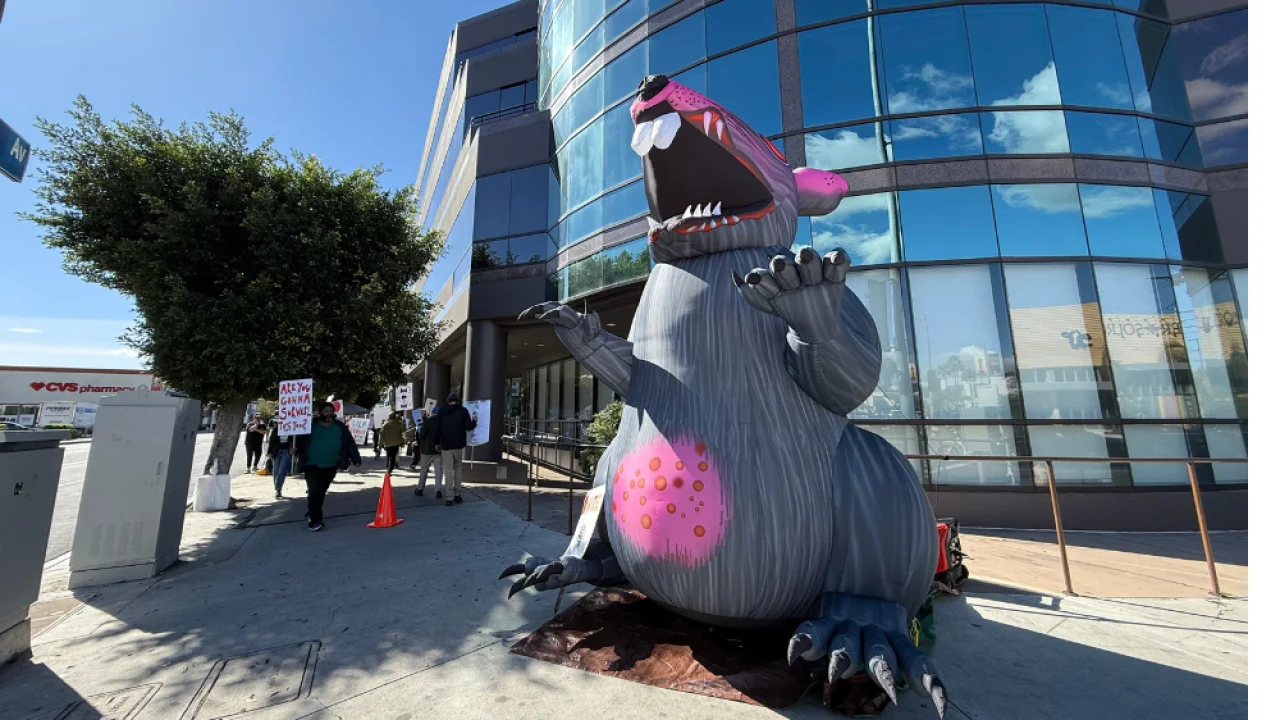
Sarah Martinez clutched her coffee cup a little tighter as she watched the familiar sight unfold outside the Writers Guild of America West headquarters. The giant inflatable rat—affectionately known as “Scabby”—towered over the sidewalk, its beady eyes seemingly staring down the picketers who had gathered with their signs and chants. For Sarah, a script coordinator who’d been working in Hollywood for eight years, this wasn’t just another labor dispute playing out on the news. This was her livelihood, her colleagues, and her future hanging in the balance.

The irony wasn’t lost on anyone present. Here was the writers’ union—the very organization that had fought tooth and nail for fair treatment from studios—now facing its own internal labor crisis. The WGA West staff strike had brought Scabby the Rat face-to-face with writers who understood the power of collective action better than most.
“It’s surreal,” Sarah muttered to herself, watching union members cross their own picket line. “We’re literally watching the people who negotiate for writers having to fight for their own basic rights.”
When the Union’s Own Workers Say “Enough”
The WGA West staff strike represents a dramatic escalation in tensions that have been building for months. Guild employees, who work behind the scenes to support the writers’ union operations, have reached their breaking point over workplace conditions, compensation, and management practices.
The timing couldn’t be more challenging. With major studio negotiations looming on the horizon, the writers’ union finds itself in the awkward position of preparing for battles with Hollywood executives while simultaneously dealing with labor unrest within its own walls.
According to union sources, the striking staff members include administrative workers, researchers, and support personnel who keep the guild running day-to-day. These are the people who process membership applications, coordinate meetings, and handle the countless administrative tasks that allow the union to function.
“The guild talks a big game about worker solidarity and fair treatment,” said one striking employee who requested anonymity. “But when it comes to their own staff, they’ve been tone-deaf to our concerns for way too long.”
The presence of Scabby the Rat—labor’s iconic symbol of anti-union sentiment—adds a layer of symbolism that hasn’t been lost on observers. Typically deployed outside businesses accused of using non-union labor, Scabby now stands as a reminder that even pro-worker organizations can find themselves on the wrong side of labor disputes.
What’s Really at Stake in This Labor Showdown
The WGA West staff strike isn’t just about one workplace—it’s highlighting broader issues that affect workers across the entertainment industry. Here’s what the striking employees are fighting for:

- Fair compensation: Staff members report that their salaries haven’t kept pace with the cost of living in Los Angeles
- Better working conditions: Complaints about excessive workloads and inadequate resources
- Job security: Concerns about layoffs and restructuring without proper consultation
- Respect and recognition: Feeling undervalued despite their crucial role in union operations
- Healthcare benefits: Disputes over medical coverage and retirement contributions
| Key Issue | Staff Position | Guild Response |
|---|---|---|
| Salary Increases | Cost-of-living adjustments needed | Budget constraints cited |
| Workload | Understaffed departments | Efficiency improvements promised |
| Benefits | Enhanced healthcare coverage | Current package deemed competitive |
| Job Security | No layoffs without consultation | Restructuring may be necessary |
Industry veteran Maria Rodriguez, who has worked with various Hollywood unions for over two decades, sees deeper implications in this conflict. “When the people who support the union can’t get fair treatment from the union itself, it raises questions about the organization’s values and priorities,” she explains.
The Ripple Effects Nobody Saw Coming
The WGA West staff strike is creating complications that extend far beyond the guild’s Beverly Hills offices. With crucial studio negotiations approaching, the internal labor dispute threatens to undermine the union’s credibility and effectiveness.
Writers themselves are caught in an uncomfortable position. Many support their colleagues’ right to organize and strike, but they’re also concerned about how this internal conflict might affect their own upcoming contract talks with studios.
“It’s a mess,” admits longtime screenwriter James Chen. “How can we demand better treatment from the studios when we can’t even treat our own staff fairly? The optics are terrible.”
The strike is also affecting day-to-day operations at the guild. Membership services have been disrupted, meetings postponed, and administrative functions scaled back. For an organization that prides itself on being responsive to members’ needs, these disruptions are particularly damaging.
Some industry observers worry that the internal strife could weaken the WGA’s position in upcoming negotiations. Studio executives, who are always looking for leverage in contract talks, may see the guild’s internal problems as a sign of weakness or disorganization.
“The studios are watching this very closely,” notes labor relations expert Dr. Patricia Wong. “Any sign that the union is distracted or divided could embolden them to take a harder line in negotiations.”
What This Means for Hollywood’s Future
The WGA West staff strike is exposing uncomfortable truths about power dynamics in Hollywood’s labor movement. It’s raising questions about whether organizations that fight for workers’ rights are practicing what they preach in their own workplaces.
For the striking employees, this isn’t just about their immediate concerns—it’s about establishing a principle that worker solidarity shouldn’t stop at the organization’s front door. They’re demanding that the guild live up to the values it espouses when negotiating with studios.
The resolution of this conflict could set important precedents for other unions and advocacy organizations. If the WGA West can successfully address its staff’s concerns, it could strengthen the broader labor movement. But if the dispute drags on or ends poorly, it could damage the union’s reputation and effectiveness.
Meanwhile, the entertainment industry continues to watch this unprecedented situation unfold. Writers are preparing for their own contract negotiations while wondering if their union will be strong enough and unified enough to represent them effectively.
As one veteran writer put it during a recent guild meeting: “We’re all in this together, or we’re not. And right now, it’s not clear which one it is.”
The presence of Scabby the Rat outside the WGA West offices serves as a daily reminder that the fight for fair treatment doesn’t end when you walk through your employer’s doors. For the striking staff members, it’s a symbol of their determination to hold their own union accountable to the principles it claims to champion.
FAQs
Why are WGA West staff members on strike?
Staff members are striking over issues including fair compensation, better working conditions, job security, and feeling undervalued by guild management.
What is Scabby the Rat doing at the WGA West offices?
Scabby the Rat is labor’s iconic inflatable symbol used to protest anti-union practices, now deployed by striking guild staff against their own employer.
How does this affect upcoming studio negotiations?
The internal strike could weaken the WGA’s position in contract talks with studios by creating distractions and raising questions about the union’s effectiveness.
Are writers supporting the striking staff?
Many writers support their colleagues’ right to strike but are concerned about how the internal conflict might affect their own representation.
How long is the WGA staff strike expected to last?
The duration depends on negotiations between the striking employees and guild management, with no clear timeline for resolution currently available.
What precedent does this set for other unions?
This situation highlights the importance of labor organizations practicing fair treatment of their own employees, potentially influencing how other unions handle internal labor relations.
About the Author