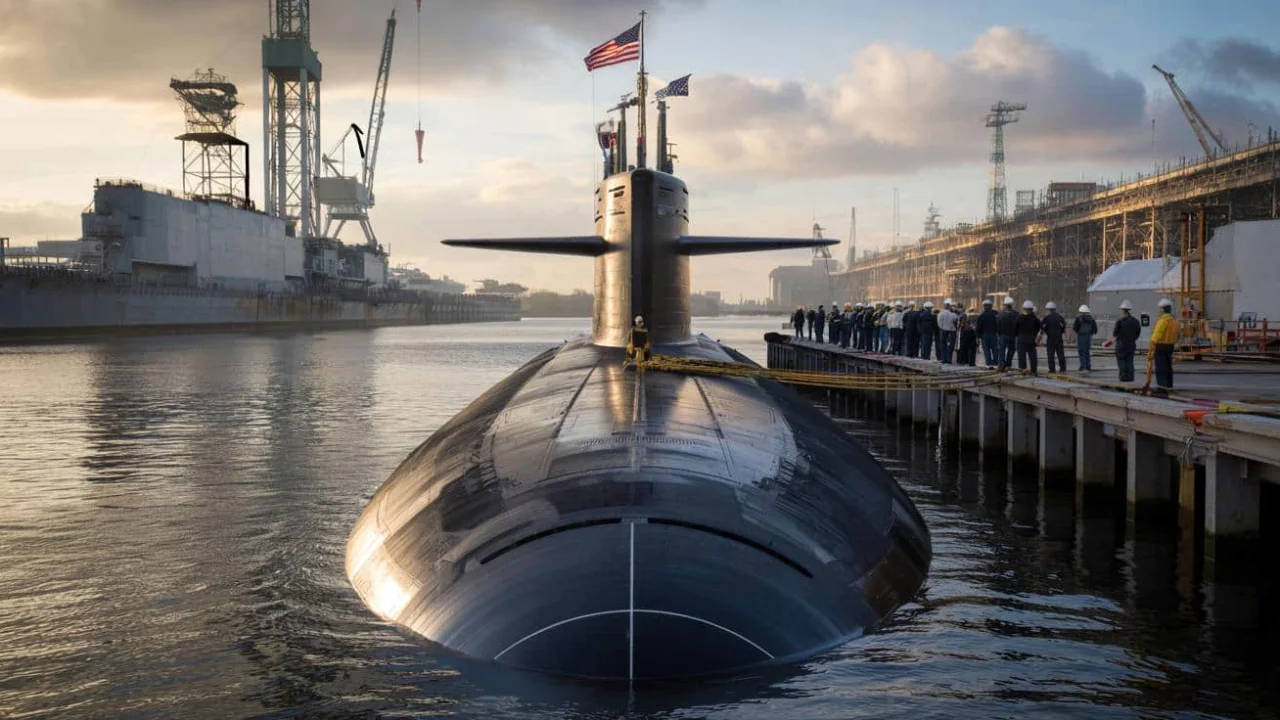
Captain Sarah Mitchell still remembers the first time she walked through a submarine construction facility as a young Navy officer. The sheer scale overwhelmed her – massive steel sections being welded together by workers whose precision had to be perfect every single time. “One small mistake down there,” her guide had explained, “and sailors don’t come home.” That moment stuck with her throughout her career, and now, as she watches the Massachusetts (SSN 798) prepare for its first deployment, she understands why submarine construction represents one of America’s most critical industrial capabilities.
The delivery of this Virginia-class submarine isn’t just another ship leaving the yard – it’s a testament to thousands of skilled workers who spent years ensuring every system works flawlessly under the ocean’s crushing pressure.
The emotions surrounding submarine deliveries run deeper than most people realize, because these vessels carry the sons and daughters of American families into some of the world’s most dangerous waters.
What Makes This Virginia-Class Submarine Special
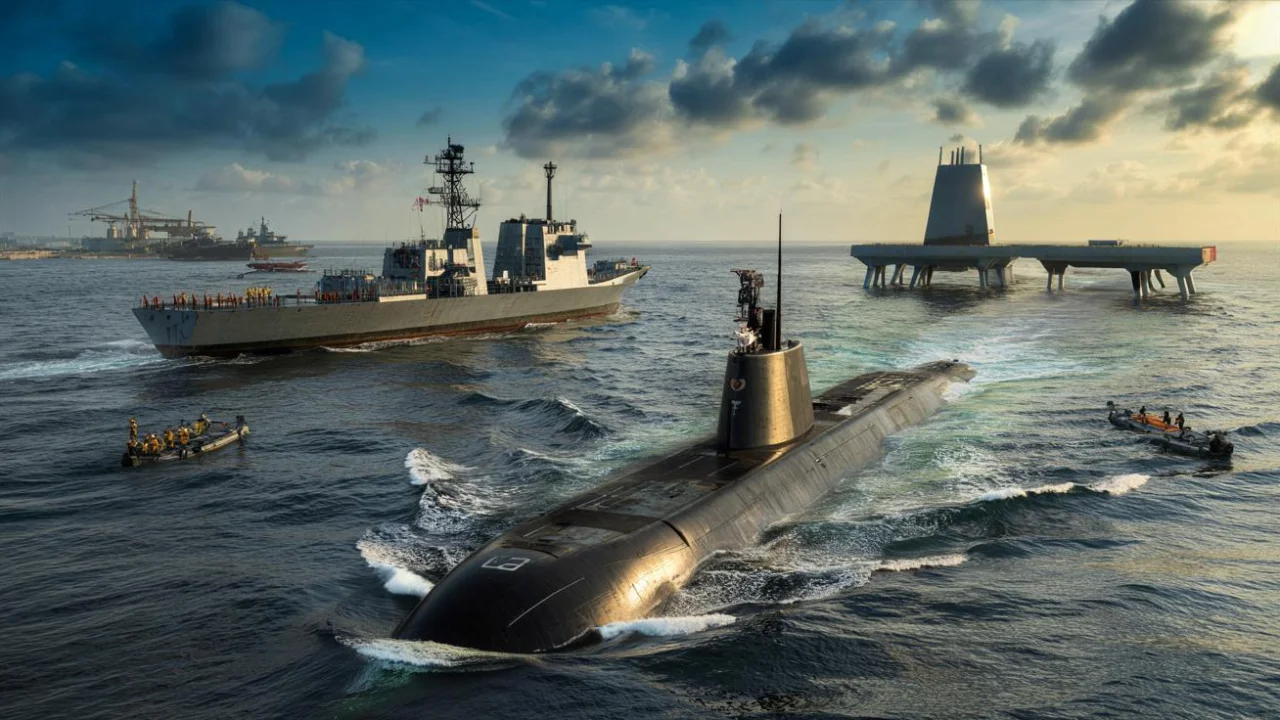
HII’s Newport News Shipbuilding has officially delivered the Virginia-class submarine Massachusetts (SSN 798) to the U.S. Navy, marking a significant milestone in America’s submarine production program. This isn’t just another vessel joining the fleet – it’s the 25th Virginia-class submarine completed through the partnership between Newport News Shipbuilding and General Dynamics Electric Boat.
The Massachusetts represents years of precision engineering and construction. Every Virginia-class submarine costs approximately $3.4 billion and takes nearly a decade to complete from initial construction to final delivery. The complexity is staggering – these submarines contain over 2 million parts and require welding that must be perfect to withstand depths of more than 800 feet.
“Each submarine delivery represents not just advanced technology, but the dedication of thousands of skilled workers who understand that lives depend on their craftsmanship,” said Kari Wilkinson, president of Newport News Shipbuilding.
The Massachusetts successfully completed extensive sea trials testing everything from nuclear propulsion systems to advanced sonar capabilities. These trials push the submarine to its operational limits in real Atlantic Ocean conditions, ensuring it can perform its mission when sailors’ lives are on the line.
Breaking Down the Virginia-Class Submarine Program
The numbers behind the Virginia-class submarine program tell a story of American industrial capability and strategic commitment. Here’s what makes these submarines so crucial to national security:
| Specification | Details |
|---|---|
| Length | 377 feet |
| Displacement | 7,900 tons submerged |
| Speed | 25+ knots submerged |
| Crew | 134 sailors |
| Weapons | 12 vertical launch tubes, 4 torpedo tubes |
| Construction Time | 7-9 years |
The Virginia-class submarine program involves two primary shipyards working in coordination:
- Newport News Shipbuilding (Virginia) – 12 submarines delivered to date
- General Dynamics Electric Boat (Connecticut) – 13 submarines delivered to date
- Combined production goal: 2 submarines per year
- Total program cost: Over $100 billion through 2030
Massachusetts holds special significance as the fifth U.S. Navy vessel to carry the Commonwealth of Massachusetts’ name, continuing a naval tradition spanning over a century. The submarine’s hull number SSN 798 places it among the most advanced fast-attack submarines ever built.
“We’re not just building submarines – we’re building America’s underwater advantage for the next 30 years,” explained a senior Navy official familiar with the program.
Real Impact on Naval Strategy and National Security
The delivery of Massachusetts comes at a crucial time for U.S. naval strategy. With rising tensions in the Pacific and increased submarine activity from potential adversaries, every Virginia-class submarine strengthens America’s ability to project power beneath the waves.
These submarines perform missions most Americans never hear about – gathering intelligence, protecting aircraft carriers, and maintaining underwater superiority in regions where surface ships cannot safely operate. The Massachusetts will likely spend much of its operational life in contested waters where its stealth capabilities provide critical advantages.
For the families of submarine crews, each new delivery represents improved safety and capability. Modern Virginia-class submarines include advanced life support systems, better communications equipment, and enhanced damage control capabilities compared to older submarine classes.
The economic impact extends far beyond the shipyards. Virginia-class submarine construction supports approximately 23,000 jobs across 47 states, from specialized steel producers in Pennsylvania to electronics manufacturers in California. Small towns throughout America depend on submarine construction contracts that flow through hundreds of subcontractors.
“When we deliver a submarine like Massachusetts, we’re delivering jobs, security, and technological advancement that benefits the entire nation,” noted an industry analyst who has tracked submarine programs for over two decades.
The strategic timing of this delivery also matters. Navy leadership has emphasized the need to maintain a submarine construction rate of two vessels per year to replace aging Los Angeles-class submarines while expanding overall fleet size. Each successful delivery like Massachusetts proves the industrial base can meet these demanding production schedules.
For allied nations, American submarine capabilities provide reassurance in an increasingly complex global security environment. The Massachusetts will likely participate in joint exercises and patrol missions that demonstrate U.S. commitment to international maritime security partnerships.
Looking ahead, the Massachusetts represents proven industrial processes that will be essential for the next-generation Columbia-class ballistic missile submarines. The skills, techniques, and quality standards demonstrated in Virginia-class construction directly transfer to these even more complex vessels that will carry America’s nuclear deterrent for decades.
FAQs
How long does it take to build a Virginia-class submarine?
Construction typically takes 7-9 years from initial steel cutting to final delivery, including extensive testing and sea trials.
How much does a Virginia-class submarine cost?
Each submarine costs approximately $3.4 billion, including construction, testing, and initial equipment packages.
How many crew members serve on a Virginia-class submarine?
These submarines have a crew of 134 sailors, including officers and enlisted personnel across various specialties.
What makes Virginia-class submarines different from older submarines?
They feature advanced sonar systems, improved stealth capabilities, modern life support systems, and enhanced weapons systems compared to previous submarine classes.
Where are Virginia-class submarines built?
Two shipyards build these submarines: Newport News Shipbuilding in Virginia and General Dynamics Electric Boat in Connecticut.
How deep can a Virginia-class submarine dive?
While the exact operational depth is classified, these submarines can safely operate at depths exceeding 800 feet.
About the Author