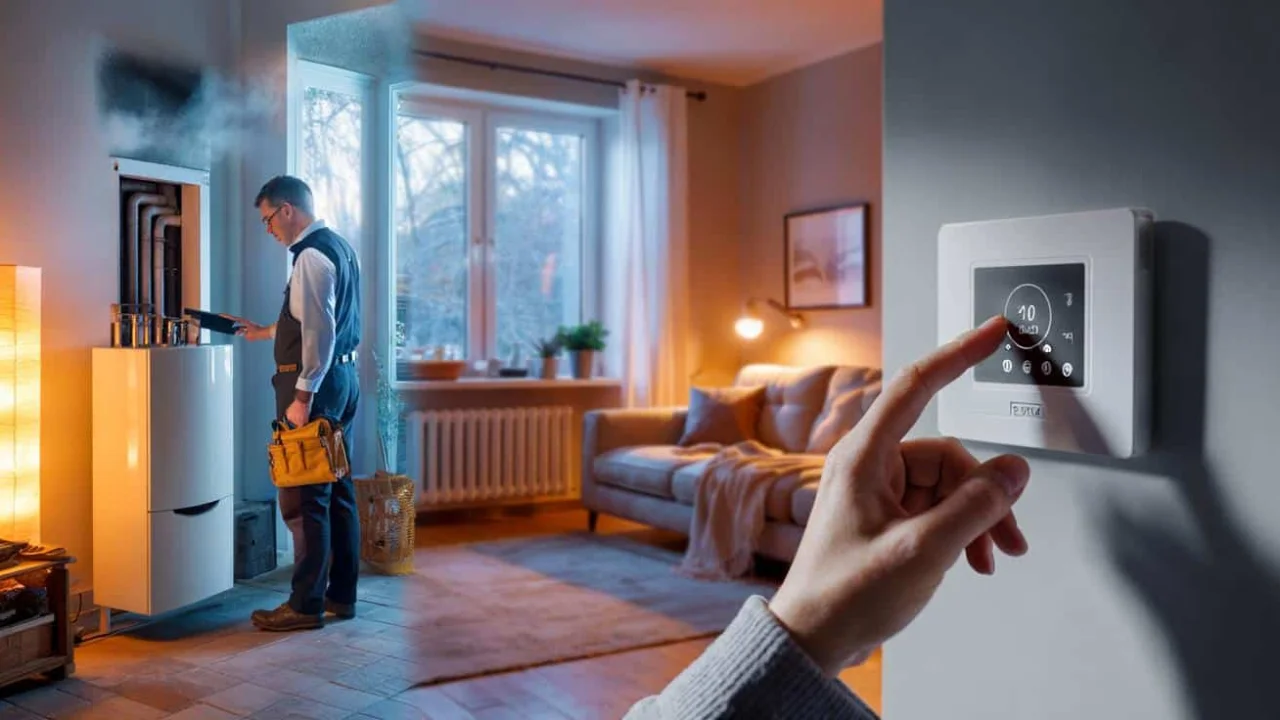
Sarah thought her heating system was broken. For three days running, the thermostat had been acting like a moody teenager – firing up the boiler, shutting it down, then starting all over again. The temperature would hit 21°C, drop to 19°C, then climb back up. Her husband kept jabbing the controls, cranking it higher each time the house felt cold.

By Thursday morning, their gas bill estimate had jumped £30 higher than usual. That’s when Sarah called her heating engineer, convinced something was seriously wrong. Twenty minutes later, she discovered the expensive truth: nothing was broken except their understanding of how thermostats actually work.
This exact scenario plays out in thousands of homes every winter, and heating engineers say it’s costing families hundreds of pounds in unnecessary energy bills.
Why your thermostat seems to have a mind of its own
The moment temperatures drop below freezing, heating engineers’ phones start buzzing non-stop. But here’s the surprising part: barely any of these calls involve actual faults.
“Nine times out of ten, people think their thermostat is malfunctioning when they see it cycling on and off,” explains heating engineer Mark Thompson, who’s been fixing boilers for over 15 years. “What they’re actually witnessing is perfectly normal thermostat behaviour during cold weather.”
The confusion starts with a simple misunderstanding. Most people think a thermostat works like a light switch – on or off. In reality, it’s more like a traffic controller, constantly making tiny adjustments to keep your home at the right temperature.
When outside temperatures plummet, your house loses heat much faster than usual. Cold air seeps through window frames, under doors, and down chimneys. Your thermostat detects these temperature drops and signals the boiler to fire up more frequently.

The stop-start pattern that seems so worrying is actually your heating system responding exactly as it should. The problem begins when homeowners panic and start overriding the system.
The costly mistakes most people make during cold snaps
Understanding normal thermostat behaviour can save you serious money. Here are the most common – and expensive – mistakes people make when temperatures drop:

- Cranking the temperature way up: Setting your thermostat to 25°C when you want 20°C doesn’t heat your home faster – it just wastes gas
- Constantly adjusting the setting: Each time you bump the temperature up by a degree, you’re telling the boiler to work longer
- Turning the heating off and on manually: This forces your system to work harder when you switch it back on
- Blocking the thermostat sensor: Furniture or curtains near your thermostat can confuse its temperature readings
- Installing multiple smart thermostats: Two thermostats fighting for control creates chaos and higher bills
“I see people who’ve been adjusting their thermostat every hour during cold weather,” says heating specialist Emma Richardson. “They think they’re being clever, but they’re actually making their boiler work three times harder than it needs to.”
| Normal Thermostat Behaviour | What It Means | Energy Impact |
|---|---|---|
| Cycling every 10-15 minutes | House is losing heat faster than usual | Normal energy use |
| Running for longer periods | System working to maintain temperature | Expected increase during cold weather |
| Temperature fluctuating by 1-2°C | Natural response to heat loss | Minimal impact if left alone |
| Boiler firing more frequently | Compensating for cold outdoor temperature | Normal winter energy consumption |
The key insight that most homeowners miss is this: your thermostat is already doing the most efficient job possible. When you start second-guessing it during cold weather, you’re usually making things worse, not better.
What this really means for your energy bills
The financial impact of misunderstanding thermostat behaviour adds up fast. During a typical cold spell, families who constantly adjust their heating settings can see their energy bills spike by 30-40% above normal winter levels.
Here’s what actually happens to your energy consumption when you interfere with normal thermostat behaviour:
- Setting the temperature 3°C higher than needed can increase your heating bill by £15-20 per week
- Manual overrides force the boiler to restart from cold, using extra energy each time
- Frequent adjustments prevent the system from finding its optimal rhythm
- Impatient temperature bumping during cold weather can double your gas consumption
“The families who leave their thermostat alone during cold snaps typically see bills that are 25% lower than those who keep fiddling with the controls,” notes energy consultant David Hayes. “Patience literally pays.”
Smart thermostat data reveals something striking: homes with the steadiest temperature settings during winter consistently have the lowest energy costs per square foot. The constantly adjusted homes? They’re burning through gas like there’s no tomorrow.
Even more surprising is how this affects different types of properties. Older homes with poor insulation actually benefit more from steady thermostat behaviour than newer, well-insulated houses. The reason? Their heating systems have to work harder anyway, so efficiency becomes even more critical.
The bottom line for your wallet is simple: during cold weather, your thermostat behaviour directly controls how much you’ll pay for heating. Those seemingly harmless little adjustments can easily add £50-80 to a monthly gas bill without you realizing it.
“I always tell customers that their thermostat is smarter than they think,” explains heating engineer Rachel Foster. “Trust it to do its job, especially when the weather turns nasty. Fighting with it just costs you money.”
The smartest approach during cold spells? Set your desired temperature once, then step away from the controls. Your thermostat will handle the rest, your home will stay comfortable, and your energy bills won’t shock you when they arrive.
FAQs
Why does my thermostat keep turning the heating on and off during cold weather?
This is completely normal – your home loses heat faster in cold weather, so the thermostat cycles more frequently to maintain your set temperature.
Should I turn my thermostat up higher to heat my home faster?
No, this doesn’t work and wastes energy. Your boiler already runs at maximum output regardless of the temperature setting.
How much can constant thermostat adjustments increase my heating bill?
Frequent adjustments during cold weather can increase your monthly heating costs by 30-40% or around £50-80 extra per month.
What’s the most energy-efficient way to use my thermostat in winter?
Set your desired temperature once and leave it alone – constant adjustments make your system work harder and use more energy.
Is it normal for my boiler to run more often when it’s very cold outside?
Yes, this is expected behavior as your heating system compensates for increased heat loss during cold weather.
Why does my house feel cold even when the thermostat shows the right temperature?
Cold surfaces and drafts can make you feel chilly even at the correct air temperature – resist the urge to keep turning up the heat.
About the Author
