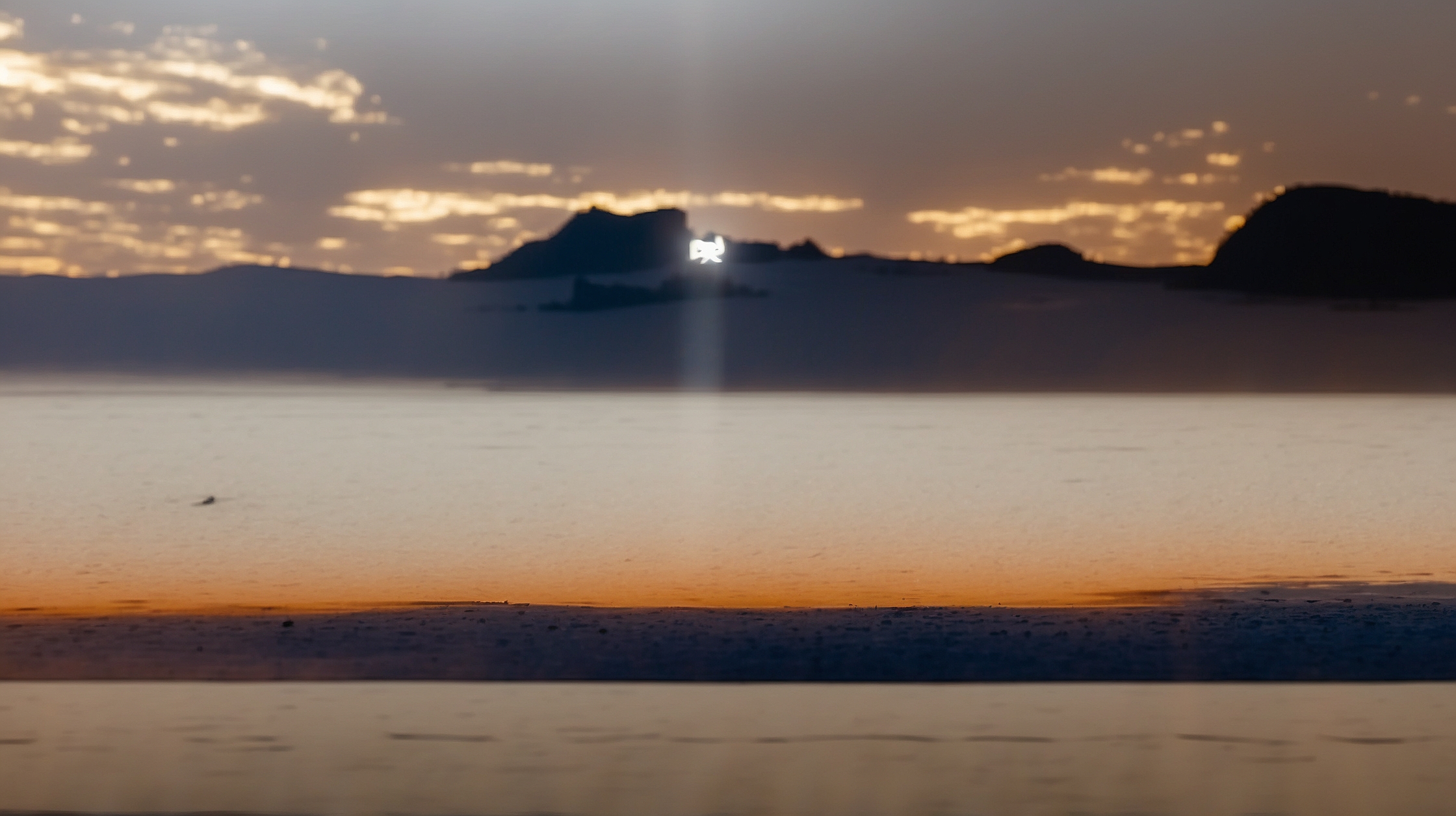

The cosmos is offering a rare spectacle that skywatchers will not want to miss: the **century’s longest total solar eclipse** now has an official date. On **July 16, 2186**, Earth will witness a solar eclipse lasting over seven minutes—a mesmerizing event that won’t be surpassed for hundreds of years. With anticipation already building within the astronomy and space science fields, this rare alignment provides not just a stunning visual event, but a rich opportunity for scientific study and global engagement.
While the eclipse will not occur in most of our lifetimes, planning and projections for it are already underway, highlighting not only the **precise cosmic mechanics** of our solar system but also the enduring human fascination with celestial phenomena. Over the next decades, thousands of professionals and enthusiasts will prepare for this record-setting event. But before we look toward 2186, it’s also a reminder of the magic and mystery we can still witness in current and upcoming solar eclipses—some of which will be visible just a few years from now.
Key facts about the 2186 total solar eclipse
| Date | July 16, 2186 |
| Duration of Totality | 7 minutes and 29 seconds |
| Region of Maximum Eclipse | Atlantic Ocean, near the equator |
| Longest Duration Location | Approximately off the coast of South America |
| Orbit Type | Saros 139 cycle |
| Type | Total Solar Eclipse |
Why this eclipse is so significant
While solar eclipses occur somewhere on Earth approximately every 18 months, their **duration** varies greatly. Most total eclipses last just a few minutes. The longest total eclipse within our modern technological awareness—up until this upcoming event—has typically capped out around seven minutes. The 2186 eclipse will see the **Moon perfectly aligned** to cast a shadow on Earth longer than any other solar event in the 21st to 22nd centuries.

This exquisite alignment is influenced by a nearly circular Earth orbit and a closer proximity of the Moon due to its elliptical orbit, magnifying totality length. It’s an incredible cosmic coincidence that makes eclipses like these both pragmatically rare and philosophically awe-inspiring.
Future observers and scientific implications
According to astronomers, the Moon’s and Earth’s orbits are not static; they subtly evolve over centuries. This makes exact duration calculations incredibly complex, but researchers have confirmed this particular eclipse is a standout. Such prolonged darkness enables researchers to study the **Sun’s corona** in unprecedented detail—a critical area in understanding space weather and solar flares that could affect Earth’s satellites and power grids.

There are discussions underway about deploying future technologies and scientific labs in strategic locations along the eclipse’s path to **maximize observational opportunities**. From climate scientists to astrophysicists, the potential for data gathering during this event is vast and could help revolutionize solar science.
It’s not just the visual spectacle that makes this event monumental—it’s what we can learn from it. When the skies go dark for that long, the Sun’s outer edges become a cosmic classroom.
— Dr. Lila Fernandez, Astrophysicist and Eclipse ResearcherAlso Read What research says is the ideal age gap for a long-lasting relationship
Will anyone be able to watch the eclipse from land?
Because the path of totality will mostly stretch over the Atlantic Ocean, visibility from land will be limited. However, parts of South America and West Africa may catch glimpses of totality or at least partial views. By 2186, it’s likely that advanced scientific crafts and possibly even **space tourism flights** could be arranged for optimal viewing.
The anticipation of this solar event could even impact **global travel and space tech developments**, as the aerospace industry gears up to provide new types of viewing experiences for an event that’s quite literally once-in-a-lifetime—or even once in many lifetimes.
What changed this year in celestial predictions
2024 marked a significant year in eclipse tracking, with major databases updated based on new satellite data. Astronomers have refined their calculations which confirmed the **7-minute-and-29-second record** for the 2186 eclipse. Although predictions had been circulated earlier, this year brought **official confirmation** and a narrowed-down geography for observational planning.
The 2186 eclipse has been a mathematical projection for decades, but only now do we have refined orbital models to confirm the exact time and location of totality.
— Prof. Steven Maddox, Orbital Dynamics Expert
How this compares to other historic eclipses
The last eclipse that came close to this duration was in **July 11, 1991**, where totality lasted about 6 minutes 53 seconds. Even then, observers praised its longevity. The upcoming 2186 eclipse will be **longer than any total solar eclipse** since July 11, 1711, and beats that one by over a minute.
Throughout history, cultures have perceived solar eclipses as divine or ominous. But in recent centuries, they’ve evolved into global scientific events. This eclipse could redefine how we perceive and prepare for celestial happenings—not just as observers, but as high-tech participants.
Technological advancements that will change how we view eclipses
By 2186, the predictive pace of technology will likely revolutionize how we experience eclipses. Expect **real-time augmented reality filters**, global live feeds, and optical enhancements that offer photorealistic simulations. Space-based instruments, possibly stationed on lunar or planetary orbits, could provide multiple perspectives of the eclipse as it unfolds in real time.
From drone-assisted viewing stations to immersive VR platforms, humanity’s gaze toward the 2186 eclipse will be **augmented by intelligent systems and autonomous space vehicles**, ensuring that even those far from the eclipse’s direct path can still feel close to the cosmic event.
No winners or losers—only observers and scientists
Though there isn’t a clear “winners vs losers” dynamic with a celestial event, access inequality may come into play. Those in academic institutions or regions with advanced infrastructure may gain more scientific benefits, while under-resourced areas may not be as well-positioned to capitalize on the event. This gap underscores the importance of **international scientific collaboration**.
Frequently asked questions about the 2186 eclipse
How long will the 2186 solar eclipse last?
The totality will last approximately 7 minutes and 29 seconds, making it the longest in the 21st and 22nd centuries.
Where will the eclipse be visible?
The eclipse will primarily be visible over the Atlantic Ocean, with potential partial visibility in South America and West Africa.
Why is this eclipse so long?
The combination of the Moon being closest to Earth and the Earth being farthest from the Sun results in a longer duration of totality than usual.
Will people be able to travel to view the eclipse?
Yes, though mostly by sea or specialized air and space travel, depending on the technology available by 2186. Limited land-based viewers may also see it partially.
Can I view the eclipse safely?
As with all solar eclipses, direct viewing requires protective eyewear to avoid permanent eye damage, unless viewed during full totality when the Sun’s disk is entirely covered.
Will there be live coverage or broadcasts?
While it’s not certain now, it’s highly expected that by 2186, high-tech broadcasts and real-time simulations from multiple viewpoints will be standard.
How do total solar eclipses affect the Earth?
Total eclipses temporarily reduce solar energy and disrupt animal behavior, while offering key windows for scientific observation of the Sun’s corona.
What is the Saros cycle mentioned in relation to this eclipse?
The Saros cycle is an 18-year, 11-day pattern used to predict eclipses. The 2186 event belongs to Saros cycle 139, known for producing long-duration totalities.
About the Author