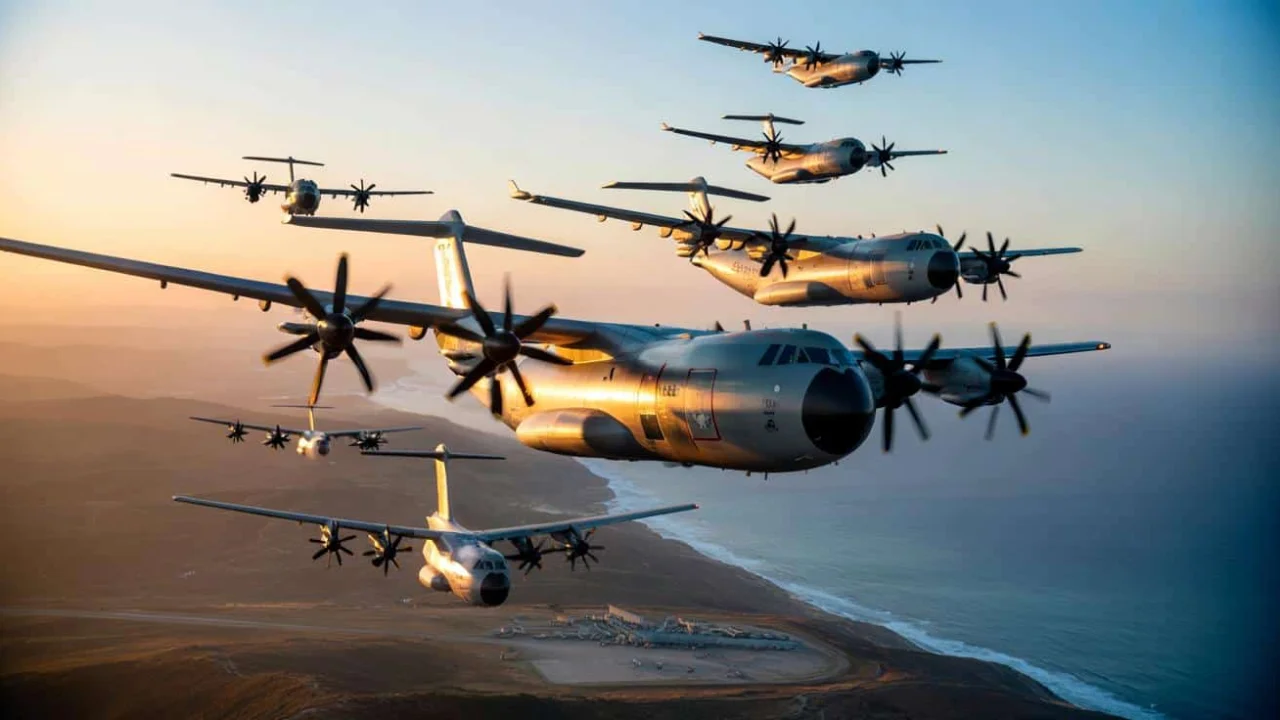
Captain Miguel Santos had just finished his third consecutive airlift mission to Eastern Europe when he realized how stretched his squadron really was. Flying humanitarian aid to Ukraine one week, then disaster relief supplies to Morocco the next, his A400M Atlas had barely touched Spanish soil. “We’re flying more missions than ever, but with the same number of aircraft we had five years ago,” he told his crew chief while refueling in Zaragoza.
That conversation, repeated in hangars across Spanish military bases, captures exactly why the Spanish Air Force’s decision to keep six additional A400M transport aircraft matters so much. What started as a budget headache has become a strategic opportunity.
The Spanish government has made a quiet but significant decision that will reshape the country’s airlift capabilities for decades. Instead of selling off surplus A400M Atlas transport aircraft as originally planned, Spain will now integrate six additional airlifters into its active fleet, bringing the total to 20 operational aircraft.
Why Spain Changed Course on Its A400M Plans
The Spanish Air Force A400M story reads like a perfect example of how global events can transform military planning overnight. Back in 2001, Spain committed to purchasing 27 A400M aircraft as part of Europe’s ambitious Future Transport Aircraft program. The plan seemed solid: replace aging C-130 Hercules transports and establish Spain as a major player in European air mobility.
Then the 2008 financial crisis hit like a sledgehammer. By 2013, Spain’s defense budget was bleeding red ink, forcing military planners to slash the A400M order to just 14 aircraft. Those 14 airlifters were delivered between 2016 and 2023, leaving 13 “orphan” aircraft still under contract but with no clear home.
“The original plan was to find buyers for those extra aircraft and walk away,” explains defense analyst Carmen Rodriguez from the Madrid Institute for Strategic Studies. “But the war in Ukraine changed everything about how we think about strategic airlift.”
For years, Spain actively shopped those surplus A400Ms to potential buyers. South Korea showed interest. Turkey, already an A400M partner nation, seemed like a natural fit. Jordan appeared on shortlists. None of those conversations produced firm deals, leaving the aircraft in contractual limbo.
Meanwhile, Spanish A400M crews found themselves busier than ever. Humanitarian missions to Ukraine. Disaster relief to Turkey after the devastating earthquakes. Peacekeeping support in Mali. Counter-narcotics operations in the Caribbean. Each mission highlighted the same problem: Spain needed more airlift capacity, not less.
Breaking Down Spain’s A400M Fleet Expansion
The decision to retain six additional Spanish Air Force A400M aircraft represents more than just numbers on paper. Here’s how the expansion breaks down:
- Current fleet: 14 operational A400M aircraft delivered between 2016-2023
- New additions: 6 additional A400M aircraft to be integrated starting 2025
- Final fleet size: 20 total A400M transport aircraft
- Remaining surplus: 7 aircraft still seeking buyers or alternative arrangements
- Home base: All aircraft will operate from Zaragoza Air Base
| Category | Details |
|---|---|
| Aircraft Type | Airbus A400M Atlas |
| Current Squadron | 31st Air Transport Wing, Zaragoza |
| Payload Capacity | 37 tons maximum |
| Range (loaded) | 3,298 nautical miles |
| Crew Requirements | 3 pilots + 1 loadmaster minimum |
| Integration Timeline | 2025-2027 |
The timing isn’t coincidental. Spain’s defense ministry projects a 40% increase in transport missions over the next five years, driven by NATO commitments, EU humanitarian operations, and domestic disaster response needs.
“We’re not just buying more aircraft,” notes Air Force Colonel Elena Vasquez, who oversees transport operations. “We’re investing in Spain’s ability to project power and respond to crises independently.”
What This Means for Spain’s Military Reach
The expanded Spanish Air Force A400M fleet will fundamentally change how Spain operates on the global stage. With 20 aircraft instead of 14, Spanish military planners gain flexibility that seemed impossible just five years ago.
Consider the practical impact: Spain currently struggles to maintain simultaneous operations in multiple theaters. A single A400M breakdown or scheduled maintenance can disrupt entire mission schedules. With six additional aircraft, Spain gains the redundancy to maintain consistent operations even during peak demand periods.
The ripple effects extend far beyond military missions. Spain’s A400M fleet regularly supports civilian disaster relief, from flooding in Valencia to wildfires in Galicia. More aircraft means faster response times and larger cargo capacity for emergency operations.
“This decision makes Spain a more reliable NATO partner,” explains former Air Force General Roberto Martinez. “When the alliance calls for transport support, we can actually say yes without compromising our other commitments.”
The economic impact deserves attention too. Each A400M supports roughly 50 direct jobs in maintenance, operations, and logistics. Six additional aircraft could create up to 300 new positions across Spanish military bases and support facilities.
Spain’s defense industry also benefits from the expanded fleet. Companies like Airbus Defence and Space, EADS CASA, and dozens of smaller suppliers will see increased demand for spare parts, modifications, and ongoing support services.
But perhaps the most significant change involves Spain’s strategic independence. With 20 A400M aircraft, Spain can conduct major airlift operations without relying on allies for transport capacity. That matters enormously in an era where even friendly nations prioritize their own defense needs first.
The decision also reflects Spain’s growing comfort with its defense spending levels. After years of cuts and constraints, Madrid is finally investing in capabilities that match its global ambitions and responsibilities.
FAQs
How many A400M aircraft will Spain have in total?
Spain will operate 20 A400M transport aircraft once all six additional airlifters are integrated into the fleet.
When will the new Spanish Air Force A400M aircraft enter service?
The six additional aircraft will be integrated between 2025 and 2027, with the first deliveries expected in late 2025.
Where will the expanded A400M fleet be based?
All Spanish A400M aircraft operate from Zaragoza Air Base under the 31st Air Transport Wing.
What happened to Spain’s other surplus A400M aircraft?
Seven aircraft from the original 27-unit order remain without assigned operators, though Spain continues seeking buyers or alternative arrangements.
How much cargo can an A400M carry?
The A400M Atlas can transport up to 37 tons of cargo, with a range of over 3,000 nautical miles when fully loaded.
Why didn’t Spain sell all its surplus A400M aircraft?
Changing security needs, increased mission demand, and lessons from recent crises convinced Spanish planners that additional airlift capacity was more valuable than budget savings.
About the Author
