Sarah was working late in her backyard garden when she heard what sounded like thunder rolling across the clear Nevada sky. But there were no storm clouds anywhere. What she didn’t know was that she had just witnessed the sonic boom of a massive piece of space debris streaking overhead at 30 times the speed of sound.

Thousands of miles away, seismometers designed to detect earthquakes were quietly recording the vibrations from that very same object. What Sarah experienced that night represents a growing problem that’s literally falling from the sky – and now scientists have figured out how to track it.
Space junk tracking has entered a new era thanks to an ingenious breakthrough by researchers who realized that the same equipment we use to monitor earthquakes can also follow debris as it crashes back to Earth. With satellites and spacecraft components entering our atmosphere multiple times every day, this technology couldn’t come at a better time.

Why Space Debris Tracking Matters More Than Ever
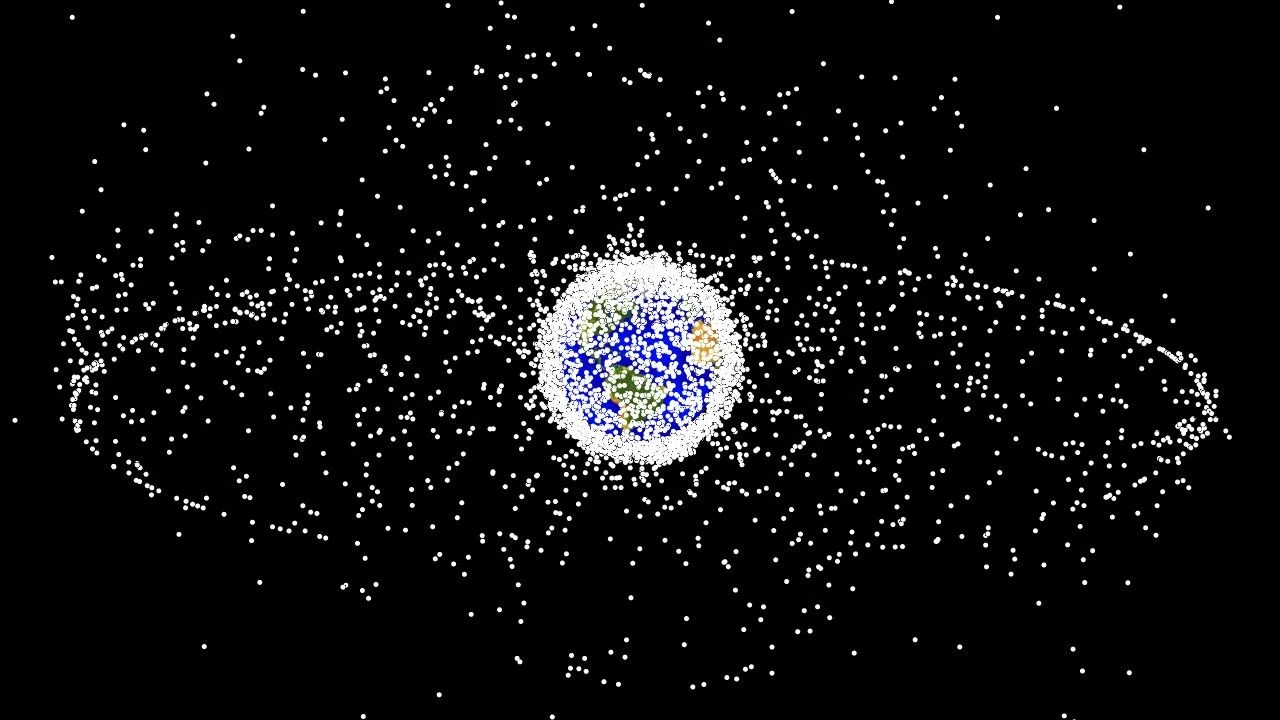
The numbers are staggering. According to NASA, roughly 95 percent of the objects currently orbiting Earth are just junk – abandoned satellites, spent rocket stages, and fragments from collisions. These pieces of space debris pose real risks when they come tumbling back down.
“Re-entries are happening more frequently. Last year, we had multiple satellites entering our atmosphere each day, and we don’t have independent verification of where they entered, whether they broke up into pieces, if they burned up in the atmosphere, or if they made it to the ground,” explains Benjamin Fernando, a postdoctoral research fellow at Johns Hopkins University who led the groundbreaking research.

The new space junk tracking method, published in the journal Science, works by detecting the sonic booms that debris creates as it screams through our atmosphere. When these objects move faster than sound – which they always do – they produce shock waves that travel all the way to the ground and shake seismometers along their path.
Fernando and his colleague Constantinos Charalambous from Imperial College London successfully tested their approach by tracking China’s Shenzhou-15 spacecraft module as it reentered Earth’s atmosphere on April 2. The module was no small piece of junk – it measured 3.5 feet wide and weighed more than 1.5 tons.
How Scientists Track Falling Space Junk
The process behind space junk tracking is surprisingly elegant. Here’s how it works and what makes it so effective:
- Sonic boom detection: Space debris creates shock waves as it moves through the atmosphere at hypersonic speeds
- Ground vibration recording: These shock waves reach Earth’s surface and trigger seismometers in a predictable pattern
- Trajectory calculation: By analyzing which seismometers activate and when, researchers can map the debris path
- Impact prediction: The intensity and timing of seismic readings help scientists estimate where fragments might land

For the Shenzhou-15 tracking, the team analyzed data from 127 seismometers across southern California. They discovered the module was traveling between 25 and 30 times the speed of sound as it streaked northeast over Santa Barbara and Las Vegas.
| Space Debris Tracking Method | Coverage Area | Detection Speed | Accuracy |
|---|---|---|---|
| Traditional radar tracking | Limited range | Real-time | High for large objects |
| Optical telescopes | Weather dependent | Delayed | Good visibility needed |
| Seismometer networks | Continental scale | Near real-time | Precise trajectory mapping |
“We can follow the debris’ trajectory, determine which direction it’s moving, and estimate where it may have landed,” Fernando notes. The seismic intensity even reveals how objects break apart during reentry, giving authorities crucial information about what they might find on the ground.
Real-World Impact and Future Applications
This space junk tracking breakthrough has immediate practical benefits for public safety and environmental protection. Some debris contains toxic materials that require careful handling and cleanup. The faster authorities can locate crash sites, the better they can protect communities from potential hazards.
“This information will help authorities to quickly locate and retrieve the charred remains, some of which could be toxic,” Fernando explains. The near real-time data generation means emergency responders won’t have to spend days or weeks searching vast areas for debris fragments.
The technology comes at a critical time. Commercial space launches are increasing rapidly, and more countries are developing space programs. Each mission potentially adds more debris to Earth’s orbital environment.
Current space junk tracking systems using radar and optical telescopes have significant limitations. Radar can only track objects within a limited range, while optical telescopes depend on clear weather and proper lighting conditions. Seismometer networks, however, can monitor debris across entire continents regardless of weather.
“This is a growing problem, and it’s going to keep getting worse,” Fernando warns. But now we have a powerful new tool to address it.
The seismometer approach also opens doors for tracking debris in remote areas where other monitoring systems don’t exist. Australia, for instance, has extensive seismometer networks that could monitor space junk falling across its vast outback regions.
Looking ahead, researchers plan to expand the network and refine their algorithms. They’re also exploring whether the same technique could track debris from other countries’ space programs or even natural meteors entering our atmosphere.
For communities living under busy orbital highways, this technology offers new peace of mind. The next time someone hears mysterious thunder on a clear night, scientists will know exactly what fell from the sky and where it landed.
FAQs
How often does space junk fall to Earth?
Multiple pieces of space debris enter our atmosphere every day, with larger objects creating noticeable reentries several times per month.
Is falling space junk dangerous to people on the ground?
Most space debris burns up completely during reentry, but larger pieces can survive and potentially cause damage or contain toxic materials.
How accurate is seismometer tracking compared to other methods?
Seismometer networks can track debris across entire continents and provide precise trajectory data that radar and optical systems might miss.
Can this technology track all space debris?
The method works best for larger objects that create detectable sonic booms, typically pieces weighing several hundred pounds or more.
Will this help prevent space debris collisions in orbit?
This tracking system focuses on debris entering Earth’s atmosphere rather than preventing orbital collisions, though the data helps improve our understanding of debris behavior.
How quickly can scientists locate crash sites using this method?
The seismometer data provides near real-time information, allowing authorities to identify potential impact areas within hours rather than days or weeks.
About the Author