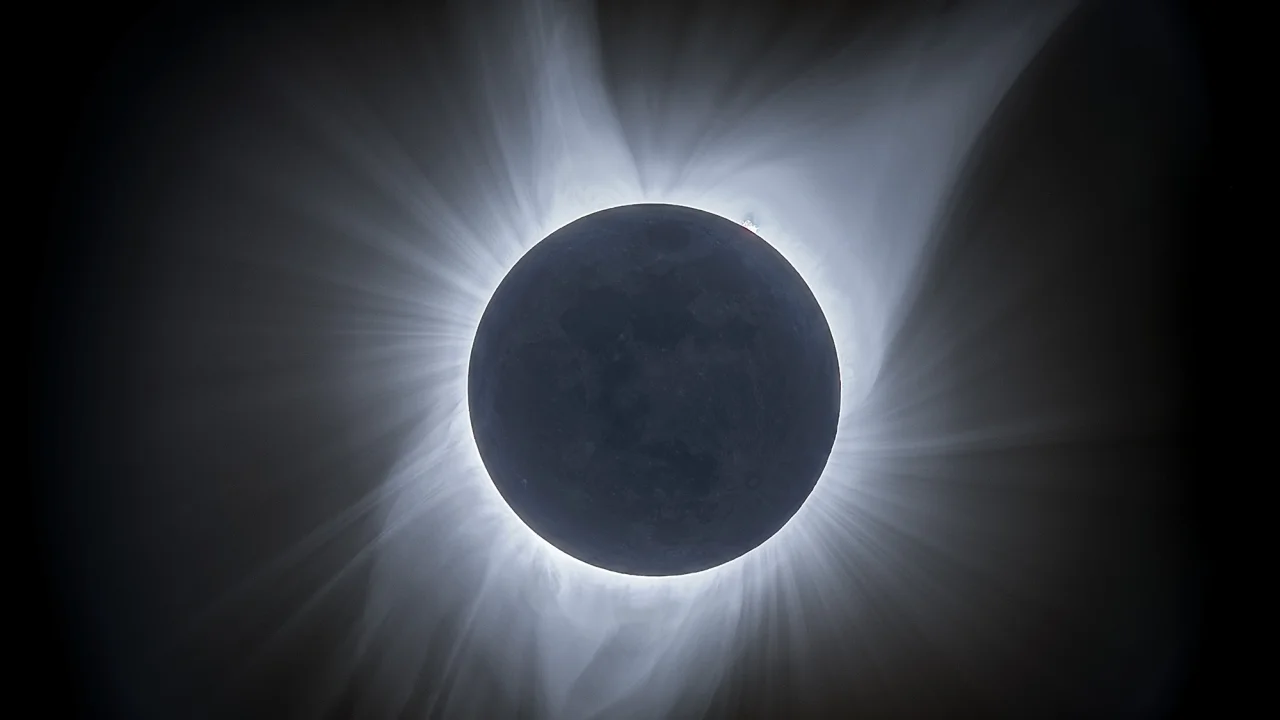
Picture this: you’re a Babylonian astronomer standing on a ziggurat in ancient Mesopotamia, staring up at the night sky with nothing but your eyes and centuries of careful observations. Your king has asked you to predict when the sun will disappear during the day—a terrifying omen that could spell doom for his reign. You have no telescopes, no computers, no satellites. Just patterns etched in clay tablets by generations of sky-watchers before you.
Yet somehow, you nail it. The eclipse happens exactly when you said it would, and your reputation as a cosmic fortune-teller is secured forever.
How did these ancient stargazers pull off such incredible feats of solar eclipse prediction? The answer reveals one of humanity’s greatest intellectual achievements—and it’s far more ingenious than you might think.
The Secret Weapon: Pattern Recognition on a Cosmic Scale
Ancient astronomers cracked the code of solar eclipse prediction through pure detective work. They discovered that eclipses follow predictable patterns that repeat over specific time periods. The most famous of these patterns is called the “saros cycle,” a discovery that changed everything.
“The ancients understood that the universe operates like clockwork,” explains Dr. Sarah Chen, an astronomy historian at MIT. “They just had to figure out the timing of the gears.”

The Chaldeans of ancient Mesopotamia were the first to master this technique around the 7th century BCE. They noticed that nearly identical eclipses occurred every 6,585.3211 days—roughly 18 years, 11 days, and 8 hours. This became known as the saros cycle, named later by the Greeks.
But here’s where it gets fascinating: this cycle isn’t just a random number. It represents the perfect alignment of four different lunar cycles happening simultaneously. Think of it like multiple spinning wheels that only line up at specific intervals.

Breaking Down the Ancient Mathematical Marvel
The saros cycle works because it synchronizes four crucial astronomical periods that govern when eclipses can occur. Ancient astronomers painstakingly tracked these cycles without understanding the underlying physics—they just knew the patterns worked.
Here’s how the saros cycle breaks down:
| Lunar Cycle | Duration | What It Tracks |
|---|---|---|
| Orbital Period | 27.32 days | Moon’s orbit around Earth |
| Synodic Period | 29.53 days | Moon phases (new to new moon) |
| Draconitic Period | 27.21 days | Moon crossing Earth’s orbital plane |
| Anomalistic Period | 27.55 days | Moon’s closest approach to Earth |
“What’s mind-blowing is that ancient astronomers figured this out through pure observation,” notes Dr. Michael Rodriguez, a historian of ancient mathematics. “They were essentially running complex calculations in their heads using pattern recognition.”
The genius of the saros cycle lies in its near-perfect repetition. After exactly one saros period, the Moon returns to almost the same position relative to Earth and the Sun. The eclipse won’t occur in the same location on Earth—that’s the tricky part—but it will happen with nearly identical characteristics.
Key benefits of the saros system included:
- Predicting eclipse dates with incredible accuracy
- Determining eclipse duration and intensity
- Planning religious ceremonies and political events
- Establishing credibility as court astronomers
- Creating detailed eclipse calendars spanning decades
Real-World Impact: When Kings Lived and Died by Eclipse Predictions
Solar eclipse prediction wasn’t just an academic exercise—it was a matter of life and death. Eclipses terrified ancient populations, who saw them as signs of divine anger or impending disasters. Rulers desperately needed astronomers who could warn them when these cosmic events would occur.
The most famous example involves the battle between the Lydians and Medes in 585 BCE. According to the Greek historian Herodotus, the two armies were locked in fierce combat when a total solar eclipse suddenly darkened the sky. Terrified soldiers on both sides laid down their weapons, interpreting the event as a divine command to make peace.
What makes this story remarkable is that the Greek philosopher Thales had allegedly predicted this eclipse. Whether he actually made the prediction is debated, but the story illustrates how powerful eclipse forecasting had become by the 6th century BCE.
“Eclipse predictions gave ancient astronomers enormous political influence,” explains Dr. Lisa Thompson, an expert in ancient Near Eastern cultures. “If you could accurately predict when the sun would disappear, people assumed you had direct access to the gods’ plans.”
Chinese astronomers faced even higher stakes. According to legend, two court astronomers named Hsi and Ho were executed for failing to predict a solar eclipse around 2136 BCE. While this story is likely mythical, it reflects the deadly serious nature of eclipse prediction in ancient royal courts.
The practical applications extended far beyond royal courts:
- Agricultural planning around eclipse-related superstitions
- Military campaign timing to avoid “unlucky” eclipses
- Religious festival scheduling
- Trade route planning to avoid eclipse-panicked populations
- Medical procedures postponed during eclipse periods
Eclipse prediction also drove major advances in mathematics and record-keeping. Babylonian astronomers developed sophisticated number systems and calculation methods specifically to track celestial cycles. Their eclipse records, preserved on thousands of cuneiform tablets, remain some of the most accurate astronomical observations from the ancient world.
The three-saros refinement represented the pinnacle of ancient eclipse prediction. After three complete saros cycles (about 54 years), eclipses return not just to similar characteristics, but to nearly the same time of day and geographic region. This discovery allowed ancient astronomers to create detailed eclipse maps showing where future eclipses would be visible.
“The level of precision these ancient astronomers achieved is staggering,” says Dr. Rodriguez. “They were predicting eclipses centuries in advance with accuracy that wouldn’t be significantly improved until the telescope was invented.”
Modern eclipse prediction still relies on the fundamental principles discovered by ancient astronomers. We’ve refined the calculations with precise measurements and computer modeling, but the core insight remains the same: eclipses follow predictable patterns based on the complex dance between Earth, Moon, and Sun.
FAQs
How accurate were ancient eclipse predictions?
Ancient astronomers could predict eclipse dates within a day or two using the saros cycle, which is remarkably accurate considering they had no modern instruments.
Did ancient astronomers understand why eclipses happened?
Most ancient cultures didn’t understand the scientific cause of eclipses, but they excelled at recognizing and using the mathematical patterns that governed their occurrence.
Which ancient civilization was best at predicting eclipses?
The Babylonians were generally considered the most skilled, with detailed eclipse records dating back over 2,500 years and sophisticated mathematical methods for prediction.
How long did it take ancient astronomers to discover the saros cycle?
It likely took centuries of careful observation and record-keeping across multiple generations of astronomers to fully understand and refine the saros cycle.
Could ancient astronomers predict where an eclipse would be visible?
Basic location prediction was possible using the three-saros cycle, but precise geographic forecasting required more advanced methods that weren’t fully developed until much later.
Did eclipse predictions influence major historical events?
Yes, several historical battles, political decisions, and cultural developments were influenced by eclipse predictions or the lack thereof, though some famous examples may be legendary rather than factual.
About the Author