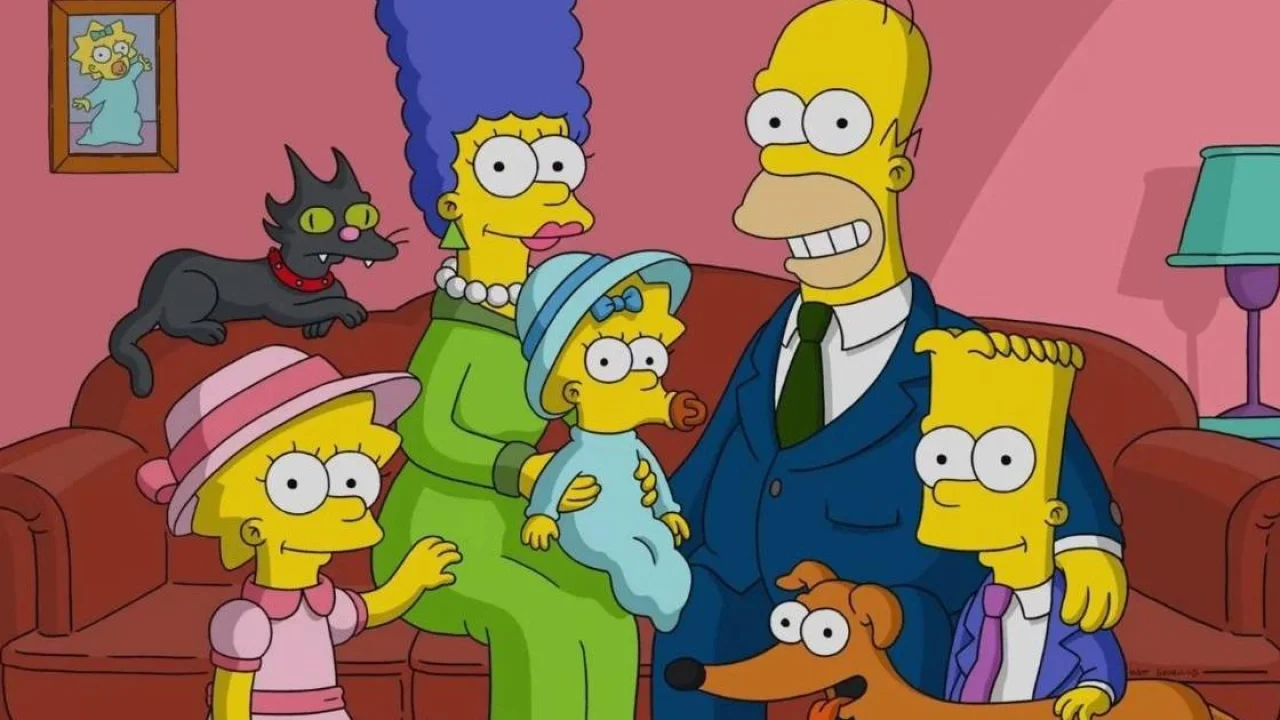
Picture this: you’re sitting in your living room on a Sunday evening, watching The Simpsons with your family like millions have done for over three decades. Your kids are laughing at Bart’s latest prank while you’re chuckling at Homer’s workplace antics. Suddenly, you realize you’re witnessing television history—this yellow family has been part of your life longer than some of your actual relatives.

That moment hits differently when you consider that The Simpsons just reached an incredible milestone that seemed impossible back in 1989. We’re talking about 800 episodes of pure animated gold, and the people behind the show are finally opening up about what could actually end this cultural phenomenon.
Executive Producer Mike Price recently dropped some heavy truth bombs about what would spell doom for America’s favorite animated family. His words carry weight because he’s been steering this ship through some of its most memorable recent years.

The One Death That Would Kill The Simpsons Forever
When The Simpsons 800 episodes milestone rolled around, it came with a storyline that tugged at heartstrings everywhere. The season 37 finale dealt with something every pet owner dreads—the possibility of losing a furry family member. Marge desperately tries to keep Santa’s Little Helper healthy, and fans held their breath wondering if the writers would actually go there.
But Mike Price put those fears to rest with a surprisingly candid admission. “There was never going to be a world where it ended with the dog really dying,” he revealed. “We couldn’t picture that. If you kill off Santa’s Little Helper, that will be the end of everything.”
Think about that for a second. After 800 episodes, countless character deaths, and storylines that have pushed boundaries for decades, it’s the family dog that represents the show’s untouchable core. Santa’s Little Helper isn’t just a pet—he’s been there since day one, literally appearing in the very first episode when Homer and Bart brought him home.
Price drew a clear line between expendable characters and the show’s sacred elements: “It’s one thing to kill off Larry the Barfly, but Santa’s Little Helper? That’s different territory entirely.”
Breaking Down The Simpsons’ Historic Achievement
The journey to The Simpsons 800 episodes represents more than just numbers on a screen. Let’s look at what this milestone actually means in television history:
- Longest-running American animated series in history
- Longest-running American sitcom by episode count
- Over 35 years of continuous production
- Aired across multiple decades, connecting generations of viewers
- Cultural impact spanning global audiences in dozens of languages

The numbers tell an incredible story, but they don’t capture the human element. Entire families have grown up watching this show together. Parents who watched Bart as rebellious kids now see their own children discovering Springfield for the first time.
| Milestone | Year Reached | Significance |
|---|---|---|
| 100 Episodes | 1993 | Established as cultural phenomenon |
| 300 Episodes | 2003 | Surpassed most sitcom records |
| 500 Episodes | 2012 | Entered uncharted television territory |
| 700 Episodes | 2020 | Pandemic comfort viewing peaked |
| 800 Episodes | 2024 | Historic television achievement |
Industry veteran Sarah Chen, who has worked on animated series for over two decades, puts this achievement in perspective: “When you consider that most TV shows are lucky to hit 100 episodes, The Simpsons reaching 800 is like a baseball player hitting 800 home runs. It’s not just rare—it’s historically unprecedented.”
What The Future Holds For Springfield
The conversation about endings becomes more relevant with each passing season. While The Simpsons 800 episodes celebration shows the series is still going strong, questions about longevity naturally arise. The creative team faces unique challenges that other shows never encounter.
Voice actor availability becomes increasingly crucial as the original cast ages. Contract negotiations happen more frequently. Story ideas must stay fresh while honoring 35 years of established canon. These aren’t typical television problems—they’re legacy preservation challenges.
Animation historian Dr. Marcus Rodriguez explains the delicate balance: “The Simpsons exists in this unique space where it’s simultaneously a current show and a historical artifact. Every new episode has to work for first-time viewers while satisfying fans who’ve been watching since the Bush administration—the first one.”
The show’s approach to mortality has always been carefully calculated. Major character deaths like Maude Flanders or Mrs. Krabappel happened for specific reasons—voice actor departures or meaningful story arcs. But Santa’s Little Helper represents something different entirely.
Price’s comments reveal the emotional intelligence behind the show’s longevity. Certain elements are simply too foundational to touch, regardless of dramatic potential. The family dog isn’t just a character—he’s a symbol of the Simpson family’s heart.
Why This Matters Beyond Entertainment
The Simpsons 800 episodes milestone affects more than just television statistics. This show has become genuine Americana, referenced in academic papers, political speeches, and cultural criticism worldwide. When executives talk about what could end the show, they’re really discussing the end of a cultural institution.
Consider the ripple effects: merchandise sales, theme park attractions, streaming revenue, international syndication deals, and countless jobs across multiple industries. The show supports entire communities of writers, animators, voice actors, and production staff who’ve built careers around Springfield.
Media analyst Jennifer Park notes: “The Simpsons isn’t just entertainment anymore—it’s infrastructure. Ending it would be like demolishing a cultural landmark that millions of people visit every week through their television screens.”
The show’s influence extends into unexpected areas. Teachers use Simpsons episodes to explain everything from economics to literature. Sociologists study its portrayal of American family life. Linguists analyze how it’s shaped modern comedy writing.
For viewers, the emotional investment runs deep. People have literally grown up with these characters, finding comfort in their consistency during life’s major changes. Marriages, divorces, births, deaths, job changes, moves—The Simpsons has been the constant background soundtrack to millions of lives.
That’s why Price’s admission about Santa’s Little Helper resonates so strongly. He’s not just talking about a fictional dog—he’s acknowledging that some things are too precious to sacrifice, even for the sake of storytelling. After 800 episodes, The Simpsons understands exactly what its audience treasures most.
FAQs
How many episodes does The Simpsons have now?
The Simpsons has reached 800 episodes as of the Season 37 finale, making it the longest-running animated series in American television history.
What did Mike Price say would end The Simpsons?
Executive Producer Mike Price stated that killing off Santa’s Little Helper, the family dog, would be “the end of everything” for the show, unlike other character deaths that the series could survive.
When did Santa’s Little Helper first appear on The Simpsons?
Santa’s Little Helper appeared in the very first episode of The Simpsons in 1989, when Homer and Bart brought him home, making him one of the show’s most foundational characters.
Is The Simpsons ending soon?
There’s no official word about The Simpsons ending, and the show continues to be renewed for new seasons, though discussions about longevity naturally occur given its historic 35-year run.
What makes The Simpsons’ 800 episodes so significant?
The 800-episode milestone represents unprecedented longevity in television history, surpassing virtually all other sitcoms and animated series in total episode count and cultural impact.
Have other major characters died on The Simpsons?
Yes, The Simpsons has killed off characters like Maude Flanders and Mrs. Krabappel, but these deaths were often due to voice actor departures rather than purely creative decisions.
About the Author