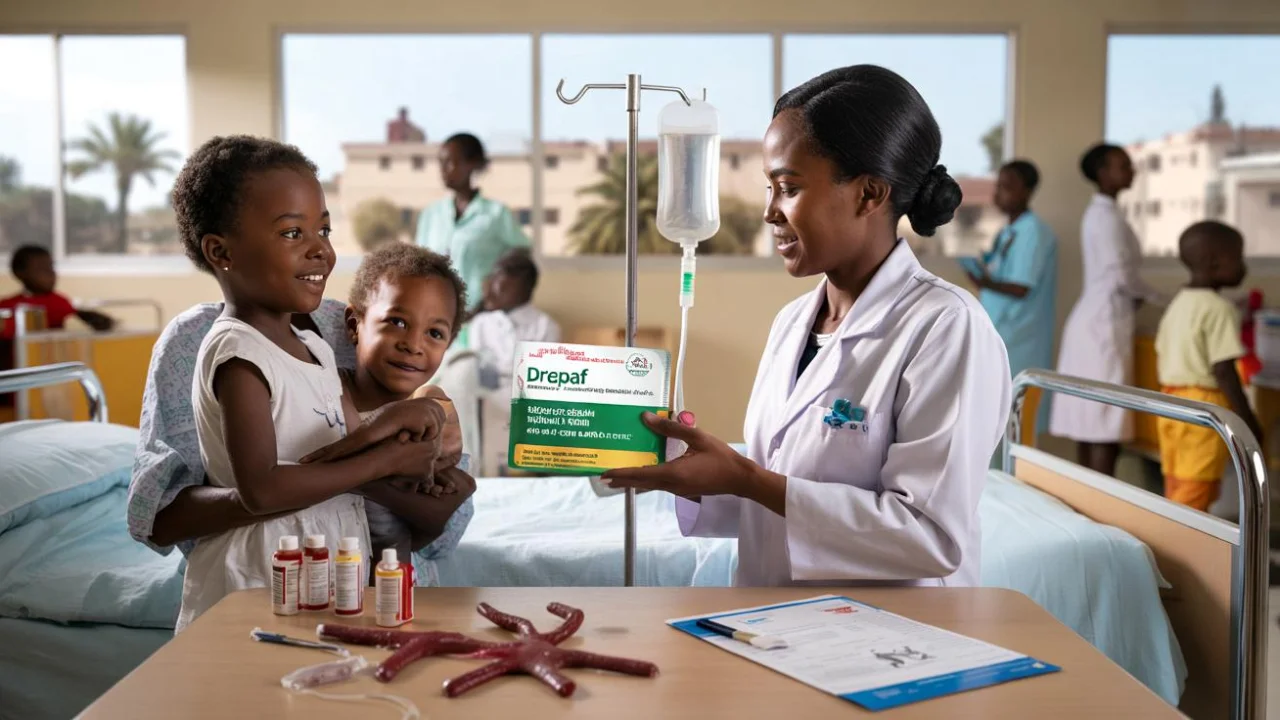
Fatou remembers the exact moment her world changed forever. Her 8-year-old son collapsed during recess at his Dakar school, writhing in pain so severe he couldn’t speak. The teacher called it growing pains, but Fatou knew better. She’d watched her own brother suffer the same agony decades earlier.

At the hospital, doctors delivered the news she’d been dreading: her son had sickle cell disease. “I felt like someone punched me in the stomach,” she recalls. “In my mind, I was already planning his funeral.”
But today, four years later, her son is thriving. The difference? A breakthrough generic drug manufactured right here in Africa, offering families like Fatou’s something they never had before—real hope.

Why This African-Made Medicine Changes Everything
Sickle cell disease affects millions across Africa, yet most families have never had access to effective treatment. The condition causes red blood cells to become misshapen and sticky, blocking blood flow and triggering excruciating pain crises that can damage organs and shorten lives.
For decades, the most effective treatment—a drug called hydroxyurea—remained largely out of reach for African patients. Imported versions cost hundreds of dollars per month, making them impossible for most families to afford. Many children died before their fifth birthday, not because their disease couldn’t be treated, but because treatment wasn’t accessible.

Then Senegalese pharmaceutical company Afric-Phar changed the game. Their generic version, called Drepaf, costs just $15 per month—a fraction of imported alternatives. More importantly, it’s manufactured locally, ensuring steady supply chains that don’t depend on international shipping delays or currency fluctuations.
“We’re not just making medicine cheaper,” explains Dr. Amadou Fall, Afric-Phar’s chief medical officer. “We’re making it available to communities that have been forgotten by the global pharmaceutical industry for too long.”

The Numbers Tell a Powerful Story
The impact of sickle cell disease across Africa is staggering, but so is the potential for change. Here’s what the data reveals:
| Country | Annual Births with Sickle Cell Disease | Access to Treatment (Before Drepaf) |
|---|---|---|
| Nigeria | 150,000 | Less than 5% |
| Democratic Republic of Congo | 45,000 | Less than 2% |
| Ghana | 15,000 | 10% |
| Senegal | 3,500 | 25% |
| Mali | 7,000 | Less than 3% |
Since Drepaf launched in 2023, treatment access in participating countries has improved dramatically:
- Over 25,000 patients now receive regular hydroxyurea therapy
- Emergency room visits for pain crises dropped by 40% among treated patients
- Hospital admissions decreased by 55% in children receiving the medication
- Treatment costs fell from $200-400 per month to just $15
- Seven African countries have approved the generic drug for distribution
Dr. Mariam Sylla, who runs Senegal’s National Sickle Cell Center, has witnessed the transformation firsthand. “Children who used to miss school every week are now playing soccer with their friends. Parents who spent their life savings on emergency treatments can finally plan for their children’s futures.”
Real Families, Real Changes
The statistics matter, but the human stories behind them reveal the true magnitude of this breakthrough. Across West Africa, families are experiencing something many thought impossible—normal childhoods for their sickle cell children.
In Ghana, 12-year-old Kwame hasn’t been hospitalized in over a year since starting Drepaf. His mother, Grace, used to keep a hospital bag packed at all times. Now she’s packing school lunch boxes instead.
“Before, I was afraid to let him play with other children,” Grace explains. “Every fever, every bump, could trigger a crisis. Now he rides his bike to school and plays football after classes. He’s just a regular kid.”
The economic impact extends beyond individual families. Parents who once missed weeks of work caring for sick children can now maintain steady employment. Healthcare systems previously overwhelmed with emergency sickle cell cases are seeing dramatic reductions in urgent admissions.
But challenges remain. Many rural families still lack access to diagnostic testing or specialized care. Some health workers need training on proper sickle cell management. And while $15 per month is affordable compared to imported drugs, it still represents a significant expense for families earning less than $2 per day.
“We’ve solved the supply problem, but we haven’t solved the poverty problem,” acknowledges Dr. Fall. “That’s why we’re working with governments and aid organizations to subsidize treatment for the most vulnerable families.”
The success of Drepaf is inspiring other African pharmaceutical companies to develop local generic alternatives for neglected diseases. Similar initiatives are underway for diabetes medications, cancer treatments, and mental health drugs—all manufactured on the continent for African patients.
For Fatou, whose son now dreams of becoming a doctor himself, the transformation feels almost miraculous. “Three years ago, I was planning his funeral. Yesterday, he brought home a report card with all A’s. That’s what hope looks like.”
As more countries approve Drepaf and production scales up, millions more African children with sickle cell disease may soon have access to life-changing treatment. After decades of being overlooked by the global medical community, Africa is proving it can develop its own solutions to its most pressing health challenges.
FAQs
What exactly is sickle cell disease?
It’s an inherited blood disorder where red blood cells become crescent-shaped and sticky, blocking blood flow and causing severe pain episodes.
How much does Drepaf cost compared to imported alternatives?
Drepaf costs about $15 per month, while imported hydroxyurea can cost $200-400 monthly.
Which countries can access this African-made drug?
Seven African countries have approved Drepaf, including Senegal, Ghana, Mali, and Nigeria, with more approvals expected.
How effective is the generic version compared to brand-name drugs?
Clinical studies show Drepaf has the same effectiveness as imported hydroxyurea, reducing pain crises by 40% and hospitalizations by 55%.
Can adults with sickle cell disease use this medication too?
Yes, Drepaf is approved for both children and adults with sickle cell disease who meet the clinical criteria.
What’s the biggest remaining challenge for treatment access?
While the drug is now affordable, many families still need help covering the monthly costs, and rural areas often lack proper diagnostic facilities.
About the Author