Captain Hans Weber still remembers the morning when his patrol vessel spotted something unusual off the German coast. After 12 hours at sea in rough November waters, his crew was exhausted, their eyes strained from scanning endless gray waves. They’d nearly missed the suspicious activity that would later prove significant to maritime security officials.
That incident, like countless others, highlights a growing challenge for Germany’s naval forces: how do you effectively monitor thousands of square miles of coastline with limited human resources? The answer, it seems, lies not in sending more sailors to sea, but in deploying machines that never need sleep, food, or rest breaks.
This reality has driven Germany to make one of its most significant naval investments in recent years, fundamentally changing how the country approaches maritime surveillance.

Germany Bets Big on Advanced SeaGuardian Drones
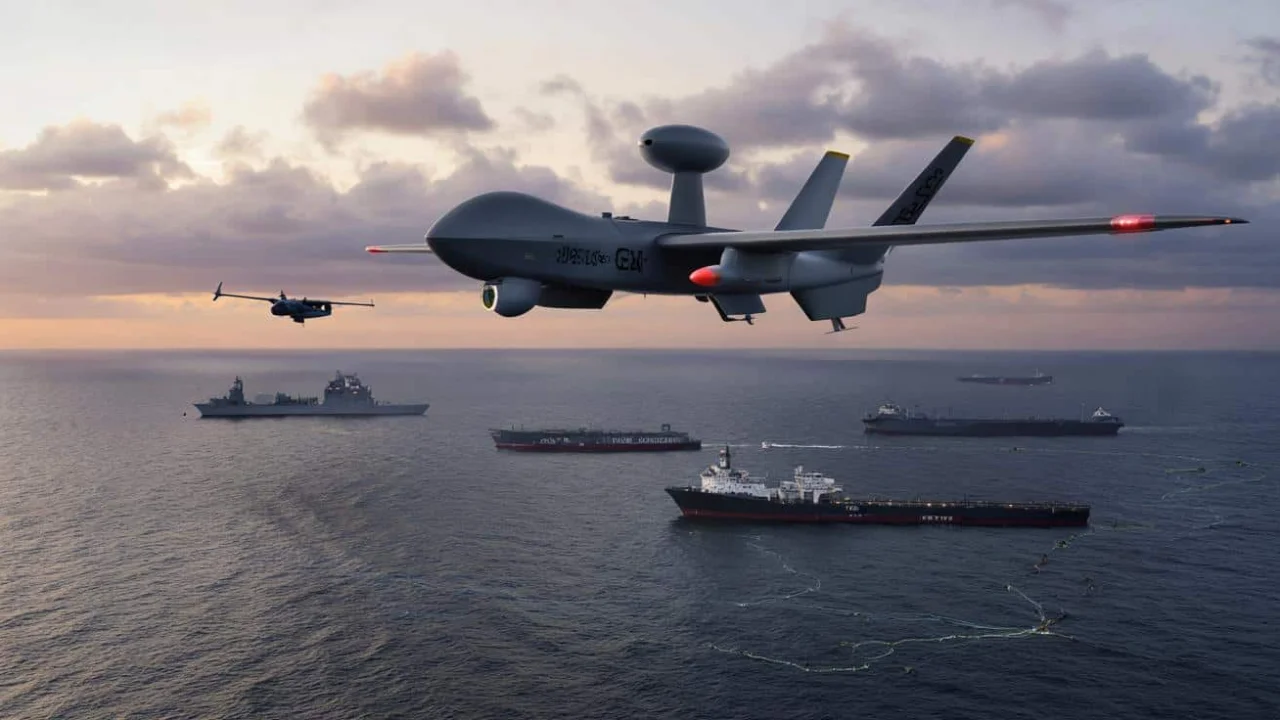
Berlin has committed €1.52 billion to acquire eight MQ-9B SeaGuardian drones from American manufacturer General Atomics Aeronautical Systems. This massive contract, approved through the NATO Support and Procurement Agency, represents more than just an equipment purchase – it’s a complete shift in Germany’s naval strategy.
The deal covers four complete SeaGuardian systems, with each system including two aircraft and dedicated ground control stations. These aren’t simple surveillance drones you might see hobbyists flying at the beach. SeaGuardian drones can stay airborne for more than 40 hours straight, covering vast ocean areas that would require multiple ships and crews to patrol effectively.

“The SeaGuardian gives us eyes where we’ve never had them before,” explains a German naval official familiar with the program. “We can monitor shipping lanes, track suspicious vessels, and respond to maritime emergencies without putting our personnel at risk.”
The German Navy plans to operate these drones from Naval Air Wing 3 “Graf Zeppelin” in Nordholz, strategically positioned on the North Sea coast. The first deliveries are scheduled for 2028, meaning Germany will have this new capability operational by decade’s end.

Key Features and Capabilities That Matter
What makes SeaGuardian drones particularly valuable for maritime surveillance goes far beyond their impressive flight endurance. These aircraft pack sophisticated sensors and communication systems specifically designed for ocean monitoring.
| Capability | SeaGuardian Specification | Real-World Impact |
|---|---|---|
| Flight Duration | 40+ hours | Continuous coverage of shipping lanes |
| Operating Altitude | Up to 40,000 feet | Wide area surveillance from safe distance |
| Communication Range | Satellite-enabled global reach | Real-time data sharing with NATO allies |
| Sensor Package | Multi-spectral imaging and radar | Day/night vessel identification and tracking |
The drones carry advanced radar systems capable of detecting and tracking multiple vessels simultaneously. Their electro-optical sensors can capture detailed imagery in various weather conditions, while satellite communication links ensure real-time data transmission to ground controllers and allied forces.
Key operational advantages include:
- Ability to operate in dangerous weather conditions without risking crew
- Continuous monitoring of critical shipping lanes and naval chokepoints
- Enhanced coordination with NATO maritime surveillance networks
- Cost-effective alternative to maintaining large patrol vessel fleets
- Rapid deployment to areas of interest or emerging threats
“These systems give us persistent surveillance capabilities that simply weren’t possible with traditional maritime patrol aircraft,” notes a defense industry analyst. “A SeaGuardian can loiter over an area of interest for an entire day and night, something no manned aircraft could safely accomplish.”
Why This Investment Matters Right Now
Germany’s decision to invest heavily in SeaGuardian drones reflects growing concerns about maritime security in European waters. Recent incidents involving undersea cable damage, suspicious vessel movements, and increased military activity have highlighted vulnerabilities in current surveillance systems.
The timing isn’t coincidental. NATO allies have reported increased submarine activity and unusual shipping patterns in both the Baltic Sea and North Atlantic. Traditional patrol methods – sending ships or aircraft on scheduled missions – often miss critical developments that occur between patrols.
SeaGuardian drones address this gap by providing continuous coverage. Unlike patrol vessels that must return to port for fuel and supplies, these drones can maintain watch over specific areas for extended periods, building detailed patterns of normal and abnormal maritime activity.
The impact extends beyond German waters. These drones will integrate with NATO’s maritime surveillance network, sharing data with allied forces across Europe. When a SeaGuardian drone operating in German waters detects suspicious activity, that information can immediately reach Danish, Dutch, or British maritime authorities.
“We’re moving toward a more connected, real-time approach to maritime security,” explains a European defense official. “Individual nations can’t effectively monitor their waters in isolation anymore.”
The economic implications are equally significant. Operating SeaGuardian drones costs substantially less than maintaining equivalent patrol vessel coverage. A single drone system can replace multiple ship patrols while providing superior surveillance capabilities and data collection.
For German citizens, this investment means enhanced protection of critical maritime infrastructure, including undersea internet cables, offshore wind farms, and shipping lanes that supply essential goods. The drones can respond rapidly to search and rescue operations, environmental disasters, or security threats.
The program also strengthens Germany’s position within NATO, demonstrating commitment to collective maritime security while providing capabilities that benefit all alliance members. Other European nations are closely watching this deployment, with several considering similar drone acquisitions.
FAQs
How long can SeaGuardian drones stay in the air?
SeaGuardian drones can operate continuously for more than 40 hours, providing persistent surveillance coverage that would require multiple shifts of manned aircraft or patrol vessels.
Where will Germany operate these drones?
The drones will be based at Naval Air Wing 3 “Graf Zeppelin” in Nordholz on the North Sea coast, with operations covering both Baltic Sea and North Atlantic waters.
When will the SeaGuardian drones be operational?
Germany expects to receive its first SeaGuardian systems in 2028, with full operational capability achieved by the end of the decade.
Can these drones operate in civilian airspace?
Yes, the SeaGuardian systems include ground control stations certified to meet strict safety standards for operation in airspace shared with civilian aircraft.
How much did Germany pay for these drones?
The complete contract totals €1.52 billion, covering eight SeaGuardian drones organized into four operational systems with ground control stations and support equipment.
Will the drones share information with other countries?
Yes, the SeaGuardian systems are designed to integrate with NATO’s maritime surveillance network, enabling real-time data sharing with allied forces across Europe.
About the Author