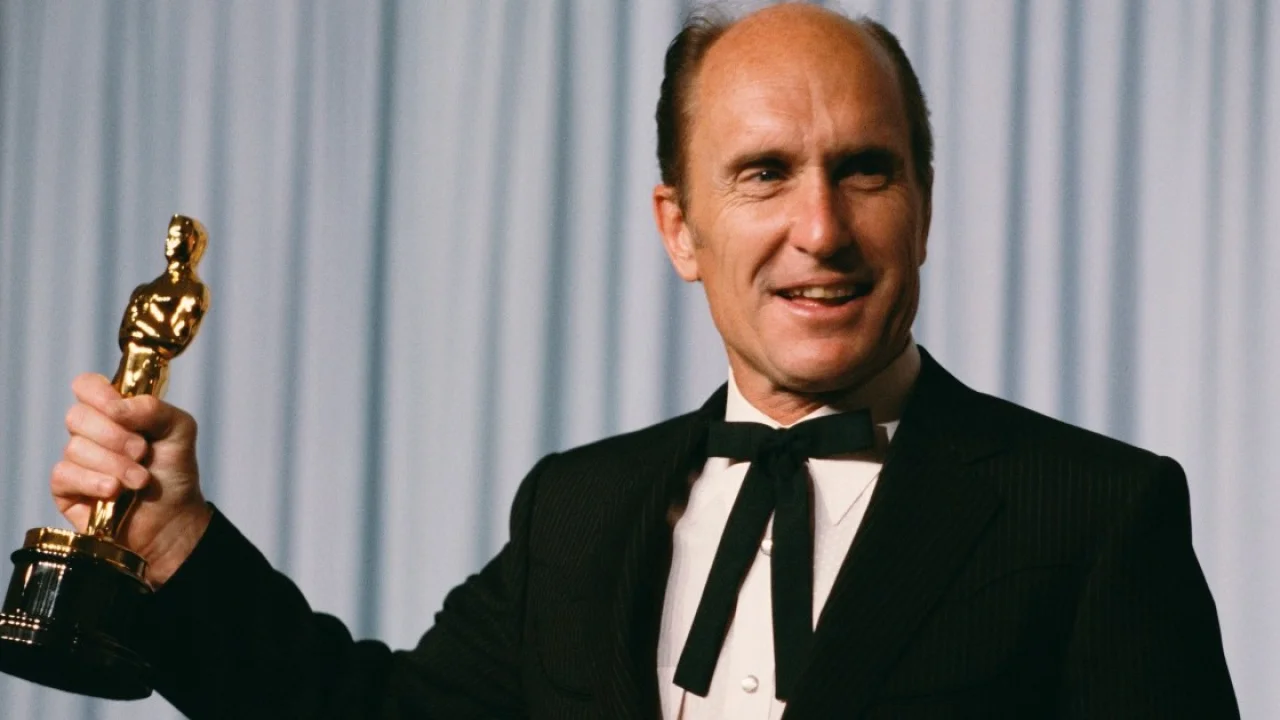
There’s something about watching Robert Duvall on screen that made you forget you were watching a movie at all. Maybe it was the way he’d lean into a character so completely that Tom Hagen felt like your neighbor, or how his gruff voice as Lieutenant Colonel Kilgore made “I love the smell of napalm in the morning” sound like casual conversation over coffee.
For millions of movie lovers, Duvall wasn’t just an actor—he was that reliable presence who showed up in your favorite films and made everything feel more real. When you saw his name in the credits, you knew you were in for something special.
Now, that familiar face is gone. Robert Duvall dies at age 95, leaving behind a legacy that spans over six decades and touches nearly every corner of American cinema.

Hollywood Loses a Legend
The news broke quietly on Sunday evening, much like the man himself preferred to live. Robert Duvall passed away peacefully at his home in Middleburg, Virginia, surrounded by family and the rolling countryside he’d grown to love in his later years.
His wife, Luciana Duvall, announced his death through a heartfelt Facebook post that captured the essence of their 20-year marriage. “Yesterday we said goodbye to my beloved husband, cherished friend, and one of the greatest actors of our time,” she wrote. “Bob passed away peacefully at home, surrounded by love and comfort.”
The reaction from Hollywood was swift and emotional. Al Pacino, who worked alongside Duvall in both Godfather films, released a statement that felt deeply personal: “Bobby was more than a co-star—he was family. The Corleone family wouldn’t have been the same without Tom Hagen, and my life wouldn’t have been the same without Bobby’s friendship.”
Robert De Niro, another frequent collaborator, shared his memories with characteristic brevity: “Bob taught us all what it meant to disappear into a role. He never acted like a star because he was too busy being a craftsman.”

A Career That Defined American Cinema
When people talk about method acting and complete character transformation, Robert Duvall’s name comes up in every conversation. His career wasn’t just impressive—it was foundational to how we think about great acting in American films.
Here’s what made Duvall’s career so remarkable:

- Seven Academy Award nominations across five decades
- One Oscar win for Best Actor in “Tender Mercies” (1983)
- Memorable roles in over 100 films and television shows
- A National Medal of Arts recipient
- Hollywood Walk of Fame star since 1995
| Iconic Role | Film/Show | Year | Impact |
|---|---|---|---|
| Tom Hagen | The Godfather films | 1972, 1974 | Defined the loyal consigliere archetype |
| Lt. Col. Kilgore | Apocalypse Now | 1979 | Created one of cinema’s most quoted characters |
| Mac Sledge | Tender Mercies | 1983 | Earned him an Academy Award |
| Augustus McCrae | Lonesome Dove | 1989 | Redefined the TV western miniseries |
Director Francis Ford Coppola, who cast Duvall in multiple films, once said: “Bob had this rare ability to find the truth in any character. He never seemed to be performing—he just was whoever he was playing.”
The Tributes Keep Coming
As news of Robert Duvall’s death spread, the entertainment industry paused to remember a man who helped shape modern American cinema. The tributes revealed not just professional respect, but genuine affection for someone who remained humble despite his massive success.
Tommy Lee Jones, a longtime friend and fellow Texan, shared a particularly moving statement: “Bob was the kind of actor who made everyone around him better. He never hogged scenes or demanded attention—he just showed up, did the work, and made magic happen.”
Even younger actors who worked with Duvall in his later years spoke about his influence. Actor Haley Joel Osment, who appeared with him in “Secondhand Lions,” remembered: “Mr. Duvall treated every day on set like a master class. He showed me that great acting isn’t about big gestures—it’s about finding the small truths that make a character real.”
The Academy of Motion Picture Arts and Sciences released an official statement calling Duvall “a master of his craft whose performances will continue to inspire actors for generations to come.”
What This Means for Cinema History
When Robert Duvall dies, we don’t just lose an actor—we lose a direct connection to some of the most important films ever made. His passing marks the end of an era when movie stars were also serious craftsmen who approached each role like a scholarly pursuit.
For film students and aspiring actors, Duvall’s career serves as a masterclass in versatility and commitment. He never played the same character twice, even when working within similar genres. His Tom Hagen was nothing like his Augustus McCrae, despite both being authority figures in male-dominated worlds.
The film industry today operates very differently than it did when Duvall was building his career. Social media, franchise filmmaking, and celebrity culture have changed what it means to be a movie star. Duvall represented an older model—the actor who let the work speak for itself.
“Bob never cared about being famous,” noted longtime friend and casting director Marion Dougherty. “He cared about being good. That’s why his performances still feel fresh today, while so many of his contemporaries feel dated.”
A Personal Loss for Fans Everywhere
For movie lovers, hearing that Robert Duvall dies feels like losing a family member you never met but somehow knew intimately. His characters were the kind of people you’d want in your corner during tough times—loyal, principled, and unafraid to speak truth to power.
Think about it: how many actors can you name who made you forget they were acting? Duvall had that rare gift of complete believability. Whether he was advising Michael Corleone or riding the range in “Lonesome Dove,” he inhabited his roles so completely that the performance became invisible.
This authenticity extended beyond his professional life. Unlike many Hollywood stars, Duvall kept his personal life relatively private and stayed connected to his roots. He maintained homes in Virginia and Argentina, far from the Hollywood spotlight, and pursued interests like tango dancing and horse breeding with the same intensity he brought to his acting.
Film historian Leonard Maltin summed up Duvall’s appeal perfectly: “Bob represented something pure about American acting. He never seemed to be trying to impress you—he was just trying to tell the truth of the story.”
FAQs
How did Robert Duvall die?
Robert Duvall passed away peacefully at his home in Middleburg, Virginia, surrounded by family. No specific cause of death was announced, but he was 95 years old.
What was Robert Duvall’s most famous role?
While he had many iconic roles, Duvall is best known for playing Tom Hagen in “The Godfather” films and Lieutenant Colonel Kilgore in “Apocalypse Now.”
Did Robert Duvall win an Oscar?
Yes, Duvall won the Academy Award for Best Actor in 1984 for his role as Mac Sledge in “Tender Mercies.” He was nominated six other times throughout his career.
Was Robert Duvall married?
Yes, Duvall was married four times. His fourth wife, Luciana Pedraza, whom he married in 2005, survived him. They were married for nearly 20 years.
What other actors paid tribute to Robert Duvall?
Al Pacino, Robert De Niro, Tommy Lee Jones, and many others shared emotional tributes remembering Duvall as both a brilliant actor and a generous colleague.
Where will Robert Duvall be buried?
Funeral arrangements have not been publicly announced, though it’s expected he will be buried privately according to his family’s wishes.
About the Author