When 22-year-old aerospace engineering student Maria Schneider watched Top Gun: Maverick in her Munich cinema last year, she never imagined she’d soon be applying for internships at a company building the real thing. The movie’s hypersonic aircraft scenes seemed like pure Hollywood magic – until her professor mentioned that a small German firm was actually building something similar just 50 kilometers away.

That company, Polaris Raumflugzeuge, has just landed a groundbreaking contract that could change everything. The German Ministry of Defence has quietly awarded them the task of building Europe’s first operational reusable hypersonic aircraft, putting a relatively unknown startup at the center of a technological revolution.
While China, Russia, and the United States dominate headlines with their hypersonic weapons programs, Germany has taken a different approach – focusing on reusable technology that could transform both military operations and civilian space access forever.

Germany Bets Big on Hypersonic Innovation
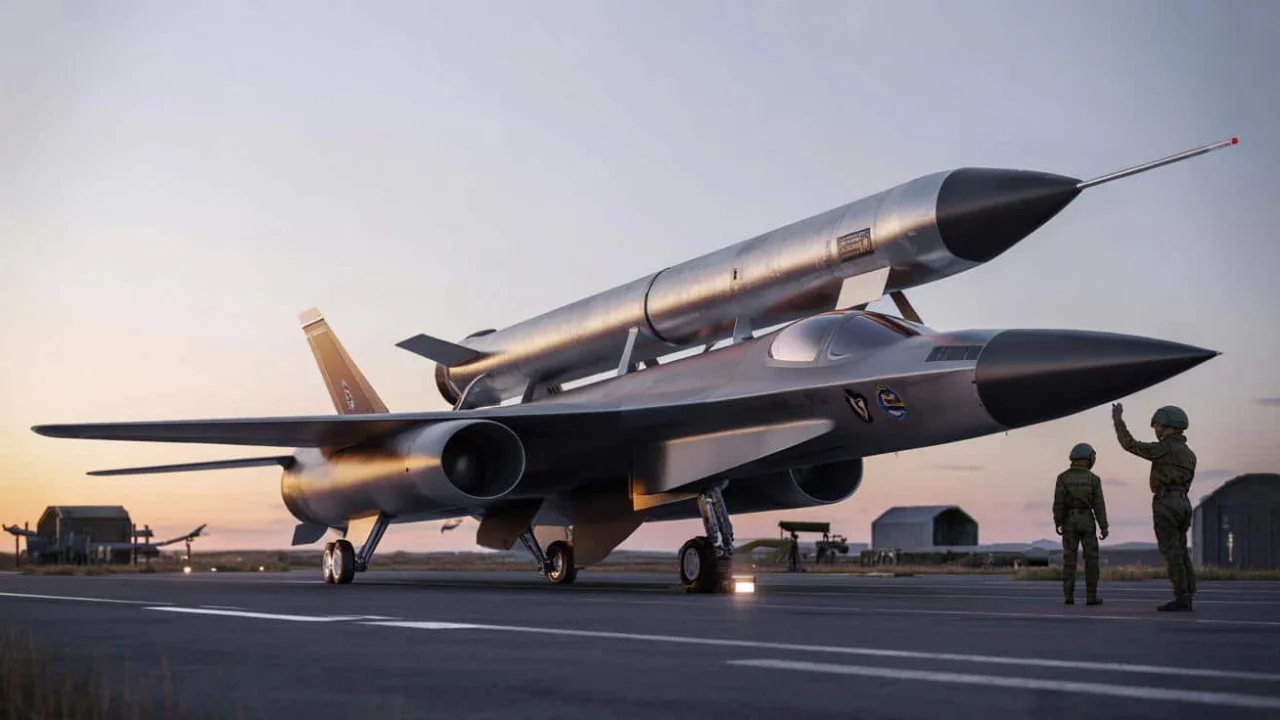
The German defence ministry’s procurement agency, BAAINBw, has awarded Polaris Raumflugzeuge a contract to develop the HYTEV (Hypersonic Test and Experimentation Vehicle). This isn’t just another paper study – it’s a commitment to build and fly actual hardware that travels faster than Mach 5.
What makes this project revolutionary is its focus on reusability. While other nations pour billions into single-use hypersonic missiles, Germany is betting on aircraft that can land, refuel, and fly again – just like commercial airliners, but at five times the speed of sound.

“The reusable hypersonic aircraft represents a fundamental shift in how we think about extreme-speed flight,” explains Dr. Andreas Weber, a hypersonics researcher at the German Aerospace Center. “Instead of expensive missiles, we’re talking about aircraft that could theoretically operate daily missions.”
Polaris, a spin-off from the prestigious German Aerospace Center (DLR), confirmed the contract award on LinkedIn, marking a transition from theoretical research to practical engineering. The company promises operational capability by the end of 2027 – an ambitious timeline that has caught industry observers by surprise.

Breaking Down the Technical Marvel
The HYTEV system represents cutting-edge engineering that pushes the boundaries of what’s currently possible. Understanding its specifications helps reveal why this project could reshape aerospace technology:
| Specification | Details |
|---|---|
| Configuration | Two-stage, horizontally launched |
| Size | Fighter aircraft dimensions |
| Reusability | Fully reusable system |
| Speed | Hypersonic (Mach 5+) |
| Timeline | Operational by end of 2027 |
| Developer | Polaris Raumflugzeuge |
The two-stage design means the aircraft consists of a carrier vehicle that launches a smaller hypersonic craft at altitude. This approach offers several advantages:

- Reduces fuel requirements for the hypersonic stage
- Allows conventional takeoff and landing operations
- Enables flexible mission profiles and orbital insertions
- Provides redundancy and safety through staged operations
- Supports both atmospheric and space-bound missions
“What’s remarkable about the German approach is its practicality,” notes Sarah Mitchell, a defense analyst at the European Security Institute. “While others focus on weapons, Germany is building a platform that could serve multiple purposes – reconnaissance, satellite deployment, even eventual passenger transport.”
The project builds on years of preliminary work. In 2021, BAAINBw awarded Polaris an initial €250,000 study contract to assess how spaceplane technology could support rapid reconnaissance missions. That modest beginning has now evolved into a full development program with significantly higher stakes.
Real-World Impact Beyond Military Applications
The implications of Germany’s reusable hypersonic aircraft extend far beyond military reconnaissance. This technology could fundamentally alter multiple industries and reshape global transportation networks.
For military applications, a reusable hypersonic aircraft offers unprecedented capabilities. Traditional surveillance satellites follow predictable orbits that adversaries can track and avoid. A hypersonic reconnaissance aircraft could appear over any target within hours, collect intelligence, and return to base – all while remaining nearly impossible to intercept.
“The strategic advantage is enormous,” explains Colonel retired Hans Mueller, former Luftwaffe pilot and current aerospace consultant. “Imagine being able to overfly any global hotspot within six hours of receiving orders, then returning with fresh intelligence the same day.”
The civilian implications might prove even more transformative. Reusable hypersonic technology could revolutionize satellite deployment, making space access routine and affordable. Instead of waiting months for launch windows, satellites could be deployed on-demand using hypersonic aircraft that operate like cargo planes.
Space tourism represents another potential market. While current space tourism requires massive rockets and carries enormous risks, a reusable hypersonic aircraft could offer suborbital flights with airplane-like safety margins and operational frequency.
The economic ripple effects could reach across Europe. Germany’s early lead in reusable hypersonic technology positions European aerospace companies to compete with American giants like SpaceX and Blue Origin. Success could attract billions in investment and thousands of high-tech jobs to European manufacturing centers.
Environmental considerations also favor reusable systems. Traditional rockets burn massive amounts of fuel for single-use missions. Reusable hypersonic aircraft could significantly reduce the environmental cost of accessing space while increasing mission frequency.
However, significant challenges remain. Hypersonic flight generates extreme temperatures that can destroy conventional aircraft materials. The engines must operate efficiently across a huge speed range, from conventional takeoff to Mach 5+ cruise. Navigation and control systems must function in the harsh hypersonic environment.
“The technical hurdles are immense, but not insurmountable,” observes Dr. Elena Rodriguez, a propulsion specialist at Madrid Technical University. “Germany’s methodical engineering approach gives them a real chance at success where others have struggled.”
The timeline remains aggressive. Moving from contract award to operational capability in less than three years requires everything to go perfectly. Component testing, flight trials, and safety certification typically take much longer in aerospace development.
Yet Polaris appears confident in their approach. The company’s background as a DLR spin-off provides access to decades of German hypersonic research and proven aerospace expertise. Their focus on incremental development rather than revolutionary leaps could prove the key to meeting their ambitious schedule.
FAQs
What makes this hypersonic aircraft different from existing technology?
Unlike single-use hypersonic missiles, Germany’s aircraft is designed to be fully reusable, landing and flying again like conventional aircraft but at speeds exceeding Mach 5.
How fast is hypersonic speed?
Hypersonic speed begins at Mach 5, which equals about 3,800 miles per hour or 6,100 kilometers per hour at sea level.
When will the German hypersonic aircraft be ready?
Polaris Raumflugzeuge promises operational capability by the end of 2027, though this timeline is considered aggressive by industry standards.
Could this technology be used for civilian purposes?
Yes, potential civilian applications include satellite deployment, space tourism, ultra-fast cargo transport, and scientific research missions.
Who is building Germany’s reusable hypersonic aircraft?
Polaris Raumflugzeuge, a spin-off company from the German Aerospace Center (DLR), received the contract from Germany’s defense procurement agency.
How does the two-stage system work?
A larger carrier aircraft launches a smaller hypersonic vehicle at altitude, reducing fuel requirements and enabling conventional airport operations for the carrier stage.
About the Author