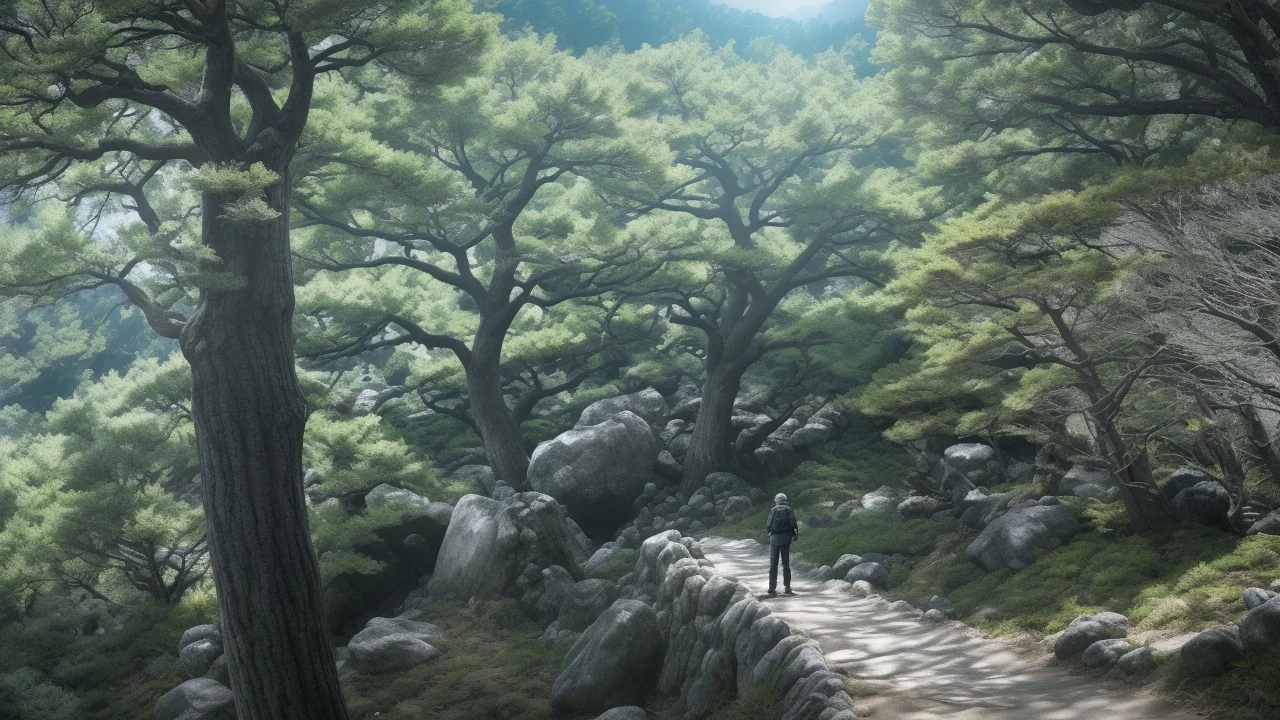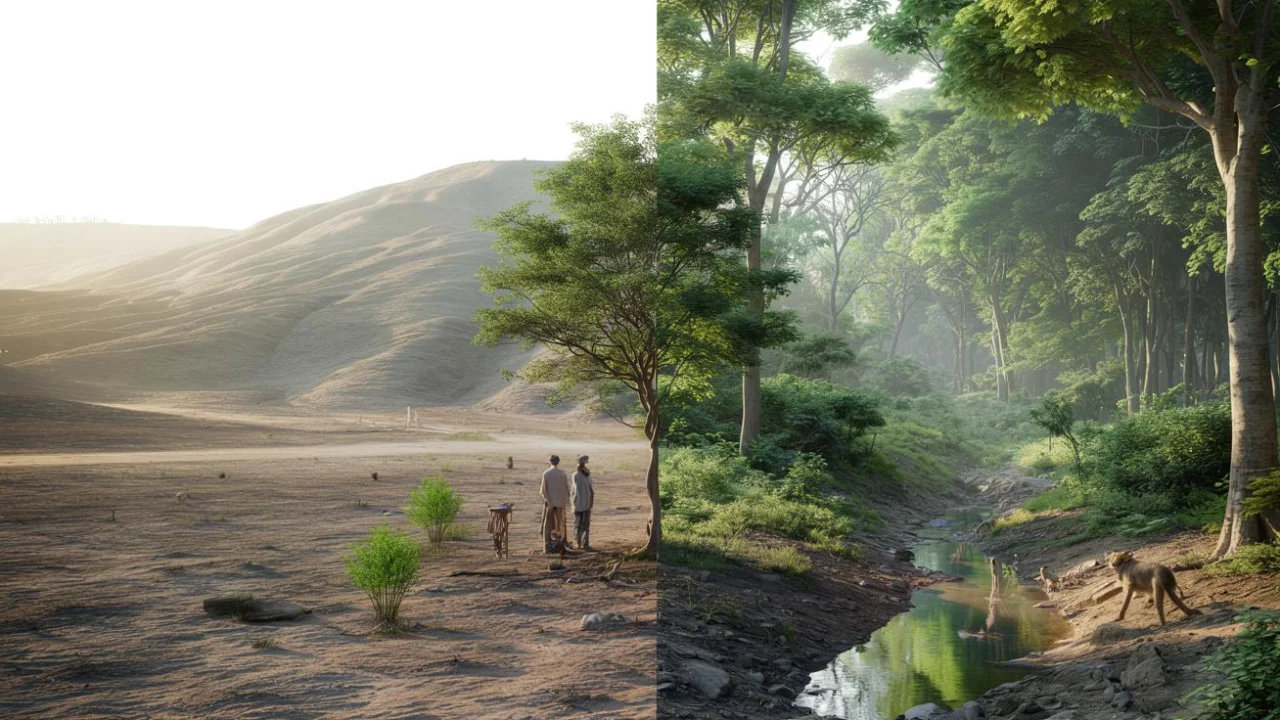
Maria remembers the exact moment she knew something had changed. Standing in her grandmother’s backyard in rural Guatemala, she watched her five-year-old daughter chase butterflies between towering cecropia trees. The same spot where Maria had played as a child was nothing but cracked earth and stubble back then.

“My daughter will never know what this place looked like when I was her age,” Maria says, running her fingers along the bark of a tree that’s now taller than her house. “She’ll grow up thinking forests just… exist.”
That’s the quiet miracle of reforestation playing out across the globe. What starts as an act of faith—planting tiny saplings in hostile soil—becomes the foundation for entirely new ecosystems a generation later.

How dead land comes back to life
The transformation doesn’t happen overnight, but when it does happen, it’s breathtaking. Walk through what used to be a barren valley in Northern China’s Loess Plateau and you feel it instantly. The ground is softer, darker, almost springy underfoot. Birds slice through the air where dust devils once ruled.
Dr. Sarah Chen, who’s studied forest recovery for two decades, puts it simply: “We’re not just planting trees. We’re rebuilding the entire operating system of the land.”

What you’re seeing isn’t just trees growing—it’s carbon being pulled from the sky and locked into wood, leaves, and soil. A place that once reflected heat and blew topsoil into neighboring provinces now behaves like a giant, living sponge.
Costa Rica offers one of the most striking examples. In the 1980s, the country had lost most of its forests to cattle ranching and logging. Hills were shaved clean, rivers shrank, and farmers watched their crop yields slip year after year.

Then came a radical policy shift: paying landowners to let trees come back naturally. Two and a half decades later, that decision is absorbing several million tons of CO₂ every single year. Former cattle ranches are now dense secondary forests where monkeys swing across what used to be barbed wire fences.
The numbers behind the green revolution
The scale of successful reforestation projects worldwide tells a remarkable story. Here’s what 25 years of dedicated forest restoration looks like in real numbers:

| Region | Area Restored (Million Hectares) | CO₂ Absorbed Annually (Million Tons) | Timeline |
|---|---|---|---|
| Costa Rica | 2.4 | 4.2 | 1985-2010 |
| China’s Loess Plateau | 3.5 | 15.6 | 1999-2024 |
| Atlantic Forest (Brazil) | 1.8 | 8.1 | 1990-2015 |
| Ethiopian Highlands | 1.2 | 3.8 | 2005-2030 |
Scientists now estimate that global reforestation and forest regrowth are absorbing billions of tons of CO₂ annually—a chunk large enough to noticeably slow the rise in atmospheric carbon.
The benefits extend far beyond carbon capture:
- Soil erosion drops by 60-90% within the first decade
- Local rainfall increases by 10-20% as forests mature
- Biodiversity rebounds, with bird species returning first, followed by larger mammals
- Local temperatures drop by 2-5 degrees Celsius under forest canopies
- Water table levels rise as root systems improve soil absorption
“The trees are just the most visible part,” explains Dr. James Rodriguez, an ecological restoration specialist. “Underground, there’s this incredible network of roots, fungi, and microbes working together to lock away carbon and rebuild the soil’s structure.”
Real families, real changes
For the people living through these transformations, the changes feel almost surreal. In Ethiopia’s Tigray region, farmers like Desta Gebru have watched their degraded hillsides transform into productive agroforestry systems over the past two decades.
“My children help me harvest coffee beans from trees we planted when they were toddlers,” Desta says. “The same slopes where we used to lose topsoil every rainy season now give us three different crops.”
The human impact ripples outward in unexpected ways. Tourism has returned to areas that were once ecological dead zones. Young people who might have migrated to cities are finding work as forest guides, tree nursery operators, or ecotourism entrepreneurs.
In Costa Rica’s Monteverde region, former cattle rancher Carlos Mendoza now runs a successful canopy tour business. “Twenty-five years ago, tourists would drive through here and see nothing but grass and cows,” he remembers. “Now they come specifically to see the forest that grew back.”
The economic benefits are measurable too. Property values in reforested areas typically increase by 15-30% over a 20-year period. Water quality improves dramatically, reducing municipal treatment costs. Agricultural yields in nearby areas often increase due to improved microclimates and reduced wind erosion.
But perhaps the most profound change is psychological. Communities that spent decades watching their landscape degrade are now watching it heal. Children grow up with a fundamentally different relationship to their environment.
Dr. Ana Gutierrez, who studies the social impacts of reforestation, notes: “There’s this shift from despair to pride. People start seeing themselves as stewards rather than just survivors.”
The pattern is repeating from India’s degraded mining lands to Rwanda’s reforested hills. When trees return, the math of the atmosphere quietly changes. Roots deepen the soil, which traps even more carbon than the visible trunks above ground. Leaf litter feeds fungi and microbes that lock away additional CO₂ in microscopic networks stretching for miles.
These aren’t instant wins. They’re the long, patient payoff of decisions taken 10, 20, 25 years ago, when planting a sapling looked almost symbolic against a horizon of bare ground. But time has a way of validating faith, and today’s forests stand as proof that damaged land can heal—if we give it the chance.
FAQs
How long does it take for reforestation to show real results?
Most reforestation projects show significant ecological improvements within 10-15 years, with mature forest characteristics developing after 20-25 years.
Does reforestation actually help fight climate change?
Yes, mature reforested areas can absorb 10-40 tons of CO₂ per hectare annually, making them one of the most effective natural climate solutions available.
What’s the difference between reforestation and afforestation?
Reforestation restores forests to areas that were previously forested, while afforestation creates new forests in areas that weren’t historically forested.
Can reforestation work in dry or degraded areas?
Absolutely—some of the most successful projects have been in degraded drylands, using drought-resistant native species and water-conservation techniques.
How much does large-scale reforestation cost?
Costs vary widely, but typically range from $300-3,000 per hectare depending on the location, methods used, and local labor costs.
What happens to wildlife when forests grow back?
Wildlife recovery follows a predictable pattern: insects and small birds return first, followed by larger birds, then small mammals, and eventually larger mammals as the forest matures.
About the Author