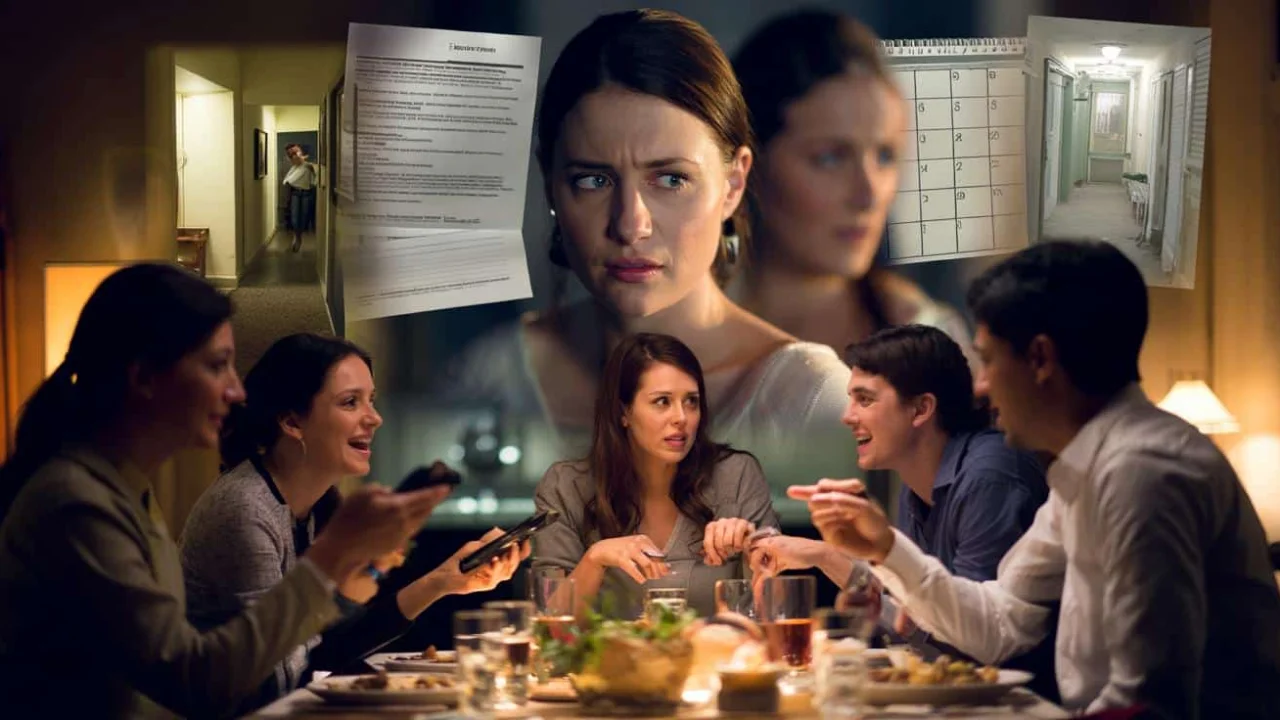
Sarah stared at her wedding photos for the third time that evening, searching for something she couldn’t name. The images were perfect – her dress flowing, her husband’s smile genuine, guests dancing under string lights. But as she flipped through each memory, a familiar hollow feeling crept in. She remembered standing at the altar, supposedly the happiest moment of her life, yet her mind had been racing through the reception timeline, worrying about her grandmother’s mobility, calculating if the photographer was getting enough shots.

The most beautiful day of her life had felt like watching someone else’s movie. She was there, but not really there.
If this sounds familiar, you’re not alone. Psychology reveals that certain people struggle deeply with staying present, even during life’s peak moments. Their minds operate like restless travelers, constantly departing from the current moment to visit yesterday’s regrets or tomorrow’s anxieties.

The science behind our wandering minds
Researchers call it the “default mode network” – a collection of brain regions that activate when we’re not focused on specific tasks. For some people, this network runs like a hyperactive commentator, constantly narrating, analyzing, and predicting instead of simply experiencing.
“Think of it like having a radio that won’t turn off,” explains Dr. Michael Chen, a cognitive psychologist at Stanford University. “While others can tune into the present station clearly, some brains are constantly scanning frequencies, picking up static from past and future channels.”

This mental time travel isn’t inherently bad. Our ability to learn from the past and plan for the future kept our species alive. But when the volume gets turned up too high, the present moment becomes background noise to an internal dialogue that never stops.
People with anxiety disorders, depression, or trauma histories often struggle most with present-moment awareness. Their brains learned to stay vigilant, scanning for threats or problems to solve. What once protected them now prevents them from fully experiencing joy, connection, or simple contentment.
Who gets trapped outside the present moment
Research identifies several key groups who commonly struggle with present-moment enjoyment:
- High achievers and perfectionists – Their minds constantly evaluate performance and plan improvements
- People with anxiety disorders – Hypervigilant brain patterns make relaxation feel dangerous
- Trauma survivors – Past experiences trained their minds to stay alert for potential threats
- Chronic worriers – They believe constant mental rehearsal prevents future problems
- People-pleasers – Always analyzing social interactions and planning how to maintain approval
- Those with ADHD – Racing thoughts and distractibility pull attention away from current experiences

“The irony is that people who most need present-moment peace are often the least able to access it,” notes Dr. Rachel Martinez, a mindfulness researcher at UCLA. “Their protective mechanisms become prisons.”
| Mindset Pattern | Present-Moment Impact | Common Triggers |
|---|---|---|
| Perfectionist thinking | Constantly evaluating and improving experiences rather than enjoying them | Social events, achievements, creative activities |
| Catastrophic planning | Mind jumps to worst-case scenarios during positive moments | Travel, celebrations, new opportunities |
| Rumination loops | Replaying past conversations or mistakes during current interactions | Quiet moments, social situations, bedtime |
| Future-focused anxiety | Unable to enjoy current success due to worry about maintaining it | Achievements, relationships, financial gains |
What this means for daily life
The inability to stay present doesn’t just steal joy from big moments – it erodes the fabric of everyday contentment. People describe feeling like spectators to their own lives, watching experiences happen rather than inhabiting them fully.
Take Marcus, a successful architect who realized he’d been mentally designing buildings during his daughter’s bedtime stories for months. Or Jennifer, who spent her entire vacation planning the next trip instead of enjoying the beach in front of her.
“I achieved everything I thought I wanted, but I felt like I was living behind glass,” shares one therapy client. “Success, love, beautiful moments – they all felt muted, like someone had turned down the volume on my life.”
This psychological pattern affects relationships too. Partners, friends, and family members often sense when someone is physically present but mentally absent. The delayed smiles, the half-second pause before responding, the eyes that look through rather than at people during conversations.
Dr. Lisa Thompson, a family therapist, observes: “Children especially notice when their parents are there but not there. It creates a subtle but profound sense of disconnection, even in loving families.”
The good news? Psychology also reveals that present-moment awareness is a skill that can be developed. Small practices like naming five things you can see right now, feeling your feet on the ground, or taking three conscious breaths can gradually retrain distracted minds.
Some people benefit from mindfulness meditation, others from therapy that addresses underlying anxiety or trauma. The key is recognizing that struggling with the present moment isn’t a character flaw – it’s often a sign of a protective mind that learned to stay busy to feel safe.
The dinner table is still there. The laughter is still happening. The warmth is still available. Sometimes we just need to teach our minds how to come home.
FAQs
Why can’t I enjoy good moments when they happen?
Your brain may be stuck in protective mode, constantly scanning for problems or planning ahead instead of experiencing the present. This often develops from anxiety, perfectionism, or past experiences that taught your mind to stay vigilant.
Is it possible to train myself to be more present?
Yes, present-moment awareness is a learnable skill. Simple practices like mindful breathing, naming what you can see and hear, or setting phone-free time periods can gradually retrain your attention.
Does medication help with being unable to stay present?
For some people, treating underlying anxiety or depression with medication can quiet the mental chatter enough to access present-moment experiences more easily. However, therapy and mindfulness practices are often equally important.
Why do I feel guilty when I try to relax and be present?
Many people unconsciously believe that constant mental activity keeps them safe or productive. Relaxing into the present can trigger guilt or fear that they’re being irresponsible, even when rest is exactly what they need.
Can trauma make it harder to enjoy the present moment?
Absolutely. Trauma often creates hypervigilant brain patterns where scanning for danger feels safer than relaxing into current experiences. Trauma-informed therapy can help address these protective mechanisms.
How do I know if my inability to stay present is a serious problem?
If present-moment struggles are affecting your relationships, preventing you from enjoying achievements, or causing significant distress, it’s worth speaking with a mental health professional who can help identify underlying causes and solutions.
About the Author
