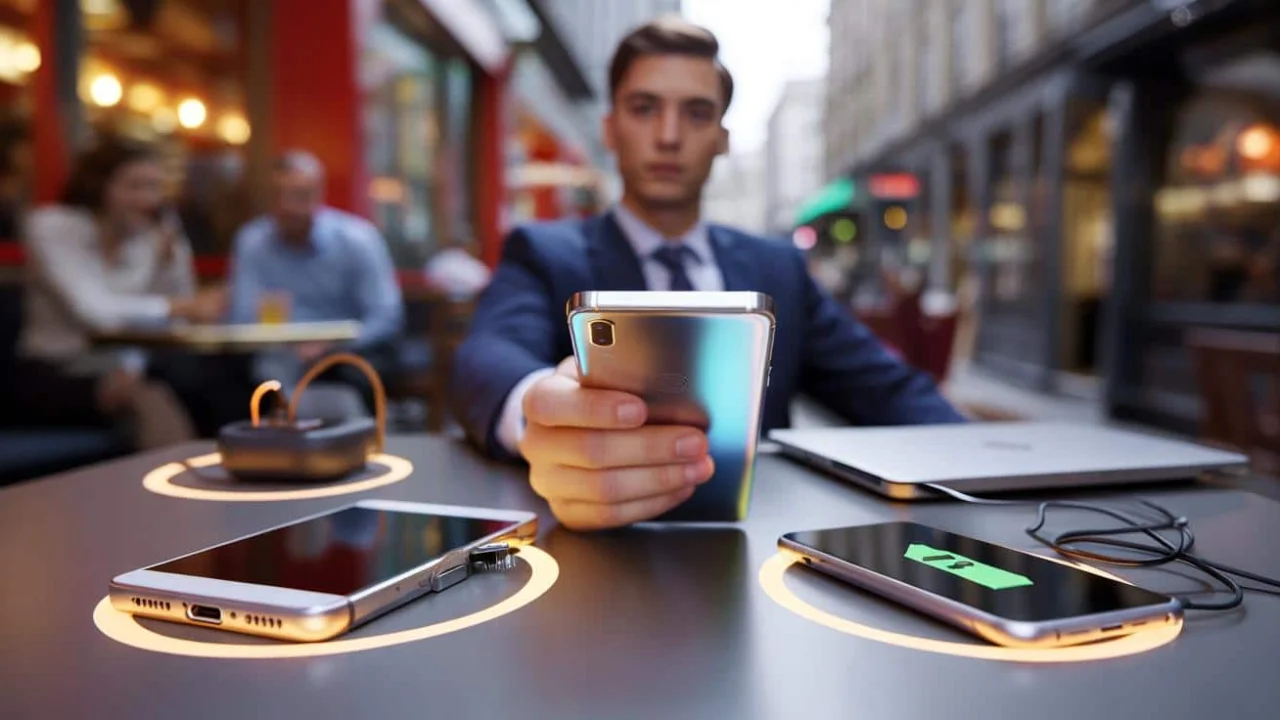
Sarah fumbles with her phone charger in the dark corner of a Berlin coffee shop, trying to plug in the USB-C cable for the third time. The port feels loose, wobbling when she moves the device. Pocket lint has accumulated around the edges again, and she can already see tiny scratches from months of daily plugging and unplugging.

Across the street, in a sleek EU regulatory office, policymakers are drafting guidelines that could make Sarah’s charging frustrations a relic of the past. They’re not just planning the next phone connector—they’re planning the last one.
The future of smartphones might be completely smooth, with no holes, no ports, and no physical connections at all. And surprisingly, it’s the European Union’s push for universal charging standards that’s accelerating this dramatic shift toward portless smartphones.

How EU Regulations Are Accidentally Killing the Port
The EU’s common charger directive seemed straightforward when it passed: force all smartphone makers to use USB-C by 2024. No more proprietary Lightning cables, no more drawer full of incompatible chargers. Just one universal standard to reduce electronic waste and consumer frustration.
But tech companies are already thinking three steps ahead. Once every phone uses the same port, the argument for keeping that port becomes much weaker. Manufacturers can finally focus on the holy grail of smartphone design: a completely sealed device with no openings whatsoever.

“The USB-C mandate was supposed to be the solution, but it’s actually the bridge to something bigger,” explains tech analyst Marcus Chen. “When you eliminate the chaos of different ports, you make it much easier to eliminate ports entirely.”
Apple has been testing portless smartphone prototypes internally for years, while Samsung and other Android manufacturers have been quietly advancing wireless charging and data transfer technologies. The EU’s standardization push gives them political cover to make this leap.

What Portless Smartphones Actually Mean for Users
Portless smartphones aren’t science fiction anymore—they’re engineering reality waiting for market timing. Here’s what this technological shift would actually look like:
| Current USB-C Function | Portless Alternative | Current Status |
|---|---|---|
| Charging | Wireless charging pads/MagSafe | Already mainstream |
| Data transfer | Wi-Fi, Bluetooth, cloud sync | Mostly sufficient for casual users |
| Wired headphones | Bluetooth audio | Widely adopted |
| Professional data transfer | Magnetic contact points | In development |
The benefits of going portless extend beyond just aesthetics:

- Better waterproofing: No holes means no water damage from unexpected splashes
- Improved durability: Ports are often the first thing to break on smartphones
- Thinner designs: Removing the USB-C port saves precious millimeters of thickness
- Fewer moving parts: Less mechanical wear and tear over time
- Enhanced security: Harder to install physical monitoring devices
“We’re looking at phones that could be essentially indestructible rectangles,” notes hardware engineer Lisa Rodriguez. “No dust getting stuck, no cables wearing out the charging port, no liquid damage through connection points.”
The Real-World Challenges Nobody Wants to Talk About
But portless smartphones also create genuine headaches that manufacturers are still solving. Fast charging over wireless connections remains significantly slower than wired charging. While the newest wireless chargers can deliver 15-30 watts, premium USB-C connections can push 100+ watts for rapid charging.
Professional users who frequently transfer large video files or connect to external monitors would need entirely new workflows. Cloud storage becomes mandatory rather than optional, raising privacy and data cost concerns.
The transition period looks particularly messy. Early portless smartphones would likely ship with magnetic charging accessories that essentially recreate wired charging through contact points rather than insertion. Think Apple’s old MagSafe laptop chargers, but for phones.
“The first generation of truly portless phones will probably feel like a step backward for power users,” admits technology researcher David Park. “But the second generation will make current phones feel clunky and old-fashioned.”
European regulators are already preparing for this shift. New guidelines being drafted would cover wireless charging efficiency standards and electromagnetic compatibility requirements for portless devices.
The automotive industry is watching closely too. Car manufacturers have spent years integrating USB-C connections into vehicle dashboards. Portless smartphones would force another round of costly updates to support wireless Android Auto and CarPlay exclusively.
Consumer adoption might actually happen faster in Europe than elsewhere. EU environmental regulations are pushing manufacturers to design phones that last longer and generate less electronic waste. Portless smartphones, despite their wireless accessories, could actually reduce overall cable waste if they eliminate the need for regular charging cable replacements.
Some manufacturers are already testing hybrid approaches: phones with concealed contact points that only activate when specific magnetic accessories are attached. This would preserve emergency data transfer capabilities while achieving the sealed design benefits of truly portless devices.
The timeline for mainstream portless smartphones keeps accelerating. What seemed like a distant future concept just five years ago now looks inevitable by 2027 or 2028, driven partly by EU regulations that inadvertently cleared the technical and political obstacles.
FAQs
Will portless smartphones charge slower than current phones?
Initially yes, but wireless charging technology is rapidly improving and should reach comparable speeds within a few years.
How would I transfer files to a computer without a USB port?
Through Wi-Fi, cloud services, or magnetic contact accessories that would replace traditional cables for professional use.
Are portless smartphones more expensive to repair?
Potentially less expensive, since ports are common failure points that require expensive motherboard repairs when damaged.
Will this affect phone cases and accessories?
Yes, the entire accessory ecosystem would shift toward magnetic attachment systems and wireless connectivity.
Can I still use wired headphones with a portless smartphone?
Only through Bluetooth adapters or potentially through new magnetic audio connectors that manufacturers might develop.
When will the first mainstream portless smartphone launch?
Industry analysts expect major manufacturers to announce portless flagship devices between 2026 and 2028.
About the Author