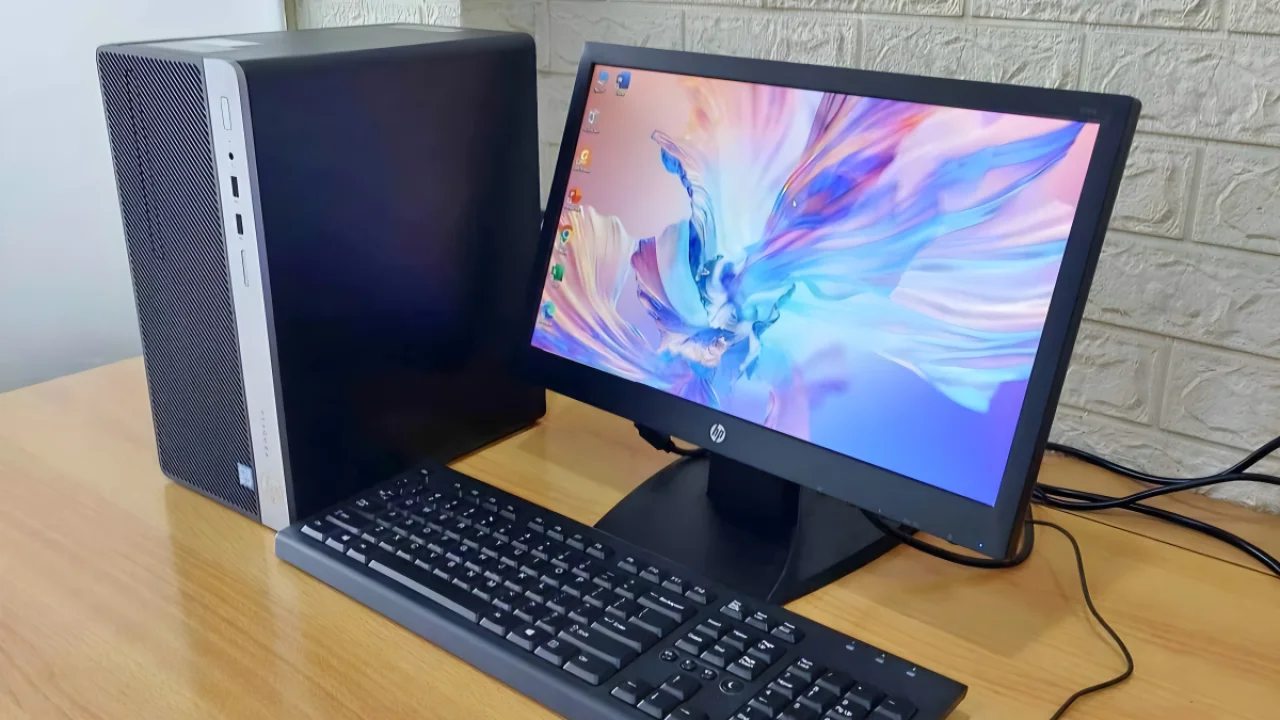
Sarah was deep into a video call with her team when it happened again. Her laptop started heating up, the fan kicked into overdrive, and suddenly she sounded like she was broadcasting from inside a wind tunnel. “Sorry, can you repeat that?” became her catchphrase as colleagues strained to hear her over the mechanical whirring.

It’s a scene playing out in home offices worldwide. We’ve all been there – that moment when your laptop decides to transform into a miniature jet engine just when you need it most. But what if that familiar soundtrack of modern computing could finally fall silent?
A breakthrough plasma cooling laptop from YPlasma, a US-Spanish startup, promises to end the age of noisy fans forever. Their revolutionary design uses space-age plasma technology to keep computers cool without a single moving part.

When Your Laptop Runs Out of Breath
Every laptop owner knows the telltale signs of thermal distress. The chassis grows uncomfortably warm against your legs. Performance mysteriously slows down during important tasks. And those fans – oh, those fans – spin faster and louder until your sleek machine sounds like a hair dryer having a breakdown.
The problem has only gotten worse as manufacturers pack more powerful AI-ready processors into increasingly thin designs. Traditional cooling systems are hitting their limits, struggling to move enough air through cramped internal spaces.

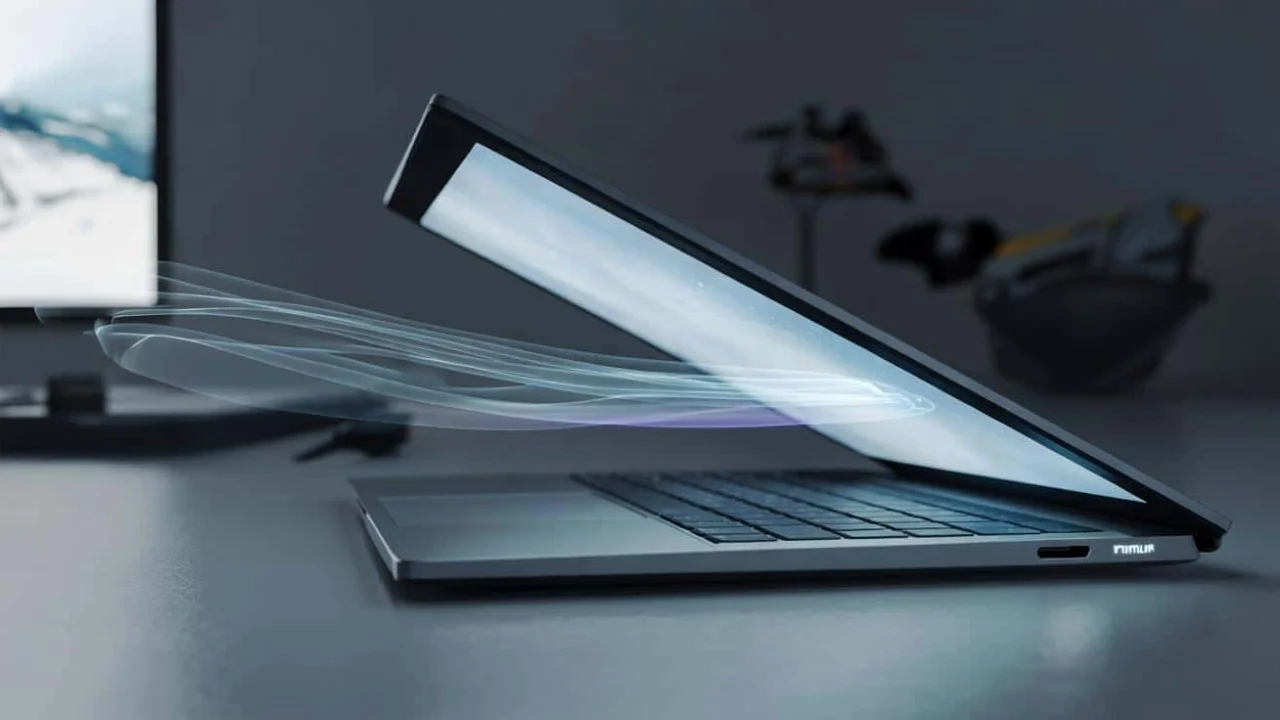
YPlasma believes they’ve found the solution in dielectric barrier discharge (DBD) technology. Instead of mechanical fans with spinning blades, their plasma cooling laptop generates what’s called an “ion wind” using high-voltage electrodes.
“We’re essentially creating controlled lightning to move air,” explains the company’s lead engineer. “The plasma ionizes air molecules and pushes them across hot surfaces with incredible efficiency.”

The Science Behind Silent Cooling
Here’s where things get fascinating. The entire cooling system fits into a film just 200 microns thick – that’s one-fifth of a millimeter, thinner than most stickers you’d put on your laptop.
This ultra-thin actuator can be attached directly to heat sinks, processor plates, or even the inner walls of a laptop chassis. When voltage is applied, it creates an invisible wind that carries heat away from critical components.

| Traditional Fan Cooling | Plasma Cooling Technology |
|---|---|
| Noise Level: 35-45 dBA | Noise Level: 17 dBA |
| Moving Parts: Multiple | Moving Parts: Zero |
| Thickness: 10-15mm | Thickness: 0.2mm |
| Maintenance: Regular cleaning required | Maintenance: None |
| Dust Issues: Common | Dust Issues: Minimal |
The key advantages go beyond just noise reduction:
- No mechanical wear and tear means longer laptop lifespan
- Dust can’t clog non-existent fan grilles
- Ultra-thin design allows for sleeker laptop profiles
- Instant response time – no spin-up delay
- Lower power consumption than traditional fans
“The silence is almost eerie at first,” says a beta tester who’s been using an early prototype. “You keep waiting for that familiar fan noise, but it never comes. Just pure, uninterrupted quiet.”
What This Means for Everyone
The implications of successful plasma cooling laptop technology extend far beyond just quieter computers. Remote workers could finally take calls without acoustic interruptions. Students could study in libraries without dirty looks from librarians. Gamers could stream without constant background noise.
But the benefits run deeper than convenience. Traditional laptop fans are among the first components to fail, often requiring expensive repairs or complete system replacement. A plasma cooling system has no moving parts to break down, potentially extending laptop lifespans by years.
The technology could also enable entirely new laptop designs. Without the need to accommodate bulky cooling fans and their required airflow paths, manufacturers could create impossibly thin devices or pack more performance into existing form factors.
“We’re not just replacing fans,” notes a thermal management expert familiar with the technology. “We’re potentially redefining what a laptop can be.”
The environmental impact could be significant too. Longer-lasting laptops mean fewer devices in landfills. More efficient cooling could reduce overall power consumption, especially important as AI workloads push energy usage higher.
YPlasma plans to demonstrate their prototype at CES 2026 in Las Vegas, where tech journalists and industry insiders will get their first hands-on experience with truly silent computing. Early reports suggest the system performs comparably to traditional cooling while operating at just 17 decibels – quieter than a whisper.
The road to commercialization won’t be without challenges. Manufacturing costs need to come down. Long-term reliability must be proven. And laptop makers will need time to redesign their products around the new cooling paradigm.
“Every disruptive technology faces skepticism,” admits a YPlasma spokesperson. “But once people experience truly silent, efficient cooling, there’s no going back to mechanical fans.”
For now, the plasma cooling laptop remains a prototype. But if YPlasma delivers on their promises, the distinctive hum of laptop fans could soon become as obsolete as dial-up internet sounds – a nostalgic reminder of computing’s noisier past.
FAQs
How does plasma cooling actually work?
It uses high-voltage electrodes to create charged particles (plasma) that generate an ion wind, moving air across hot components without any mechanical parts.
Is plasma cooling technology safe for everyday use?
Yes, the system operates at low power levels and is completely contained within the laptop chassis, posing no safety risks to users.
When will plasma cooling laptops be available to buy?
YPlasma is targeting commercial availability within 2-3 years, pending successful demonstrations and partnerships with major laptop manufacturers.
Will plasma cooling work with gaming laptops that generate lots of heat?
Early tests suggest the technology scales well for high-performance applications, though final specifications are still being refined.
How much will plasma cooling add to laptop costs?
The company hasn’t announced pricing, but aims to make the technology cost-competitive with traditional cooling systems at scale.
Can existing laptops be retrofitted with plasma cooling?
No, the technology requires integration during manufacturing, as the cooling system must be built into the laptop’s internal architecture.
About the Author