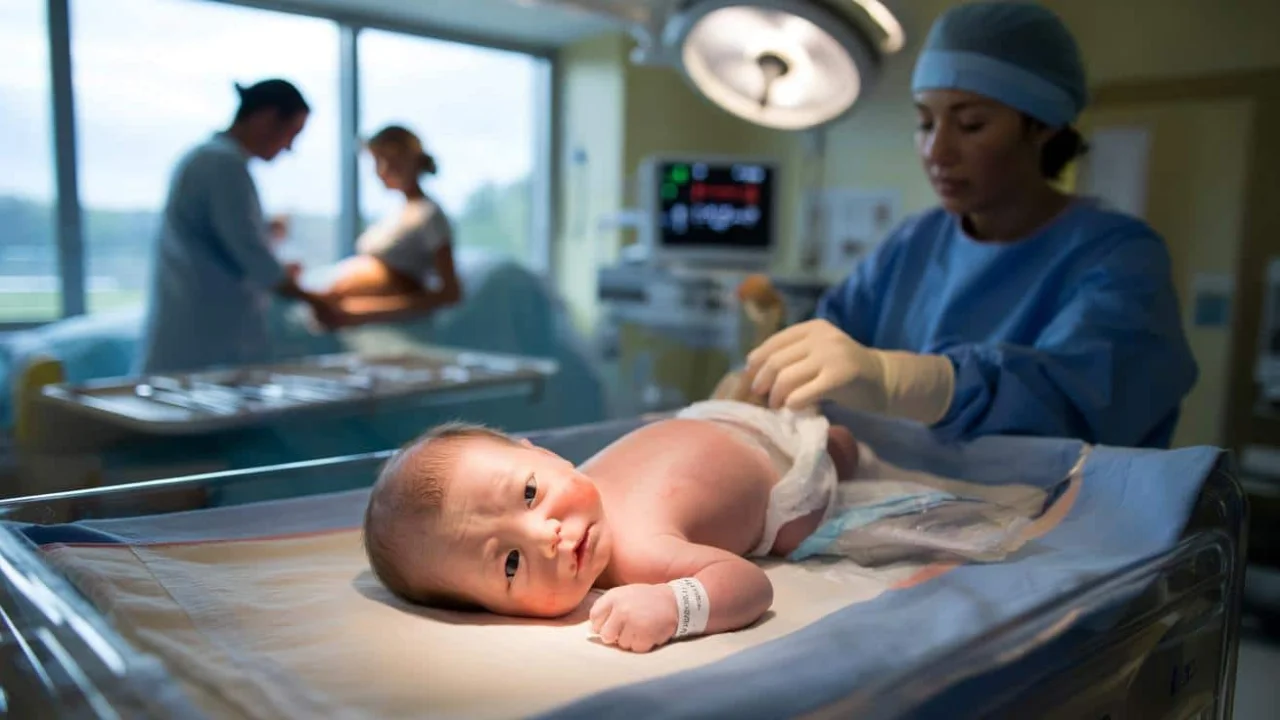
When Sarah booked her planned caesarean section for her first baby, she felt relieved. No unpredictable labor pains, no rushing to the hospital in the middle of the night. The date was circled on her calendar, and everything seemed perfectly under control.

Like many expectant mothers, Sarah chose this path for convenience and peace of mind. But new research from Sweden might give parents like her something unexpected to consider when weighing their delivery options.
A groundbreaking study involving over 2.4 million births has uncovered a subtle but concerning link between planned caesarean births and childhood leukemia. While the risk remains small, the findings are significant enough to reshape conversations between doctors and parents about delivery choices.

When Scientists Looked Beyond the Delivery Room
Researchers at the Karolinska Institutet didn’t just stumble upon this discovery. They methodically analyzed birth records spanning decades, creating one of the largest studies of its kind ever conducted.
What makes this research particularly powerful is how the scientists approached caesarean sections. Instead of lumping all C-sections together, they made a crucial distinction that previous studies had overlooked.

The team separated planned caesarean births from emergency caesareans, and this split revealed something unexpected. Only children born through scheduled C-sections showed increased leukemia risk. Those delivered via emergency caesarean during active labor showed no such pattern.
“Planned caesarean births were associated with a higher risk of acute lymphoblastic leukaemia, while emergency caesareans did not show the same pattern,” the researchers noted in their findings published in the International Journal of Cancer.

This distinction suggests something specific about the timing or circumstances of planned caesarean births may influence a child’s immune system development in ways we’re only beginning to understand.
Breaking Down the Numbers and What They Really Mean
The Swedish study examined acute lymphoblastic leukemia (ALL), the most common childhood cancer. While the increased risk is real, parents need to understand what these numbers actually mean in practical terms.

Here’s what the research revealed:
- Children born via planned caesarean showed roughly 20% higher odds of developing ALL
- The absolute risk remains very small – ALL affects about 3-4 children per 100,000 annually
- Emergency caesareans showed no increased risk compared to vaginal births
- Other childhood cancers like brain tumors showed no connection to planned C-sections
| Birth Method | Relative ALL Risk | What This Means |
|---|---|---|
| Vaginal birth | Baseline | Normal risk level |
| Emergency caesarean | No increase | Same as vaginal birth |
| Planned caesarean | 20% higher | Small but measurable increase |
The researchers took extraordinary care to account for other factors that might skew their results. They excluded children with genetic conditions known to increase cancer risk and adjusted for variables like birth weight, parents’ education levels, and maternal smoking.
“We controlled for every factor we could think of that might confuse the results,” explained one of the study authors. “The pattern held steady across different groups and time periods.”
The specificity of the findings – affecting only ALL and only planned caesareans – suggests this isn’t a random statistical fluke but points to a genuine biological mechanism.
What This Means for Expecting Parents and Medical Practice
These findings don’t mean parents should avoid planned caesarean births entirely. Many women have legitimate medical reasons for scheduling C-sections, from previous complications to breech presentations.
However, the research does add another factor to consider when the choice between vaginal birth and elective caesarean is genuinely open.
Dr. Maria Feychting, one of the study’s senior authors, emphasized the need for balanced decision-making: “These results should be part of the conversation, but they need to be weighed against other factors including maternal health and safety.”
The timing element raises intriguing questions about why planned caesareans specifically carry this risk. Some theories include:
- Missing exposure to beneficial bacteria during vaginal birth
- Lack of stress hormones released during natural labor
- Different timing of first breath and immune system activation
- Subtle differences in early immune system programming
For healthcare providers, these findings suggest a need for more nuanced discussions with patients. Rather than simply presenting caesareans as equally safe alternatives, doctors might need to explore the long-term implications more thoroughly.
“We’re not telling people what to do,” noted another researcher involved in the study. “We’re giving them better information to make informed choices.”
The research also highlights gaps in our understanding of how birth methods influence long-term health. While we’ve long known that vaginal birth provides some immune system benefits, this study suggests the effects may be more profound and long-lasting than previously realized.
For parents who’ve already had planned caesarean births, these findings shouldn’t cause panic. The absolute risk remains very low, and acute lymphoblastic leukemia, while serious, has high cure rates with modern treatment.
Moving forward, this research will likely influence guidelines for elective caesareans and spark additional studies into the mechanisms behind these associations. Understanding exactly why planned caesarean births carry this risk could lead to interventions that preserve the benefits of scheduled delivery while minimizing potential downsides.
The Swedish study represents just one piece of a larger puzzle about how our earliest experiences shape lifelong health. As science continues uncovering these connections, expecting parents will have increasingly sophisticated information to guide their most important decisions.
FAQs
How much does planned caesarean birth actually increase leukemia risk?
The increase is about 20% relative to vaginal birth, but since childhood leukemia is rare to begin with, this translates to a very small absolute increase in risk.
Do emergency caesareans carry the same risk as planned ones?
No, the study found that emergency caesareans performed during active labor showed no increased leukemia risk compared to vaginal births.
Should I change my planned caesarean based on this study?
Discuss the findings with your doctor alongside other factors like your medical history and circumstances. The risk increase is small and may be outweighed by other considerations.
Why might planned caesareans specifically increase this risk?
Scientists aren’t certain, but theories include missing beneficial bacterial exposure, lack of labor-related hormones, and differences in immune system development timing.
Does this affect other childhood cancers besides leukemia?
The study found no association between planned caesareans and other childhood cancers like brain tumors or lymphomas, suggesting the effect is specific to acute lymphoblastic leukemia.
If my child was born via planned caesarean, should I be worried?
While there’s a small increased risk, childhood leukemia remains rare overall and has high cure rates with modern treatment. Regular pediatric checkups remain the best approach.
About the Author
