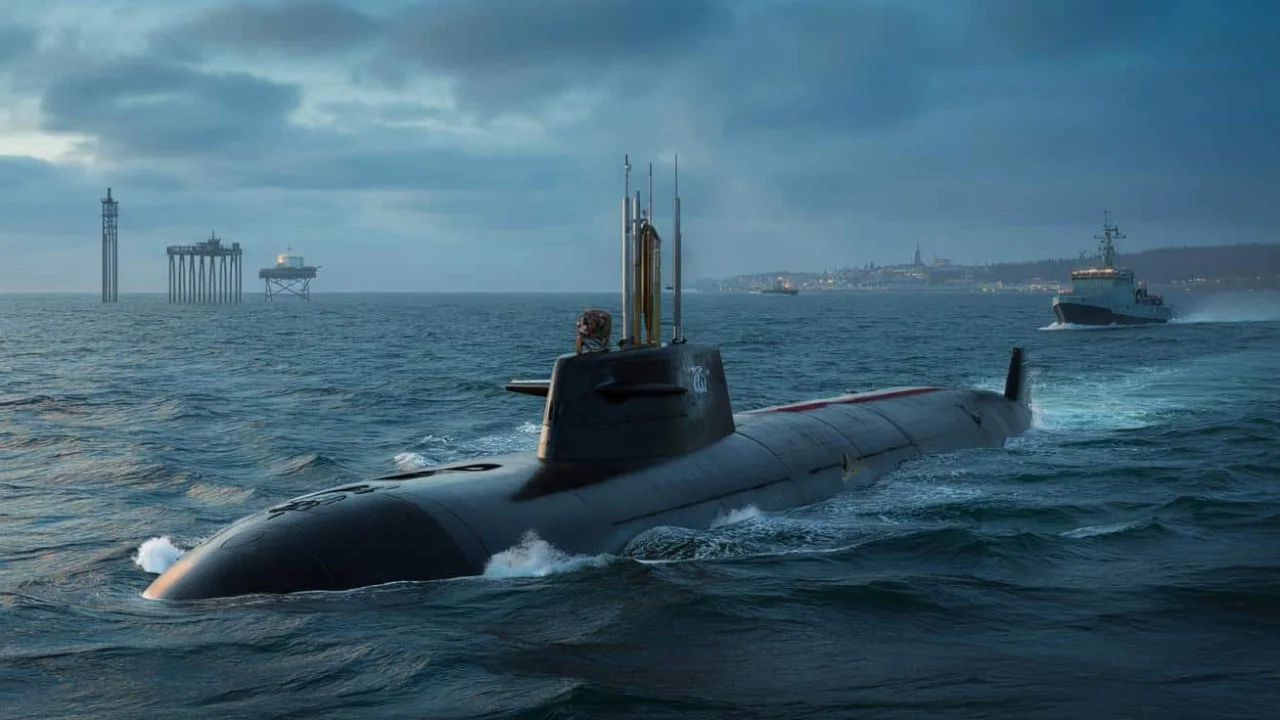
When Admiral Krzysztof Jaworski first stepped aboard the ORP Orzeł in 2019, he couldn’t shake the feeling he was touring a museum piece. The submarine’s controls looked like they belonged in a 1980s science fiction movie, complete with analog dials and switches that clicked with Soviet-era mechanical precision. “This is what we’re defending Poland with?” he thought, watching his crew navigate systems that predated the fall of the Berlin Wall.
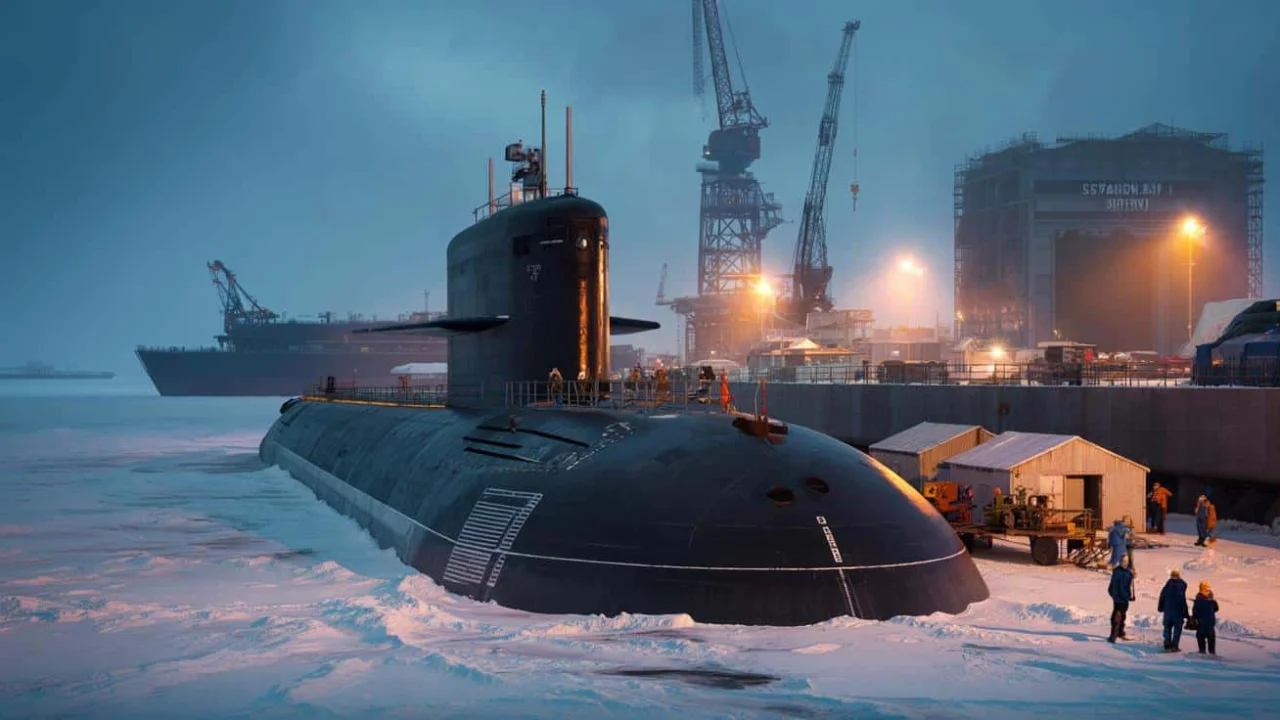
That moment of realization wasn’t just about outdated technology. It was about Poland’s vulnerability beneath the waves, in waters where Russian submarines now prowl with increasing frequency and underwater cables carry the digital lifeblood of European commerce.
Today, that vulnerability is finally being addressed. Poland’s Orka programme has chosen its champion, and the decision is sending shockwaves through European defense circles in ways few anticipated.
Sweden Wins the Underwater Chess Game
Poland has picked Saab’s A26 Blekinge-class submarine design for its crucial Orka programme, effectively ending France’s Naval Group ambitions in the Baltic. After a decade of delays, political maneuvering, and technical evaluations, Warsaw made a choice that surprised even seasoned defense analysts.
The Orka programme represents more than just replacing Poland’s aging Soviet-era submarine. It’s about establishing a credible underwater deterrent in the Baltic Sea, where tensions have escalated dramatically since Russia’s invasion of Ukraine.
“The Baltic has become Europe’s most contested underwater battlefield,” explains maritime security expert Dr. Anna Kowalski. “Poland needed submarines that could operate effectively in these specific conditions, not generic designs adapted from other theaters.”
Sweden’s A26 design beat out formidable competition from across Europe and beyond. Naval Group’s Scorpène submarines, which have found success in international markets, couldn’t overcome the specific advantages that Saab brought to the table.

What Makes the A26 Special for Baltic Operations
The technical details reveal why Poland chose Sweden over France and other contenders. The A26 wasn’t designed as a one-size-fits-all solution – it was specifically engineered for the unique challenges of Baltic Sea operations.
Here’s what sets the Swedish design apart:

- Shallow Water Optimization: The A26 operates effectively in depths as shallow as 20 meters, crucial for Baltic patrols
- Air-Independent Propulsion: Stirling engines allow extended underwater operations without surface detection
- Low Acoustic Signature: Advanced sound dampening for stealth in acoustically complex Baltic waters
- Modular Payload System: Flexible mission configurations from surveillance to mine warfare
- Advanced Sonar Integration: Sensor systems optimized for Baltic Sea acoustic conditions
| Specification | Saab A26 | Naval Group Scorpène |
|---|---|---|
| Length | 63 meters | 66.4 meters |
| Crew | 26-28 | 31-36 |
| Diving Depth | 200+ meters | 300+ meters |
| Baltic Experience | Extensive | Limited |
| AIP Duration | 18+ days | 14 days |
The numbers tell only part of the story. Saab’s decades of Baltic operations with the Swedish Navy created institutional knowledge that competitors couldn’t match. “You can’t simulate fifty years of operating in these waters,” notes former Polish Navy commander Captain Tomasz Nowak. “That experience translates into submarines that work better where Poland needs them most.”
The Real Stakes Beyond the Shipyard
Poland’s Orka programme decision reverberates far beyond submarine specifications. It signals a fundamental shift in European defense partnerships and highlights growing concerns about underwater warfare in the Baltic region.
France’s Naval Group has dominated submarine exports globally, with successful programs from Brazil to Australia. The Polish rejection stings particularly because it came after years of diplomatic courtship and technical presentations. French officials had viewed the Orka contract as a natural extension of growing Franco-Polish defense cooperation.
But geopolitical realities shifted the calculation. Sweden’s NATO membership application, strongly supported by Poland, created new opportunities for defense collaboration. The A26 selection strengthens Nordic-Baltic security ties at a time when the region faces unprecedented pressure.
“Poland is betting on Sweden as a long-term strategic partner,” explains defense analyst Maria Johansson from Stockholm International Peace Research Institute. “This isn’t just about submarines – it’s about creating a Baltic defense ecosystem that can counter Russian naval expansion.”
The impact extends to European industrial cooperation. Polish shipyards will participate in A26 construction, potentially creating a new center for submarine maintenance and upgrades. This technology transfer could position Poland as a regional hub for underwater warfare capabilities.
Russian officials have already expressed concern about enhanced Polish submarine capabilities in the Baltic. The region’s narrow waters and strategic chokepoints make effective submarine operations particularly threatening to Russian naval movements between Kaliningrad and St. Petersburg.
For everyday Europeans, the Orka programme represents protection of critical infrastructure they use daily. Undersea cables carrying internet traffic, electricity interconnectors powering homes, and gas pipelines heating buildings all depend on underwater security that Poland’s new submarines will help provide.
The financial implications are substantial too. The Orka programme contract, valued at approximately €2.5 billion, represents one of Poland’s largest defense acquisitions. Success could lead to additional orders from other Baltic nations seeking similar capabilities.
“Three new A26 submarines will transform Poland’s naval deterrence,” says maritime strategist Dr. Lars Andersen. “But more importantly, they’ll demonstrate that European nations can work together to build specialized defense solutions for regional challenges.”
The ripple effects will influence future submarine competitions across Europe. Nations watching the Orka programme closely include Finland, which is evaluating its own submarine replacement needs, and Germany, which is considering Baltic-optimized designs for its next-generation submarines.
FAQs
What is the Orka programme?
Poland’s submarine acquisition program to replace its aging Soviet-era submarines with modern vessels capable of operating effectively in the Baltic Sea.
Why did Poland choose Saab over Naval Group?
The Swedish A26 design is specifically optimized for Baltic Sea conditions, while Saab has decades of experience operating submarines in these waters.
How many submarines will Poland get?
The initial Orka programme calls for three A26 Blekinge-class submarines, with potential for additional units in the future.
When will the new submarines be delivered?
Delivery of the first A26 submarine is expected in the late 2020s, with all three boats operational by the early 2030s.
What makes the Baltic Sea challenging for submarines?
The Baltic’s shallow depths, low salinity, complex acoustic conditions, and heavy shipping traffic create unique operational challenges requiring specialized submarine designs.
Will other countries buy the A26 design?
Poland’s selection could influence other Baltic nations, particularly Finland and potentially Germany, as they evaluate their own submarine replacement needs.
About the Author