Marie Dubois watched from her apartment window in Brest as a convoy of military trucks rolled through the coastal French city at dawn. Her neighbor, a retired Navy officer, pointed toward the horizon where the silhouette of warships dotted the Atlantic waters. “Haven’t seen this many ships moving at once since the Cold War,” he muttered, adjusting his binoculars.
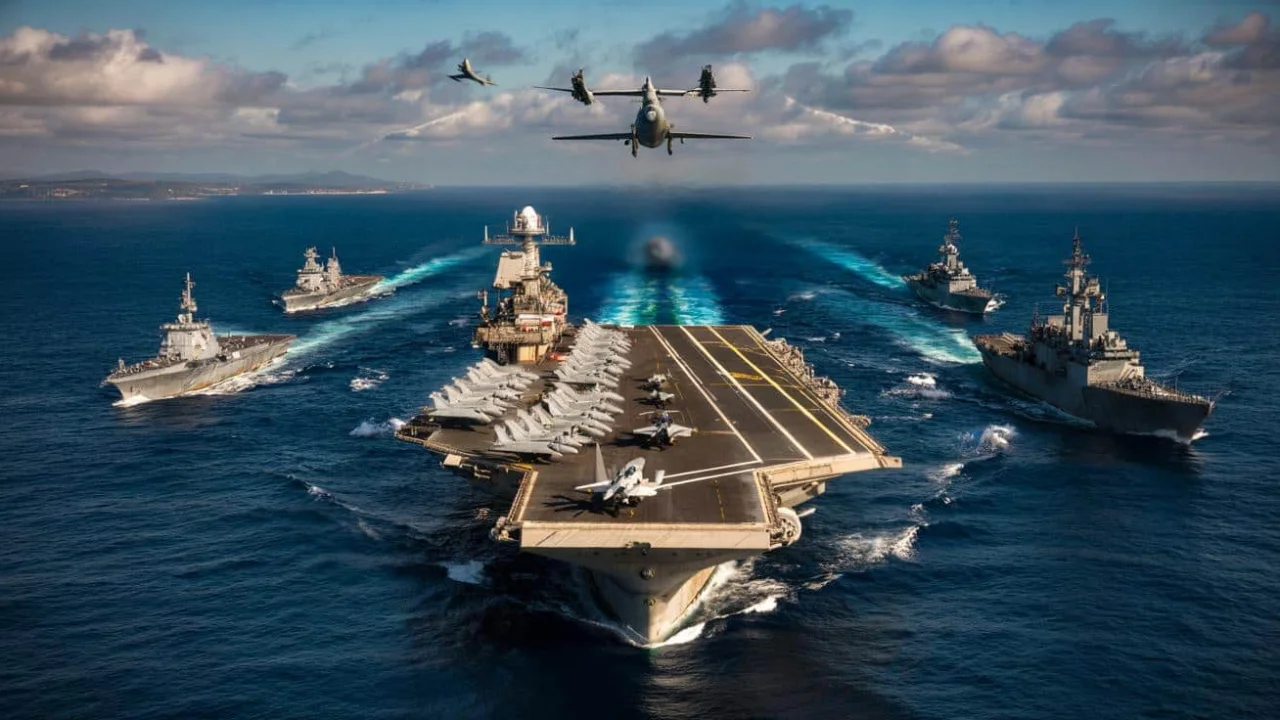
What Marie was witnessing wasn’t preparation for an actual conflict, but something almost as significant. France had just deployed its most powerful naval asset—the nuclear-powered aircraft carrier Charles de Gaulle—along with its entire strike group into Atlantic waters for what military officials are calling the largest war exercise in decades.
The timing feels anything but coincidental. As global tensions rise and European security concerns mount, France is testing whether it could actually lead and sustain a major military coalition if war came knocking on Europe’s door.
Why France moved its flagship from calm seas to rough waters
The Charles de Gaulle carrier strike group quietly slipped out of the Mediterranean on February 5, 2026, marking the beginning of France’s most ambitious military exercise in years. The ORION 26 war exercise represents a dramatic shift in how France prepares for potential future conflicts.
Unlike routine training drills, this months-long operation simulates a full-scale conventional war scenario. The Atlantic Ocean serves as the primary theater, where French forces alongside international allies practice everything from naval combat to protecting vital supply routes from North America.
“The Mediterranean has been our comfort zone for decades,” explains Captain Laurent Moreau, a naval analyst with extensive carrier experience. “Moving to the Atlantic sends a clear message that France is preparing for scenarios that extend far beyond regional conflicts.”
The exercise began when the strike group departed Toulon on January 27, completing initial Mediterranean training before transitioning to the more challenging Atlantic phase. This movement encompasses not just naval operations, but coordinated efforts across French territory, airspace, cyber domains, and even space assets.
What makes ORION 26 different from regular military drills
The scale and complexity of ORION 26 sets it apart from typical military exercises. Here’s what makes this war game particularly significant:
- First major Atlantic deployment of Charles de Gaulle in years
- Integration of all French military branches plus international allies
- Focus on high-intensity conventional warfare scenarios
- Testing of multinational coalition leadership capabilities
- Emphasis on protecting transatlantic reinforcement routes
- Real-time coordination across land, sea, air, cyber, and space domains
The exercise revolves around a fictional but realistic conflict scenario that military strategists describe as uncomfortably plausible. European nations face a major conventional threat, requiring France to coordinate a multinational response while maintaining critical supply lines across the Atlantic.
| Exercise Component | Key Focus Areas | Duration |
| Naval Operations | Carrier strike missions, fleet protection | 3 months |
| Air Combat | Multi-domain air superiority | 2 months |
| Amphibious Assault | Beach landings, coastal operations | 6 weeks |
| Cyber Warfare | Digital defense, information operations | Ongoing |
| Logistics | Supply chain protection, reinforcement | Full exercise |
“What we’re seeing is France testing its ability to be the backbone of European defense,” notes Dr. Sarah Mitchell, a defense policy expert at the International Security Institute. “The Atlantic focus isn’t accidental—it’s where any major reinforcement effort would need to succeed.”
The exercise includes participation from NATO allies and other European partners, though specific details about international involvement remain classified for operational security reasons. What’s clear is that France is positioning itself as the potential leader of a European coalition in scenarios where traditional security arrangements might be strained or unavailable.
How this massive war game affects real people and policies
Beyond the impressive military displays, ORION 26 has tangible impacts on civilian life and international relations. Coastal communities from Brittany to the Bay of Biscay have experienced increased military traffic, flight restrictions, and temporary fishing zone modifications.
Local businesses near naval bases report significant economic activity as thousands of military personnel require lodging, meals, and services. However, some tourism operators express concerns about the exercise’s impact on the upcoming spring season.
The exercise also carries significant diplomatic weight. European allies are closely watching how effectively France can coordinate complex multinational operations, while potential adversaries undoubtedly monitor the displayed capabilities and tactics.
“This isn’t just about moving ships around,” explains Admiral François Legrand, a former French naval commander. “ORION 26 demonstrates political will and military capability. It shows that France is serious about European security leadership.”
The exercise costs are substantial—estimated at over €200 million—but French defense officials argue the investment is essential for maintaining credible deterrence and alliance readiness. The training also provides valuable data for future defense planning and equipment procurement decisions.
Environmental groups have raised concerns about the exercise’s impact on marine ecosystems, particularly given the Charles de Gaulle’s nuclear propulsion and the intensive sonar operations involved in anti-submarine warfare training. The French Navy has implemented monitoring protocols and temporary marine protected zones to minimize ecological disruption.
Perhaps most significantly, ORION 26 reflects France’s evolving strategic outlook. The shift from Mediterranean-focused operations to Atlantic scenarios suggests French military planners are preparing for conflicts that could threaten the fundamental security architecture of Europe and the broader transatlantic relationship.
The exercise continues through May 2026, with various phases testing different aspects of France’s military capabilities. The final phase will reportedly include the largest amphibious assault training in French military history, involving multiple allied nations and simulating the liberation of occupied European territory.
As the Charles de Gaulle and its escort vessels conduct operations in Atlantic waters, they’re not just running through combat drills—they’re testing whether European nations can still defend themselves and their way of life when the stakes are highest.
FAQs
What is the ORION 26 war exercise?
ORION 26 is France’s largest military exercise in decades, involving the Charles de Gaulle carrier strike group and testing multinational coalition warfare capabilities in the Atlantic Ocean.
Why did France move the Charles de Gaulle to the Atlantic?
The Atlantic deployment allows France to practice protecting vital reinforcement routes from North America and simulate large-scale conventional warfare scenarios relevant to European security.
How long will the ORION 26 exercise last?
The exercise runs from late January through May 2026, with different phases testing various military capabilities over approximately four months.
Which countries are participating in ORION 26?
While France leads the exercise, multiple NATO allies and European partners are participating, though specific details remain classified for security reasons.
How much does ORION 26 cost?
The exercise is estimated to cost over €200 million, representing a significant investment in European defense readiness and coalition training.
What impact does this have on civilian areas?
Coastal communities experience increased military traffic, temporary fishing restrictions, and flight limitations, while some areas see economic benefits from military spending.
About the Author