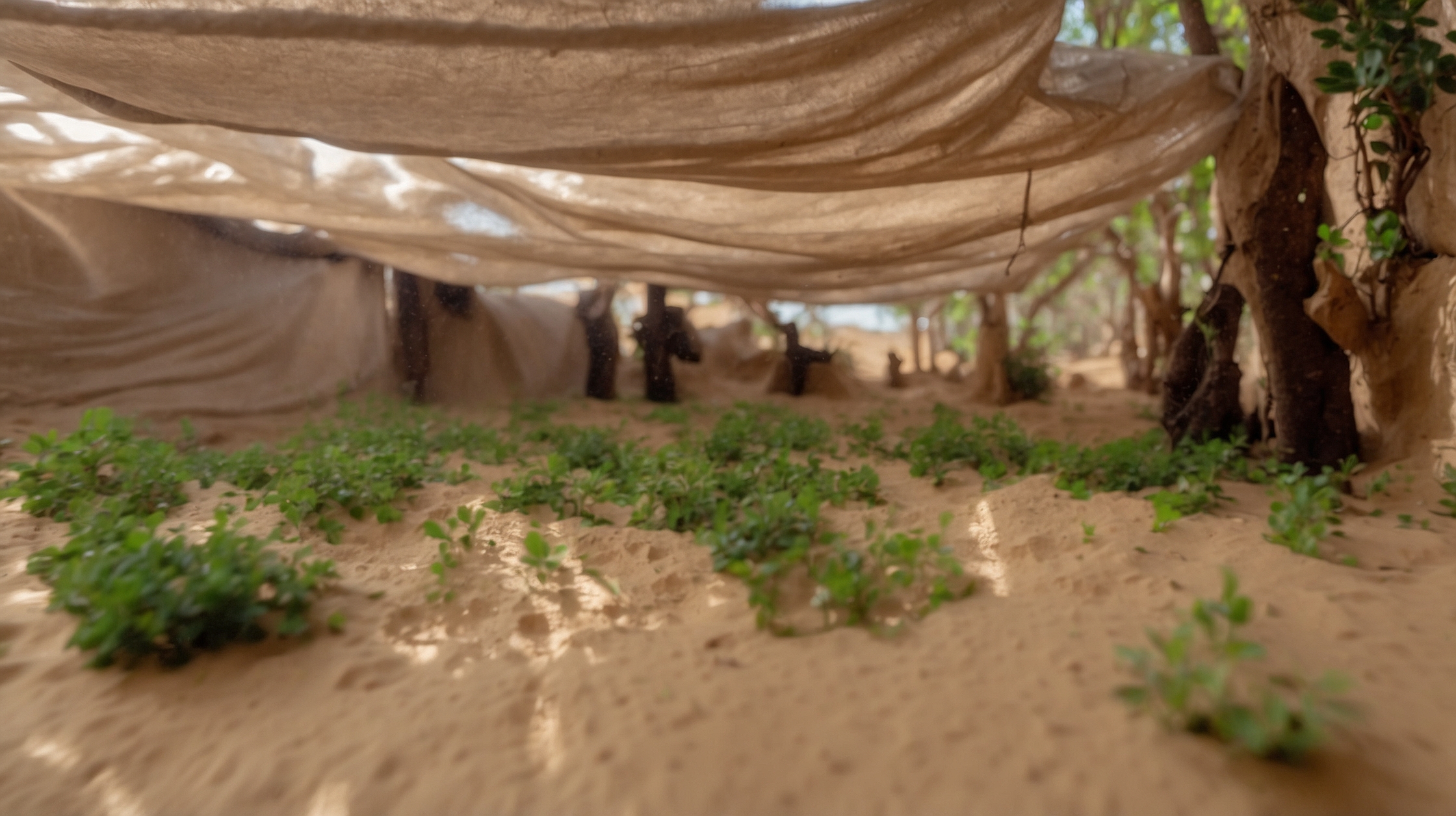

The notion that the *Sahara Desert*—one of the most arid places on Earth—could become green again might sound like science fiction. But it’s not. Recent climate models and paleoclimate data suggest that increased rainfall in the region, due to shifts in monsoon patterns, could bring new life to North Africa. While this “greening” is fueled by natural climate cycles and potentially intensified by global warming, scientists caution that it might come at a cost: destabilizing ecosystems, disrupting agriculture, and altering the delicate atmospheric balance throughout the African continent.

Historically, the Sahara has undergone dramatic changes in vegetation cover, most notably during the African Humid Period (around 14,000 to 5,000 years ago) when lush grasslands and lakes spanned areas that are now barren sand dunes. If current rain trends continue or intensify, parts of the Sahara might once again host vegetation and wildlife. However, with climate change influencing the timing, location, and volume of rainfall, there’s a concern that this could reshape livelihoods across the Sahel and beyond.
Key facts and projections at a glance
| Topic | Detail |
|---|---|
| Potential Sahara Greening | Triggered by increased rainfall from monsoon shifts |
| Past Humid Period | Occurred between 14,000 and 5,000 years ago |
| Main Driving Factor | Changes in Earth’s orbit + climate change |
| Impact Area | Sahara region, Sahel belt, sub-Saharan Africa |
| Ecological Concerns | Possible disruption of species and water cycles |
| Agricultural Impact | Both opportunity and risk for farming economies |
Why the Sahara might turn green again
The trend is not merely predictive—it’s grounded in data. Satellite observations, sediment analysis from dried-up lakes, and pollen studies all reveal that North Africa has oscillated between humid and arid conditions over tens of thousands of years. During humid intervals, propelled by intensified African monsoons, vegetation spread deep into what is now desert. Researchers suggest that similar patterns could emerge once again if rainfall increases due to a combination of natural climate cycles and anthropogenic warming.

These monsoon-driven humidity swings are rooted in orbital changes—specifically the Earth’s axial tilts and wobbles, which influence how sunlight reaches the tropics. More direct sunlight over North Africa during summers leads to warmer landmasses, which in turn pull in moisture-heavy air from the ocean, resulting in increased rainfall. If similar orbital conditions combine with existing global warming trends, the greenhouse effect could amplify rainfall, hastening the greening of the Sahara.
“We are seeing signs—through vegetation models and moisture simulations—that suggest North Africa may already be experiencing the early stages of another humid pulse.”
— Dr. Amina Doumbia, ClimatologistAlso Read Why Your Body Feels Tense When Recovery Is Irregular (And How to Fix It)
Implications for ecosystems and local economies
While more rain may sound like good news, especially for countries like Niger, Chad, and Mali that suffer from persistent drought and food insecurity, the picture is nuanced. Increased precipitation could indeed benefit agriculture and reduce water scarcity, but the intensity and irregularity of rain could also lead to flooding, erosion, and crop failures, particularly if local infrastructures aren’t adapted to accommodate the changes.

Moreover, a sudden disruption in plant species or the introduction of invasive vegetation might affect native wildlife. Areas that have adapted to dry conditions for millennia could face pressure as new water-borne ecosystems take root. As the climate shifts rapidly, migratory and nesting patterns among birds, insects, and mammals may also need to shift, resulting in potential *biodiversity bottlenecks*.
Winners and losers in the greening scenario
| Winners | Losers |
|---|---|
| Farmers in wet-adapted zones | Pastoralists in dry grasslands |
| Local freshwater ecosystems | Dry-climate wildlife species |
| Renewable energy developers (solar + hydro) | Communities unprepared for flooding |
| Governments investing in climate adaptation | Regions without resilient infrastructure |
The delicate balance with the Sahel and beyond
The greening of the Sahara could also shift weather patterns across the African continent. Currently, the Sahara acts as a thermal engine, playing a crucial role in driving atmospheric circulation. If the desert surface cools due to plant cover and moisture, some models predict that the Sahel’s usual rainfall patterns may shift further south, potentially leaving traditional farming and grazing areas drier than before.
This would make adaptation efforts in the Sahel incredibly complex and politically sensitive. The balance between greener conditions in the north and worsening drought in the south could deepen inequality and create new migration patterns, especially if people and herds begin moving toward newly fertile zones. Cross-border tensions might also flare as countries compete for water and farming opportunities.
“The Sahara is not a static entity. It breathes in geological time—and we might be entering one of its inhale phases. But who benefits from that breath will depend on how we respond today.”
— Dr. Felix Ofori, Environmental Anthropologist
How governments can prepare for the shift
Policymakers need to act now. Investing in meteorological infrastructure, building flood-resistant agriculture systems, improving soil management, and encouraging weather-resilient crops will be key. Countries that proactively handle these changes instead of reacting to them will position themselves as regional leaders in sustainability and economic renewal.
Africa’s climate future doesn’t have to be defined by disaster—it can be redefined by opportunity. But only if nations rise to the challenge with planning, international cooperation, and local engagement. Regional initiatives like the Great Green Wall, aimed at restoring degraded lands in the Sahel, could also pivot to address new ecological realities emerging from Sahara’s transformation.
The role of climate models and forecast accuracy
Understanding the greening potential also requires advances in climate modeling. Increased satellite data, regional weather tracking, and machine learning techniques allow scientists to map potential vegetative changes in real-time. However, projections are still based on assumptions, and unexpected feedback loops such as changes in ocean temperatures or atmospheric pollutants could alter outcomes considerably.
Therefore, data transparency and inter-regional scientific collaboration are essential. Climatologists, ecologists, and governments must share datasets, tools, and forecasts to design better response systems. The goal is not only to adapt but to thrive within the new dynamic equilibrium Africa may soon face.
FAQs about Sahara Greening and Africa’s Climate Balance
What causes the Sahara to shift between green and arid states?
The Sahara’s climate changes are influenced by Earth’s orbit, which affects how much solar energy North Africa receives, triggering stronger or weaker monsoon systems.
Has the Sahara been green before?
Yes, during the African Humid Period (14,000–5,000 years ago), the Sahara supported vegetation, lakes, and wildlife.
Could the Sahara become permanently green?
Unlikely in the short term, as climate systems are cyclical. However, sustained rainfall due to global warming could lead to a greener phase lasting several centuries.
Who is most at risk if Sahara greens?
Communities in the Sahel and local wildlife adapted to drought may face risk if rainfall patterns shift and invasive plants replace native ones.
What are the benefits of a greener Sahara?
Potential improvements in agriculture, water availability, and even opportunities for renewable energy development such as solar hydropower synergies.
Is this greening connected to global warming?
Partially. While natural cycles play a role, climate change may amplify rainfall and accelerate vegetative changes across the Sahara zone.
How can African nations prepare?
By investing in climate-resilient infrastructure, improving soil and water management, and collaborating on cross-border climate adaptation policies.
About the Author
