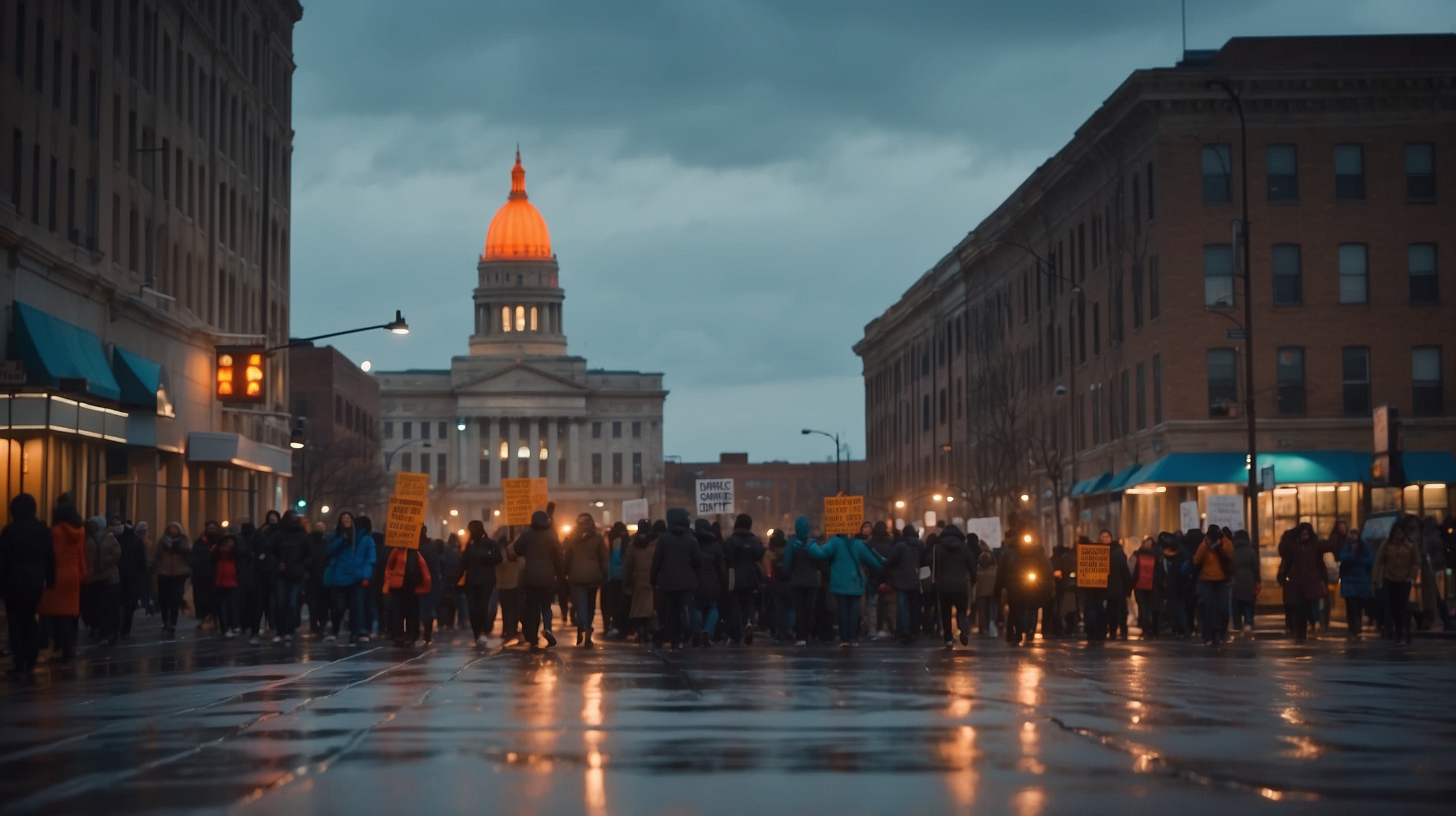

Minneapolis is once again at the epicenter of social and political unrest after a large-scale U.S. Immigration and Customs Enforcement (ICE) operation swept through the city’s neighborhoods, detaining dozens of undocumented residents. The raids, carried out with little warning, have triggered widespread community outrage and sparked what many are now calling a “general strike” — a coordinated refusal to work, shop, or participate in daily economic activity in protest.

As word of the ICE raids spread, images of frightened families, children left at schools without parents, and entire neighborhoods gripped by fear began to circulate across social media. Community organizers report that as many as 70 people were detained in a single afternoon operation. The fast-moving events have galvanized local leaders, labor unions, and advocacy groups to push for a sweeping response through protests, civil disobedience, and the organization of a rapidly growing general strike. The momentum is spreading across cities and states, opening a new chapter in the national conversation around immigration, labor, and human rights.
Minneapolis ICE raid and national reaction overview
| Event | ICE raid in Minneapolis detains dozens, sparks citywide protest movement |
|---|---|
| Date | Late April 2024 |
| Number Detained | Estimated 70 individuals |
| Main Response | Call for General Strike across Minneapolis and other U.S. cities |
| Key Organizers | Local labor unions, immigrant rights groups, student organizations |
| Potential National Impact | Disruption of major industries, spotlight on immigration policy reform |
Why the ICE raid triggered such a massive response
The ICE operation in Minneapolis did not occur in a vacuum. It came amid heightened tensions over immigration enforcement policies that have seen an uptick in workplace raids and neighborhood surveillance in recent months. According to local accounts, the recent action was carried out with no warning and targeted areas with historically high immigrant populations. Residents report that plainclothes officers took people into custody outside grocery stores, schools, and even public transit stops.

The sheer scale and aggressive nature of the raid caught many off guard. But what most enraged the community was the separation of families, particularly the fact that many children were left stranded when their parents were detained. “These are not criminals — they are our neighbors, our coworkers, our friends,” said community leader Maria Alvarez. “This was a terror operation, not law enforcement.”
The general strike gains momentum
Within 24 hours of the raid, public calls for a general strike began spreading through platforms used by local activists. The demand was simple but sweeping: halt business-as-usual until ICE operations cease and immigration enforcement policies are reformed. That initial call has since snowballed into a citywide — and possibly nationwide — movement, with labor unions, students, and nonprofit organizations pledging their support.
Health care workers, food service employees, educators, and construction crews are among those pledging to stay home from work in solidarity. Several businesses across Minneapolis have voluntarily closed their doors or issued public statements of support for the strikers. “This is what solidarity looks like,” said one local bakery owner, who shut down operations for the week. “If our employees and customers are afraid, we’re not open for business.”
Who’s organizing the strike and what they want
The movement behind the general strike isn’t rooted solely in opposition to ICE. At its core are long-standing grievances over labor rights, racial justice, and economic inequality. Leading the mobilization are a coalition of groups that include Unidos Minneapolis, the Minnesota Immigrant Rights Coalition, and several chapters of the American Federation of Labor. College campuses have also become focal points, with student walkouts coordinated across several public and private institutions in the Twin Cities.

The demands of the strike include an immediate end to ICE raids in residential areas, a legislative ban on cooperation between local police departments and federal immigration enforcement, protections for undocumented workers, and comprehensive immigration reform with a path to citizenship. Beyond immigration, organizers are also calling for wage increases, improved labor protections, and access to affordable housing.
Economic and political implications of a broad general strike
The broader implications of the strike are already becoming visible. Minnesota’s economy, particularly in sectors such as agriculture, food processing, and service hospitality, heavily relies on both immigrant labor and working-class consumers. Should the strike continue to expand, experts warn, it may cause supply chain disruptions and add to existing labor shortages already plaguing key industries.
Politically, the general strike poses a challenge to both local and national lawmakers. Minneapolis city officials have expressed concern about the ICE raids and voiced support for affected communities, but tangible legislative responses have yet to materialize. On the national level, the White House has remained mostly silent, though insiders suggest new executive actions may be in development to address the growing unrest.
“This strike could very well reshape the national political agenda going into the next election cycle.”
— Dr. Simone Tran, Political Science Professor, University of Minnesota
Winners and losers in the fallout of the raids
| Winners | Losers |
|---|---|
| Community solidarity and activism | Immigrant families separated or detained during raids |
| Progressive labor movements | Local businesses affected by closures |
| Grassroots political coalitions | Congressional leaders avoiding immigration reform |
| Organized labor gaining broader support | ICE’s public image and trust level |
Voices from the community
Emotions have run high in the days following the ICE operation. Churches, community centers, and mutual aid groups have opened their doors, offering temporary shelter, legal counseling, and emotional support. While fear remains palpable, there is also increasing resolve among many residents.
“We are not hiding, we are organizing. Our response must be louder than their fear.”
— Alejandra Gutierrez, Youth Organizer
“We’ve seen waves of deportations before, but this time, something feels different. People are joining hands who never did before.”
— Pastor Lucas James, Eastside Sanctuary Church
Federal response and what’s next
All eyes are now on federal agencies and lawmakers. A senior DHS official, speaking on background, claimed the raids were “targeted enforcement actions” against individuals with outstanding removal orders. However, that explanation has done little to quell criticism. Civil liberty groups are calling for a full inquiry, and several members of Congress have introduced a resolution condemning the raids.
In the meantime, the general strike is poised to expand. Organizers have announced “Day of No Spending” events in other major cities including Chicago, Seattle, and Los Angeles. National labor unions have begun to draft action plans to support walkouts and sick-outs, suggesting this movement may have staying power beyond Minneapolis.
Frequently asked questions about the Minneapolis ICE raid and strike
How many people were detained during the ICE raid?
Community organizers estimate that approximately 70 individuals were detained in the recent ICE operation in Minneapolis, although official numbers have not been released.
What is a general strike and how does it work?
A general strike is a coordinated work stoppage across multiple industries and sectors, usually as a form of protest or demand for systemic change. In this case, it includes workers, students, and businesses refusing to operate.
Why did this ICE raid trigger such a massive response?
The scale and surprise nature of the raid, along with the impact on families and essential workers, provoked strong emotional and political reactions from the community.
What are the main demands of the strike organizers?
Organizers demand an end to ICE raids, a ban on police-ICE cooperation, protections for undocumented workers, and broader immigration and labor reforms.
Is the movement limited to Minneapolis?
No, the call to action is spreading to other cities, and national labor organizations are beginning to join the cause with support efforts and similar actions.
Are any political leaders supporting the strike?
Some city officials and members of Congress have expressed solidarity, but the federal response has been limited so far.
Can participating in the strike carry risks?
Yes. Some workers may face employer retaliation or immigration-related consequences, though legal support services are working to minimize those risks.
How long will the general strike last?
There is currently no set end date; organizers have stated they plan to continue until meaningful policy action is taken.
About the Author
