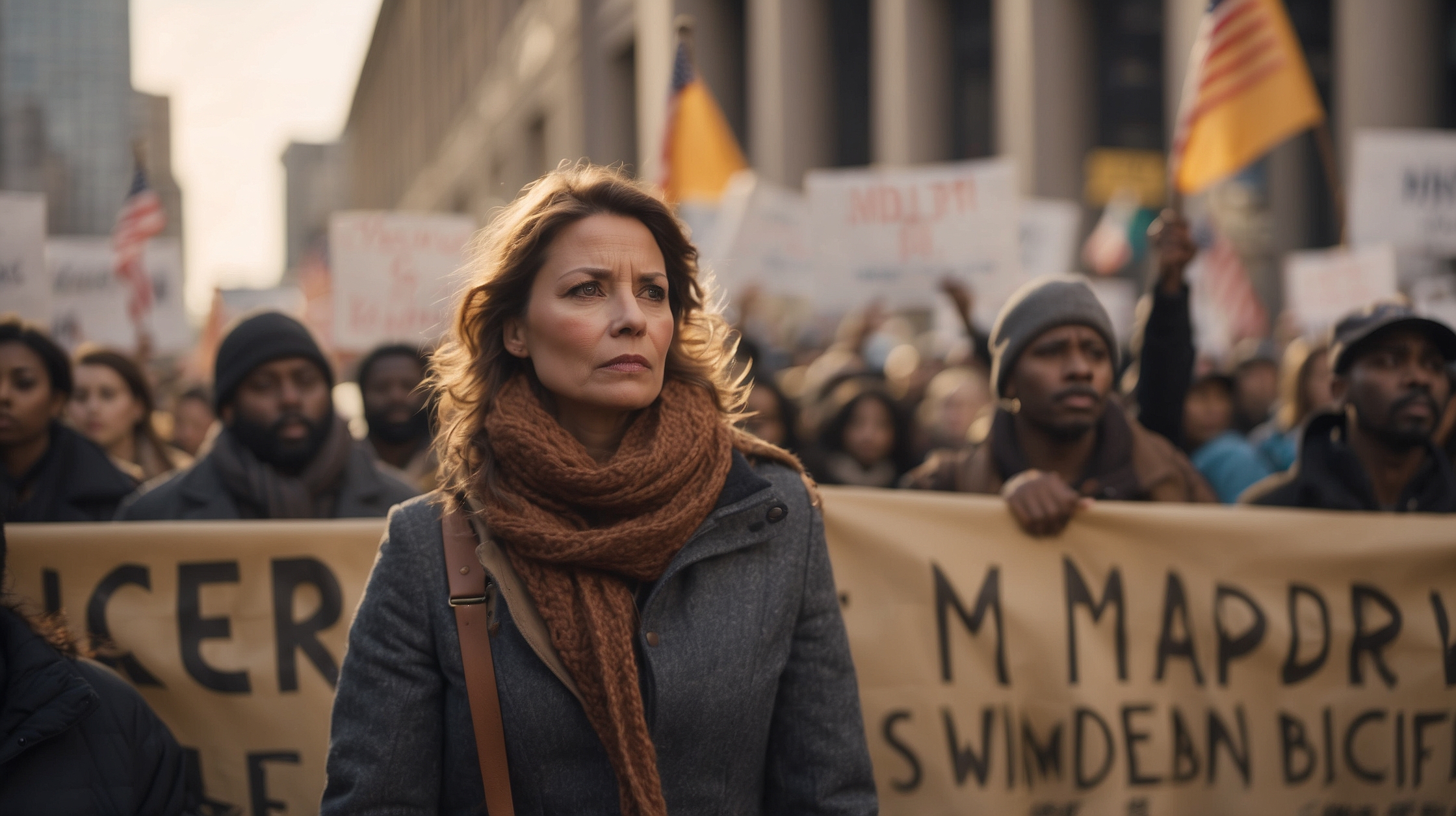
In recent days, the city of Minneapolis has erupted into yet another wave of protest, this time targeting the policies and practices of U.S. Immigration and Customs Enforcement (ICE). The demonstrators have occupied government property, staged mass rallies, and called for a nationwide **general strike**, a bold escalation that signals widespread political unrest. These demands go beyond local policing or immigration enforcement; they tap into a broader national reckoning with institutional power and justice. The calls for a general strike are now echoing beyond Minnesota, uniting disparate coalitions of labor activists, immigrant rights groups, and civil libertarians under a single, urgent cause.
The current protests were sparked by reports of aggressive ICE enforcement actions in Minneapolis’s immigrant communities. Allegations of racial profiling, inhumane detention conditions, and unchecked authority have added fuel to the fire, prompting grassroots organizations and labor unions to mobilize in unprecedented ways. In a nation already strained by growing socio-economic inequality and political polarization, this local standoff with ICE might be the spark that ignites a larger national movement.
Key developments and current situation
| Issue | Details |
|---|---|
| Protest Location | Minneapolis, Minnesota |
| Triggering Incident | ICE raids and enforcement actions targeting immigrant communities |
| Key Demand | Immediate cessation of ICE activity and a general strike |
| Parties Involved | Immigrant rights groups, local unions, civil rights activists |
| Escalation | Occupation of public spaces, transportation blockades |
| National Response | Solidarity demonstrations in major cities like Chicago, New York, and Los Angeles |
What’s driving the demand for a general strike
At the heart of the protests lies a growing distrust in **federal enforcement agencies** and their tactics. The general strike call is not simply a reaction to ICE actions, but a way for activists to express deep-seated frustrations with systemic inequalities affecting immigrants, low-wage workers, and racial minorities. Organizing a general strike is no small feat—it requires coordination across industries, unions, workers, and advocacy organizations.

Demonstrators argue that confronting ICE requires more than policy change; it requires economic leverage. The logic is direct: if the workforce refuses to cooperate, the state must pay attention. By withholding labor, protestors hope to paralyze the system enough to force political and institutional concessions.
“This moment feels different. We’re tapping into a much broader coalition who understands that injustice to one community affects everyone.”
— Ana Valdez, Community OrganizerAlso Read Mientras Sánchez celebra subida salarial del 2,87%, el precio de los alimentos se dispara sin control
How labor unions are responding
Prominent trade unions in Minneapolis and beyond have joined the calls to strike, signaling a rare instance of intersecting social and economic justice initiatives. From teachers to transit workers, various groups have used their platforms to condemn what they call the “weaponization of immigration enforcement.” Some union leaders have even pledged to support employees who walk off the job in solidarity with the immigrant community, a risky but powerful move.

Historically, **general strikes** in the U.S. have been few and far between. However, the national mood has shifted significantly since the pandemic and the rise of social justice movements. Many labor groups now see alignment with immigrant rights as consistent with their mission to promote worker protection and societal equity.
Involvement of immigrant communities
Immigrant communities are not only central to the protests; they are helping to lead them. Local organizing groups have set up community kitchens, legal aid stations, and safe zones to support affected families. Digital media is also playing a crucial role in organizing and mobilizing efforts, allowing real-time updates of protest logistics, police movements, and mutual aid requests.
Many protesters are undocumented or mixed-status families, which makes their involvement both brave and precarious. Organizers have taken steps to minimize risk, but the threat of retaliation from federal agencies remains very real. Nevertheless, there is a profound determination rippling through Minneapolis’s immigrant neighborhoods.
“We’ve lived in fear for too long. Now we’re standing up, because silence hasn’t protected us.”
— Gabriel Mendez, Local Resident and DACA Recipient
The role of social media in protest mobilization
Grassroots organizers have leaned heavily into social media platforms like Instagram, TikTok, and Twitter to spread awareness and coordinate real-time action. Organizers amplify **video evidence of enforcement actions**, share protest visuals, and post multilingual updates for wider reach. Some hashtags related to the strike and ICE protests have already trended nationally, forcing local and federal policymakers to take notice.
This digital momentum has also drawn attention from activists around the world, who liken the current Minneapolis protests to similar uprisings in Chile, France, and Hong Kong. The international coverage further legitimizes the movement and places added pressure on U.S. political leaders to respond decisively.
Potential outcomes and national implications
While it’s still unclear how these events will unfold long-term, activists believe that momentum is at a tipping point. Several outcomes are on the table: potential policy shifts around ICE jurisdiction, deeper investigations into federal enforcement practices, and the formation of new coalitions aimed at systemic reforms beyond immigration policy alone.
Additionally, should the general strike gain broader traction, it could set a modern precedent for how organized labor and activist communities can synergize in pursuit of transformative social change. The stakes are high, as both political risk and human cost loom large.
“The fusion of labor power and moral urgency is where revolutions start. These aren’t isolated events—they’re chapters in a larger story unfolding across the nation.”
— Dr. Allison Kim, Sociology Professor, Urban Studies
Winners and losers from the movement so far
| Winners | Losers |
|---|---|
| Grassroots organizers | ICE and federal enforcement credibility |
| Immigrant communities gaining visibility | Local businesses affected by strike threats |
| Allied labor unions | City officials facing criticism |
What comes next in Minneapolis and beyond
As days stretch into weeks, organizers have indicated they are prepared for a sustained protest. Plans are underway for teach-ins, voter registration drives, and continued economic disruptions if their demands remain unmet. Leaders anticipate that Minneapolis could become a blueprint for broader efforts in other urban centers where ICE operates with similar strategies.
National political figures have started weighing in, though reactions vary widely along partisan lines. Some call the protests unlawful; others argue they are a necessary eruption from a system that has long repressed vulnerable populations. Whatever narrative gains ground will depend heavily on continued organizing, media framing, and public support.
Short FAQs: Minneapolis ICE Protests and General Strike
Why are people protesting ICE in Minneapolis?
Protests have erupted in response to recent ICE raids targeting immigrant communities, which many see as unjust and heavy-handed. The demonstrations aim to push for systemic reform and compassionate immigration policies.
What is a general strike and why is it being called?
A general strike is a coordinated work stoppage across multiple industries and labor sectors. Activists believe it’s a powerful way to pressure authorities by disrupting economic systems.
Who is organizing the protests?
Various immigrant rights groups, local unions, and civil society organizations are leading the charge, with decentralized leadership to minimize risk.
Have any politicians responded to the protests?
Some city and state officials have called for investigations or expressed support, while others have criticized the disruption. The federal response remains cautious for now.
How have labor unions participated?
Several unions have endorsed the general strike idea and pledged solidarity with immigrant workers. Some have also offered legal and financial aid to members participating in protests.
Could this movement expand to other cities?
Yes. Solidarity protests have already been planned in cities like Los Angeles, New York, and Chicago. Organizers hope the momentum in Minneapolis sets a standard for national action.
About the Author