Captain Hans Weber stood on the deck of a German naval vessel last autumn, watching Russian submarines slip beneath the Baltic’s murky waters like ghosts. For decades, tracking these silent threats meant sending expensive ships and helicopters on risky patrols. Now, as he peers through his binoculars at the grey horizon, Weber knows his country is about to change the game entirely.

The German military just made one of the boldest and most expensive bets in European defense history. They’re spending nearly €2 billion on eight of the world’s most advanced maritime drones, each costing more than a fighter jet.
This isn’t just another military purchase. It’s Germany announcing to the world that it’s serious about controlling the seas around Europe, and it’s willing to pay whatever it takes to make that happen.

Why Germany Just Broke Its Own Defense Spending Records
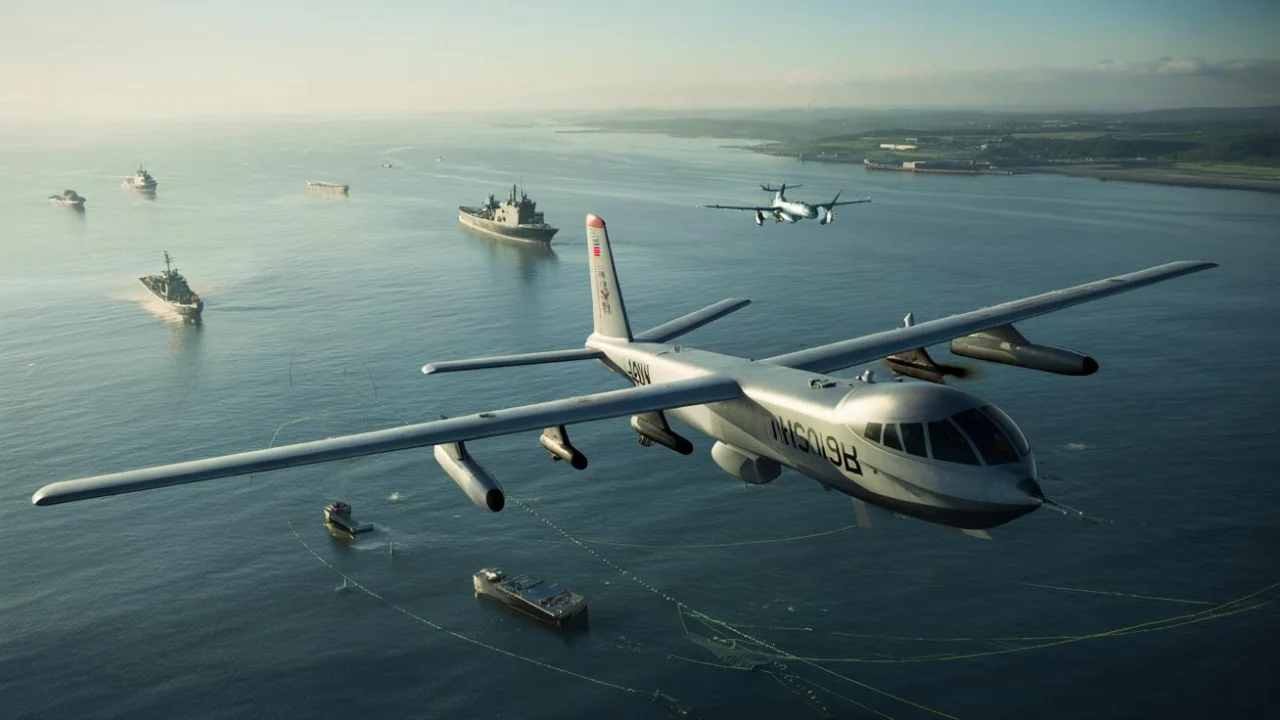
Berlin has formally ordered eight MQ-9B SeaGuardian maritime drones from the United States, with deliveries starting in 2028. These aren’t your average surveillance drones – they’re flying fortresses designed to patrol vast ocean areas for over 30 hours without landing.
The price tag has shocked even defense experts. At €237.5 million per complete system, each drone costs more than Germany’s latest Eurofighter Typhoon jets. The total bill for the first phase reaches €1.9 billion, making it one of the most expensive drone acquisitions in European history.

“When you see numbers like that, you know something fundamental has changed in how Germany views maritime security,” explains defense analyst Dr. Maria Hoffmann. “They’re not just buying hardware – they’re buying peace of mind in increasingly dangerous waters.”
The drones will be stationed at Nordholz in Lower Saxony, Germany’s main naval aviation hub. From there, they’ll maintain constant watch over the North Atlantic and Baltic Sea, with special focus on Russian submarine movements and critical underwater infrastructure like internet cables and gas pipelines.

Breaking Down the Staggering Costs Behind Maritime Drones
Most people wonder why these maritime drones cost so much more than a typical aircraft. The answer lies in what you’re actually buying beyond the drone itself.
| Component | Cost (Estimated) | Purpose |
|---|---|---|
| Basic SeaGuardian Drone | €68.5 million | Aircraft platform and basic systems |
| Advanced Sensors | €45 million | Radar, cameras, submarine detection |
| Ground Infrastructure | €35 million | Control stations and hangars |
| Training & Certification | €25 million | Pilot and technician programs |
| Communications Systems | €30 million | Secure satellite links |
| Maintenance Support | €34 million | Spare parts and service contracts |
The drone itself represents less than 30% of the total cost. The real money goes into building an entire operational system that can function in NATO’s integrated defense network.

Key features driving the cost include:
- Military-grade ground control stations designed to withstand cyber attacks
- Specialized hangars and maintenance facilities at Nordholz airbase
- Comprehensive training programs for pilots, sensor operators, and technicians
- Secure satellite communication systems for long-range operations
- Advanced maritime sensors capable of detecting submarines underwater
- Spare parts inventory and maintenance contracts extending through 2030
“People see the price tag and think it’s outrageous, but they’re not just buying a drone,” notes former naval officer Captain Klaus Mueller. “They’re buying the capability to monitor thousands of square miles of ocean simultaneously, something that would require dozens of ships and hundreds of crew members to accomplish traditionally.”
How This Changes Everything for European Maritime Security
Germany’s massive investment in maritime drones represents more than just a military upgrade – it’s reshaping how European nations think about ocean security and setting a new standard for coastal defense.
The timing isn’t coincidental. Russian submarine activity in European waters has increased dramatically since 2022, with mysterious damage to underwater cables and pipelines raising alarm bells across NATO. Traditional patrol methods using ships and helicopters simply can’t provide the continuous coverage needed to monitor these threats effectively.
These SeaGuardian drones can stay airborne for more than 30 hours, covering areas that would take multiple ships days to patrol. They carry advanced radar systems capable of detecting submarine periscopes from miles away and sophisticated cameras that can identify surface vessels in all weather conditions.
“What Germany is doing will force every other European naval power to reconsider their own maritime surveillance capabilities,” predicts defense expert Dr. Andreas Schmidt. “You can’t maintain credible sea control with yesterday’s technology when your neighbors are flying tomorrow’s.”
The ripple effects are already visible. France is accelerating its own maritime drone programs, while the UK is reassessing its Royal Navy patrol schedules. Even smaller nations like Denmark and Norway are exploring drone partnerships to avoid being left behind.
For ordinary Europeans, this investment means better protection for the internet cables carrying their data, the gas pipelines heating their homes, and the shipping lanes bringing goods to their stores. When a single severed cable can disrupt communications across multiple countries, having eyes in the sky becomes a matter of economic security, not just military strategy.
The drones also represent a shift toward more sustainable defense spending. Instead of burning fuel on constant ship patrols, Germany can maintain persistent surveillance with a fraction of the environmental impact and operational costs.
Critics argue the money could have been better spent on traditional naval vessels or European-made alternatives. However, supporters point out that no European manufacturer currently offers comparable maritime drone capabilities, and building domestic alternatives would take decades and cost even more.
“Sometimes you have to buy the best available technology, regardless of where it comes from,” argues parliamentary defense committee member Rebecca Wagner. “German taxpayers deserve protection that works today, not theoretical solutions that might be ready in 2040.”
FAQs
Why are these maritime drones so much more expensive than regular military aircraft?
The high cost includes not just the drone but an entire operational ecosystem – ground control stations, specialized facilities, training programs, and advanced sensors specifically designed for maritime surveillance.
How long can these drones stay in the air compared to traditional patrol aircraft?
SeaGuardian maritime drones can fly for over 30 hours continuously, while traditional patrol aircraft typically operate for 8-12 hours before needing to refuel.
Will other European countries follow Germany’s lead in buying expensive maritime drones?
Several European nations are already evaluating similar programs, with France and the UK showing particular interest in upgrading their maritime surveillance capabilities.
When will these German maritime drones actually start patrolling European waters?
The first deliveries are scheduled for 2028, with full operational capability expected by 2030 once all training and infrastructure is completed.
Can these drones actually detect submarines underwater?
While they can’t see deep underwater, they carry advanced sensors that can detect submarine periscopes, snorkels, and other surface signatures when submarines operate near the surface.
How does this purchase affect Germany’s relationship with European defense manufacturers?
The decision has sparked debate about European defense independence, but officials argue that no European company currently offers comparable maritime drone technology.
About the Author