Maria Taumalolo still remembers the sound that stopped her in her tracks during a morning walk through the Uafato forest. It was October 2025, and she was collecting medicinal plants when a low, haunting call echoed through the canopy above her head.

“My grandmother used to tell stories about that call,” she says, her voice trembling slightly. “I thought it was gone forever, like so many things from our childhood.” What Maria heard that day was the voice of the manumea pigeon, Samoa’s national bird that had vanished from sight for five long years.
Her report to local conservationists would soon become part of a story that’s rewriting what we know about extinction, hope, and the incredible resilience of life on remote Pacific islands.

The Ghost Bird That Refused to Die
The manumea pigeon Samoa once celebrated as its national symbol had become a ghost. Between 2020 and 2025, not a single confirmed sighting reached scientists’ ears. Birdwatchers searched. Hunters listened. Village elders who knew the bird’s habits from childhood scanned the treetops in vain.
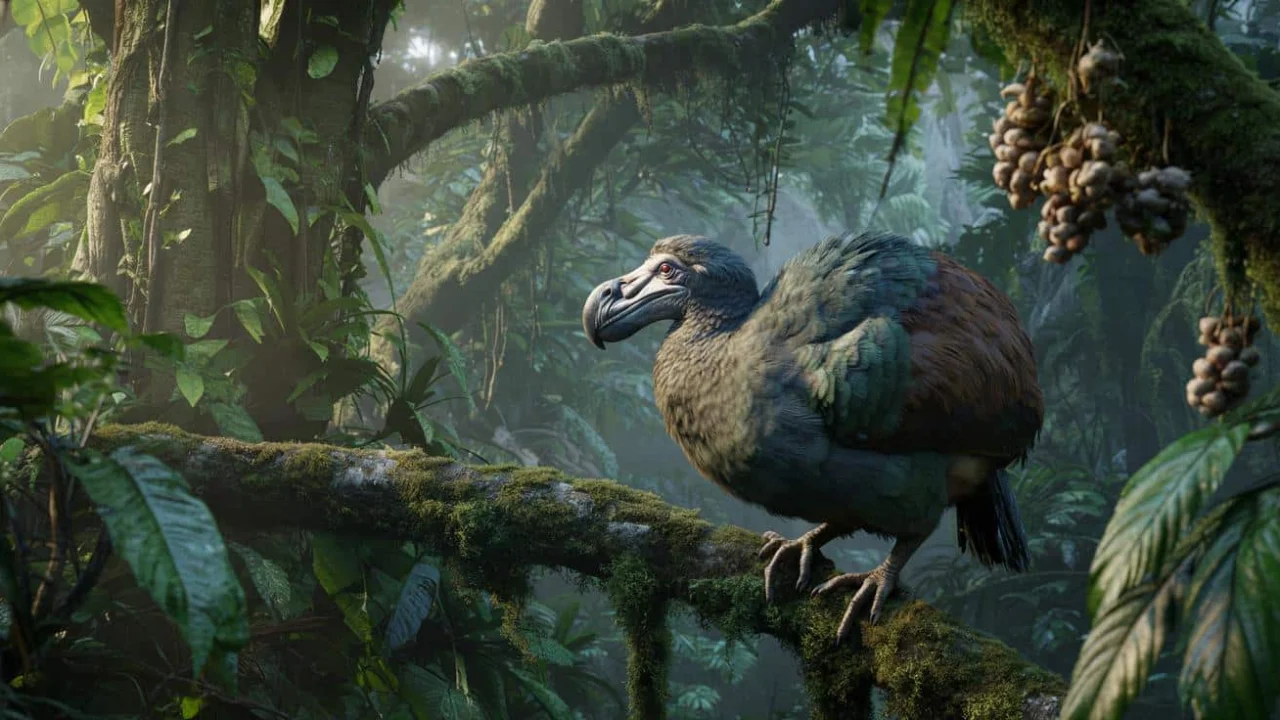
Then something extraordinary happened in the forests of Upolu island. Multiple independent teams began reporting the same thing: a stocky, distinctive pigeon moving through the upper branches of native trees. The bird matched every description of the manumea – chunky body, short rounded wings, and that unmistakable heavy beak with tooth-like ridges.

“We cross-checked every report three times before we dared to believe it,” explains Dr. James Atherton, a conservation biologist working with the Samoa Conservation Society. “When five different groups describe the same bird in the same valley within weeks of each other, you start to think maybe miracles do happen.”
The manumea’s scientific name, Didunculus strigirostris, literally translates to “little dodo.” This isn’t just poetic license – genetic research published in Science magazine confirmed that this Samoan bird shares ancestry with the famous dodo of Mauritius and other extinct island pigeons.

But unlike its flightless cousin that disappeared forever in the 1600s, the manumea pigeon has somehow managed to cling to existence in one of the most remote corners of the Pacific.
What Makes This Discovery So Remarkable
The manumea’s survival story becomes even more incredible when you understand what this bird has endured. Here’s what makes this Pacific pigeon so unique and vulnerable:

| Characteristic | Description | Survival Challenge |
|---|---|---|
| Reproduction Rate | Lays only 1-2 eggs per year | Can’t quickly recover from population losses |
| Diet Specialization | Feeds on specific native seeds and fruits | Habitat loss eliminates food sources |
| Flight Ability | Can fly but prefers short distances | Limited escape from threats and habitat fragmentation |
| Predator Response | Relatively tame, slow to flee | Vulnerable to introduced cats, dogs, and human activity |
The bird’s most distinctive feature – its powerful, hooked beak with serrated edges – evolved specifically to crack open the tough seeds of native Samoan trees. This specialization helped it thrive for millennia, but also made it completely dependent on intact forest ecosystems.
- The manumea is found nowhere else on Earth except Samoa’s islands
- It requires old-growth forest canopy to nest and feed
- Its breeding cycle depends on specific flowering and fruiting seasons
- The species has lost over 80% of its original habitat to development and agriculture
- Introduced predators like cats pose a constant threat to ground-nesting birds
“This bird evolved in paradise, but paradise changed around it faster than evolution could keep up,” notes Pacific conservation specialist Dr. Rebecca Stirnemann. “The fact that it’s still here is honestly stunning.”
The recent sightings weren’t just lucky breaks. An artificial intelligence system trained to recognize bird calls had flagged a recording from the Uafato region as “high probability manumea” back in May. A local bird enthusiast also reported a possible sighting in 2024. Individually, these reports could be dismissed. Together, they paint a picture of a species refusing to surrender.
Why This Matters Beyond Samoa’s Shores
The manumea’s persistence carries implications far beyond one small Pacific nation. This discovery is forcing scientists to reconsider some fundamental assumptions about extinction, conservation priorities, and what’s possible when entire ecosystems are under threat.
Traditional conservation wisdom suggests that when a critically endangered species disappears from sight for years, it’s probably gone forever. The manumea pigeon Samoa has been mourning may be proving that wrong.
“We’re learning that species can persist in incredibly small numbers, in incredibly difficult conditions, for much longer than we thought possible,” explains Dr. Atherton. “But they need absolutely everything to go right – habitat, food sources, breeding opportunities, protection from threats.”
The implications extend to conservation funding and policy decisions worldwide. How many other species written off as extinct might still be holding on in remote pockets of habitat? Should resources focus on preventing extinctions before they happen, or on intensive searches for species that may have already disappeared?
For the people of Samoa, the manumea represents something deeper than just another bird species. It’s woven into cultural identity, traditional stories, and national pride. The bird appears on Samoa’s currency and serves as an important cultural symbol connecting modern Samoans to their natural heritage.
Local communities are now mobilizing to protect the Uafato forest where the recent sightings occurred. Village councils are discussing restrictions on logging and hunting in critical areas. Young Samoans are volunteering for forest monitoring programs.
“When we thought it was gone forever, we felt like we’d lost part of ourselves,” explains Maria Taumalolo, whose October sighting helped confirm the bird’s survival. “Now we have a second chance, and we’re not going to waste it.”
The manumea’s story also highlights the power of combining traditional knowledge with modern technology. The AI system that detected possible calls, the systematic cross-referencing of eyewitness accounts, and the deep forest knowledge of local communities all played crucial roles in this discovery.
Moving forward, the challenge will be ensuring this remnant population can not just survive, but actually recover. With potentially fewer than a dozen individuals remaining, every breeding season matters. Every threat eliminated could make the difference between recovery and final extinction.
FAQs
What is the manumea pigeon and why is it important?
The manumea is Samoa’s national bird and a close relative of the extinct dodo. It’s the only bird species found exclusively in Samoa and plays a crucial role in the islands’ ecosystem and culture.
How long was the manumea thought to be extinct?
The bird hadn’t been reliably sighted for five years between 2020 and 2025, leading many scientists to fear it had gone extinct without anyone noticing.
Where were the recent sightings of the manumea?
Multiple independent sightings occurred in the Uafato forest on the northeastern side of Upolu island in Samoa during October and November 2025.
How many manumea pigeons might still exist?
Experts believe fewer than a dozen individuals may remain in the wild, making it one of the world’s rarest birds.
What threatens the manumea’s survival?
The main threats include habitat loss from deforestation, introduced predators like cats and dogs, and the bird’s naturally slow reproduction rate.
What’s being done to protect the remaining manumea?
Local communities are working to protect the Uafato forest, restrict logging in critical areas, and monitor the remaining population through both traditional knowledge and modern technology.
About the Author