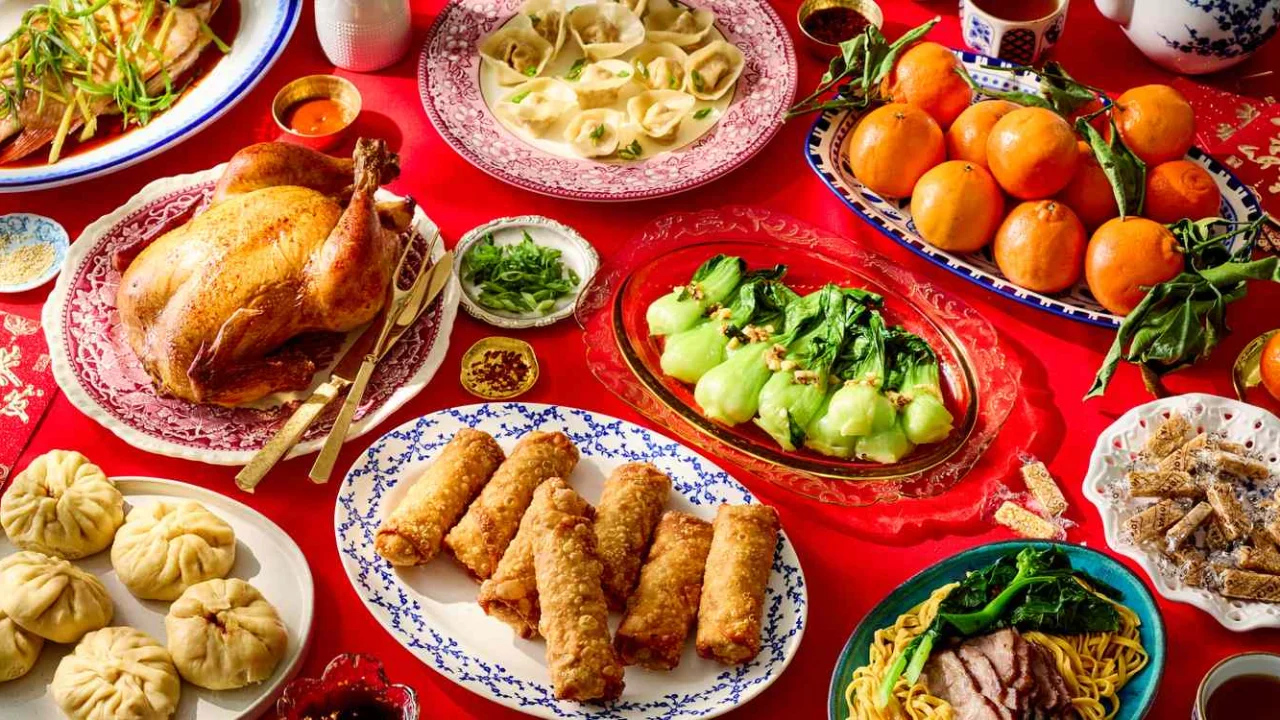
Every January, my kitchen transforms into something magical. The smell of steaming dumplings fills the air, oranges pile high on every counter, and my 76-year-old Chinese mama moves through the space with the focused energy of someone preparing for battle. But this isn’t just cooking—it’s ritual, hope, and centuries of tradition wrapped into one incredible feast.

“You cannot just wish for good luck,” she tells me, her hands expertly pleating another dumpling. “You must cook for it.” This is her approach to Lunar New Year, a celebration where every dish carries meaning and every bite is an investment in the year ahead.
Growing up, I watched her prepare the same symbolic foods every year without fully understanding why. Now, as I help her carry on these traditions, I’ve learned that lunar new year foods aren’t just delicious—they’re edible prayers for prosperity, health, and happiness.

Why Food Symbolism Matters During Lunar New Year
Lunar New Year celebrations stretch back thousands of years, rooted in the belief that what you do on the first day sets the tone for the entire year. For Chinese families like ours, the holiday represents a fresh start—a chance to sweep away bad luck and invite good fortune through every aspect of the celebration.
Food plays the starring role in these traditions. Each dish on the table carries specific meaning, often tied to the way words sound in Chinese or the visual appearance of ingredients. My mama never leaves these choices to chance.
“When I was young in Thailand, my grandmother taught me that hungry ghosts bring bad luck,” she explains. “But a full table with the right foods? That brings prosperity for twelve months.”
The timing matters too. Lunar New Year falls between late January and mid-February, following the lunar calendar. This year’s celebration offers families worldwide the chance to honor their heritage while setting intentions for the months ahead.
The Essential Lucky Foods My Mama Never Skips
After decades of watching my mama’s Lunar New Year preparations, I’ve noticed she always includes certain dishes. Each one serves a specific purpose in attracting the kind of luck she wants for our family.
Here’s her go-to list of the most important lunar new year foods, along with what makes them so special:
| Food | Symbolism | Why It’s Lucky |
|---|---|---|
| Dumplings | Wealth and prosperity | Shaped like ancient gold ingots |
| Fish (whole) | Abundance | Chinese word sounds like “surplus” |
| Noodles (long) | Longevity | Never cut them—breaking brings bad luck |
| Oranges/Tangerines | Good fortune | Golden color and round shape |
| Rice Cake (Nian Gao) | Growth and progress | Name means “getting higher each year” |
| Spring Rolls | Wealth | Look like gold bars |
- Dumplings: The star of every celebration, shaped to resemble ancient Chinese money
- Whole fish: Must be served with head and tail intact to ensure a complete year of abundance
- Long noodles: The longer the better—cutting them brings shortened life
- Mandarin oranges: Their golden color and round shape represent coins and completeness
- Sticky rice cake: Sweet and chewy, symbolizing family sticking together
- Spring rolls: Crispy and golden, resembling bars of precious metal
“Each food has a job,” my mama says. “The dumplings bring money, the fish brings plenty, the noodles bring long life. You eat with purpose.”
She also insists on preparing extra portions. “If you make just enough, you’ll have just enough all year,” she warns. “Make too much, and abundance follows.”
How These Traditions Shape Modern Celebrations
These food traditions affect millions of families worldwide, not just in China but in Chinese communities across Southeast Asia, North America, and beyond. In cities like San Francisco, New York, and Vancouver, grocery stores stock up on symbolic ingredients weeks before the holiday.
Restaurant owners report that bookings surge during Lunar New Year week, with families seeking authentic experiences or convenient alternatives to home cooking. Food delivery apps see orders for traditional dishes spike by over 200% during this period.
“The younger generation wants to honor traditions but needs them to fit modern life,” explains cultural food historian Dr. Jennifer Chen. “They might order dumplings instead of making them from scratch, but the symbolism remains just as important.”
For immigrant families like mine, these foods serve as bridges between generations. My teenage nieces might roll their eyes at some of mama’s superstitions, but they still show up hungry and ready to eat every lucky dish she’s prepared.
The celebration also affects local communities. In neighborhoods with significant Chinese populations, non-Chinese families often join the festivities, learning about the meaning behind traditional dishes and sometimes incorporating them into their own family meals.
Food banks and community centers frequently organize Lunar New Year feasts, ensuring that families facing financial hardship can still participate in the cultural celebration. “Food is how we share culture,” notes community organizer Maria Wong. “These meals create understanding between different groups of people.”
Even health experts acknowledge the psychological benefits of these traditions. The act of preparing meaningful foods with family members strengthens social bonds and provides a sense of cultural continuity that supports mental wellbeing throughout the year.
Small businesses benefit too. Local Asian markets see their busiest weeks of the year during Lunar New Year preparation time, with specialty ingredients and traditional cookware flying off shelves. Many expand their hours and hire temporary staff to meet demand.
My mama takes pride in knowing that her careful attention to these food traditions contributes to something larger than our family dinner table. “When we cook the old way,” she says, “we keep the culture alive for the next generation.”
FAQs
When should I eat these lucky foods during Lunar New Year?
The most important meal is on New Year’s Eve or New Year’s Day, but you can enjoy these foods throughout the 15-day celebration period.
Do I have to make all these dishes from scratch?
While homemade is traditional, store-bought versions work too. The symbolism matters more than whether you made them yourself.
What happens if I accidentally break the noodles while cooking?
Don’t worry—intentions matter more than accidents. Just be mindful when serving and eating them.
Can non-Chinese families participate in these food traditions?
Absolutely! Sharing these traditions helps build cultural understanding and community connections.
How long do Lunar New Year celebrations last?
The festival officially runs for 15 days, ending with the Lantern Festival, though the most important meals happen in the first few days.
Are there vegetarian versions of traditional lunar new year foods?
Yes, many families prepare vegetarian dumplings, spring rolls, and noodle dishes while maintaining the same symbolic meanings.
About the Author