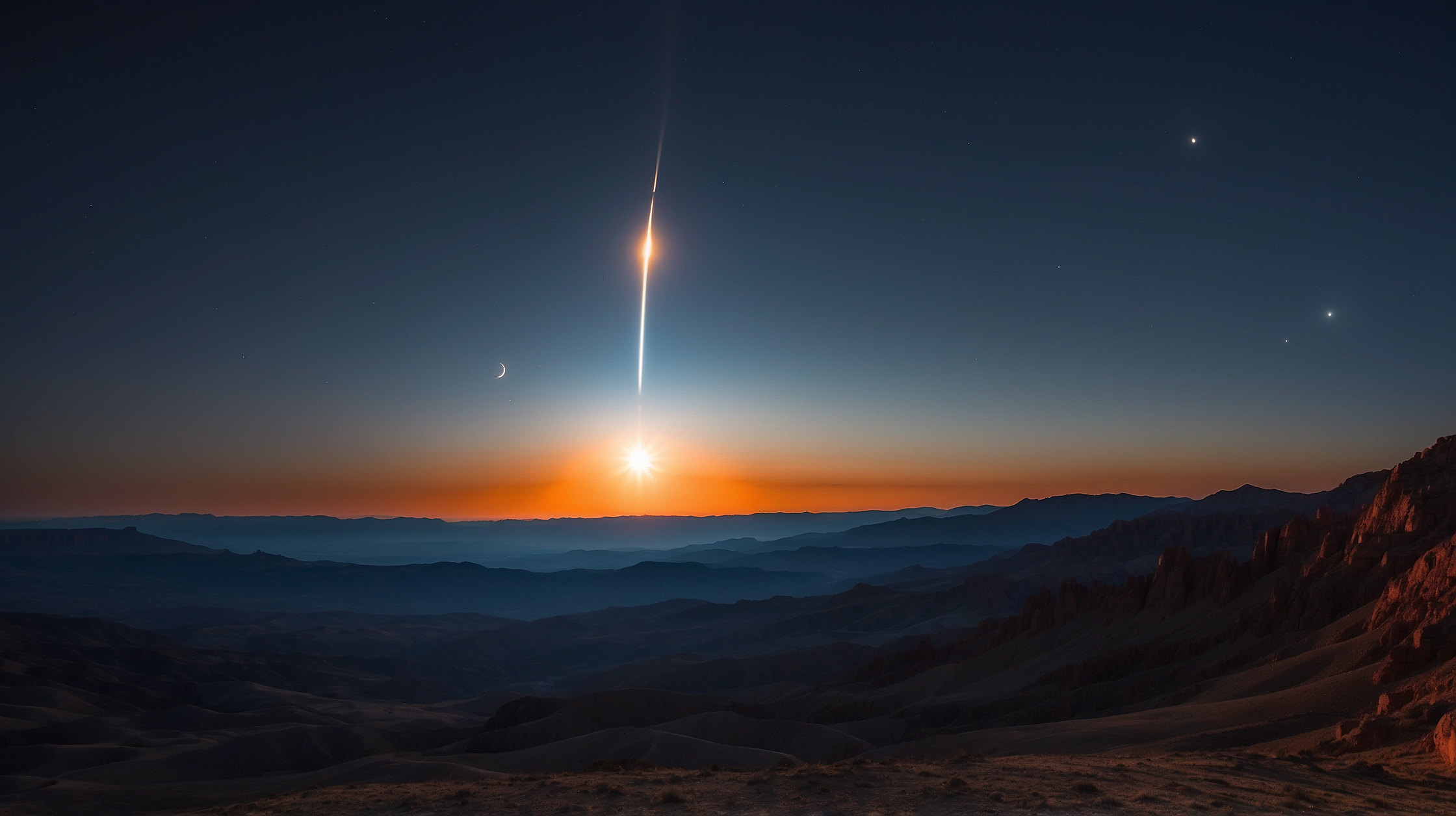

For a few awe-inspiring minutes, the skies above parts of the Earth will darken in the middle of the day as the **longest total solar eclipse of the 21st century** graces the heavens. This extraordinary celestial event promises an unforgettable spectacle for skywatchers in certain regions of the world. Solar eclipses can be remarkable on their own, but this one is drawing heightened attention for its historic length and optimal visibility across several densely populated areas.
The eclipse stands out not just for its rarity, but also for its duration: lasting 6 minutes and 39 seconds at its peak, it’s the longest total solar eclipse between 2001 and 2100. Astronomers, hobbyists, and travelers are planning skywatching vacations while local tourism boards are preparing for a swell of eclipse chasers. Whether you’re a scientist or just a lover of nature’s wonders, this eclipse is a moment where science meets spectacle — quite literally, the **day the sun disappears**.
Key details at a glance
| Event | Longest Total Solar Eclipse of the Century |
|---|---|
| Date | July 22, 2009 |
| Duration of Totality | Up to 6 minutes and 39 seconds |
| Path of Totality | India, Nepal, Bhutan, China, Japan, and Pacific Islands |
| Best Viewing Locations | Eastern China and remote areas of the Pacific |
| Special Notes | Longest total eclipse between 2001 and 2100 |
The celestial mechanics behind this historic event
A solar eclipse occurs when the **Moon passes directly between the Earth and the Sun**, obscuring the Sun’s exposure in varying intensities. During a total solar eclipse, the Moon completely blocks the Sun’s disk, allowing observers along a narrow path on Earth, known as the “path of totality,” to witness complete darkness, a rare and mesmerizing sight even for seasoned astronomers.
What sets this eclipse apart is not just its scope but its **extraordinary duration**, enabled by specific alignments between the Earth, Moon, and Sun. According to scientific analysis, this is due to the Moon being close to the Earth in its elliptical orbit and the Sun being near its farthest point from Earth (aphelion), maximizing the apparent size of the Moon and minimizing that of the Sun.
Where you can see the eclipse and what to expect
The path of totality for this eclipse is impressively long, starting in the Arabian Sea and sweeping across southern Asia. **Major cities in India, such as Surat and Varanasi**, will experience the eclipse in its early stages. From there, it moves across Nepal, Bhutan, and into mainland China, offering millions of people a direct view of the totality — something exceptionally rare in densely populated regions.
As the eclipse proceeds east, Japan and the Pacific islands, including **Iwo Jima** and parts of Micronesia, will also witness full totality. Skywatchers in path-adjacent areas will experience a partial eclipse, with the Sun appearing as a vivid crescent and light filtering eerily through vegetation. The sight has been described by previous viewers as “both humbling and exhilarating.”
Why this eclipse matters to scientists
This extended eclipse provides a **prime opportunity for scientific research**. Astronomers from around the globe are setting up observation stations along the path to study the Sun’s **corona**, the outermost part of the solar atmosphere. Normally obscured by the brightness of the Sun’s disk, the corona becomes visible during total eclipse — offering insights into solar wind, flare activity, and potentially disruptive space weather phenomena.
“This eclipse gives us the chance of a generation to observe the Sun in ways that would be impossible even with specialized instruments. A total eclipse is nature’s own telescope.”
— Dr. Lina Vargo, Astrophysicist
Eclipse tourism and preparation
Local governments and tour operators along the eclipse path have capitalized on the event by promoting **eclipse tourism**, offering packages that include transportation, lodging, and expert guidance. In areas like **Hangzhou and Shanghai**, hotels report high occupancy rates as enthusiasts flock to the region to catch the totality window.
Safety is paramount during any solar eclipse. Experts warn against looking at the Sun directly without certified **solar eclipse glasses**, as extended exposure — even during the partial phases — can cause permanent eye damage. Organized viewing parties in urban centers often include distribution of safe eyewear and live commentary from space scientists.
Local impact and cultural significance
The eclipse holds cultural and religious significance in various parts of Asia. In India and Nepal, ancient texts and oral traditions often regard solar eclipses as spiritual events, sometimes invoking rituals for purification or prayer. Temples schedule special ceremonies and many citizens fast or stay indoors during the eclipse window.
“There is superstition, but also awe. Eclipses remind people of their fragility in the cosmos, and that produces a deep spiritual connection across cultures.”
— Anil Desar, Cultural Anthropologist
Meanwhile, in urban China, officials used the occasion not only to boost tourism but also to promote **STEM education initiatives**, launching school-based eclipse programming to engage young minds.
Past and future eclipses in perspective
This eclipse not only dwarfs recent ones in scale but also serves as a **bookmark in the timeline of celestial phenomena**. The last eclipse of similar magnitude occurred in 1991, and the next won’t happen until 2132. This places the July 2009 eclipse in its own class of long-duration planetary alignment events.
Enthusiasts who missed totality this time around will have to wait years — sometimes decades — for nearby events. Meanwhile, photographers, educators, and the general public are encouraged to document and share their experiences, contributing to a growing archive of awe-inspiring media and first-person accounts.
Winners and losers of the 2009 solar eclipse
| Winners | Losers |
|---|---|
| Tourism operators in eclipse path | Regions with cloud cover |
| Astronomers and researchers | People without proper eye protection |
| Educational institutions | Those outside viewing range |
Short FAQs about the longest total solar eclipse of the century
How long did the 2009 total solar eclipse last?
The total eclipse lasted up to 6 minutes and 39 seconds at its peak — the longest of the 21st century.
Which countries were best for viewing?
India, Nepal, Bhutan, China, and some Pacific Island nations provided optimal viewing conditions for the total eclipse.
Is it safe to look at a solar eclipse directly?
Only during the brief moment of totality is it safe. At all other times, use certified solar eclipse eyewear to protect your vision.
Why was this eclipse special compared to others?
Its extraordinary length and visibility over populated areas made it unique. It was the longest total solar eclipse between 2001 and 2100.
When will the next eclipse of similar duration happen?
A similar eclipse is not expected until 2132, making this a once-in-a-lifetime event for most living observers today.
Are there any scientific benefits to observing eclipses?
Absolutely. They allow observation of the solar corona and enable study of solar magnetic fields, flare activity, and more.
What was the impact on tourism?
Tourism surged in cities along the path of totality, with hotels fully booked and guided tours in high demand.
Were there any cultural practices associated with the eclipse?
Yes, in parts of South Asia, eclipses are considered spiritually significant, leading to ritual fasting and temple ceremonies.
About the Author