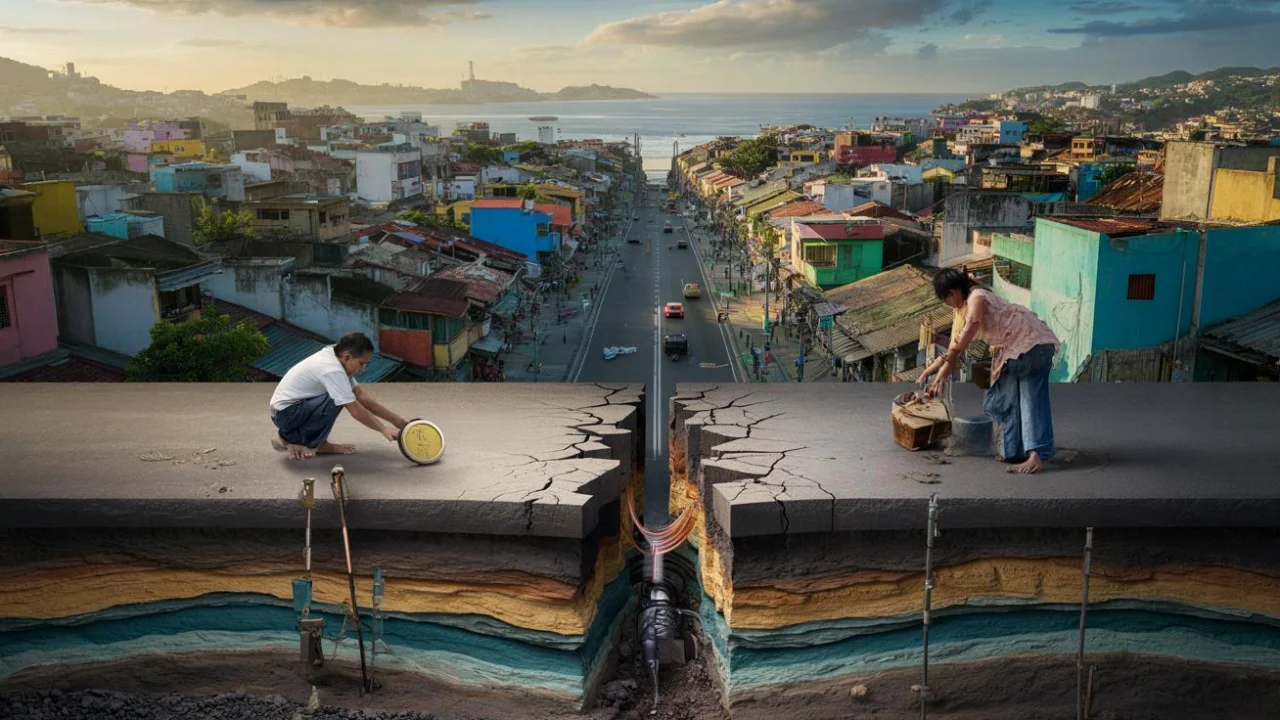
Maria noticed the crack in her kitchen floor on a Tuesday morning, right after her coffee maker started tilting slightly to the left. At first, she thought it was just the old house settling—after all, her neighborhood in Long Beach had been built decades ago when the oil derricks still dotted the horizon like steel forests.
But when she mentioned it to her neighbor, he pointed to his own cracked driveway, then to the uneven sidewalk that seemed to ripple like a frozen wave. “It’s the ground,” he said simply. “It’s been sinking for years.”
What Maria didn’t know was that beneath her feet, engineers had been fighting a quiet battle against land subsidence for decades—and in some places, they were actually winning.

The Silent Crisis Beneath Our Cities
Land subsidence doesn’t make headlines the way earthquakes or hurricanes do. There’s no single dramatic moment, no viral video. Just doors that stop closing properly, tilted lamp posts, and floods that creep a little farther into neighborhoods each rainy season.
Cities like Jakarta, Mexico City, Tehran, and parts of California’s Central Valley have been sinking for decades. Often quietly. Often invisibly. Yet the combined effect can be devastating: cracked buildings, damaged subway lines, and coastal neighborhoods that suddenly sit below sea level.

“People don’t realize their city is sinking until it’s too late,” says Dr. Jennifer Walsh, a geotechnical engineer who has studied subsidence patterns across major metropolitan areas. “By then, the infrastructure damage can cost billions to repair.”
The physics behind land subsidence are almost disappointingly simple. Underground, aquifers and oil reservoirs act like sponges and scaffolding simultaneously. When humans extract water or oil, the pressure inside those porous rocks drops. Grains of sand and clay slide closer together. Layers compact. The land surface sags.

Mexico City presents perhaps the most dramatic example. Built on a former lake, it has sunk more than 10 meters in some areas over the past century as groundwater was pumped faster than it could be replenished. Colonial churches now lean like tired giants, and entire neighborhoods have tilted into surreal landscapes.
The Ingenious Solution: Pumping Water Back Underground
Here’s where the story takes an unexpected turn. In several major cities, engineers have discovered something remarkable: they can actually slow or even reverse land subsidence by pumping water back into depleted oil fields.

The technique, known as water injection or aquifer recharge, works by restoring underground pressure that was lost when oil was extracted. As water fills the empty spaces left by decades of drilling, the rock layers regain some of their structural support.
| City/Region | Peak Subsidence Rate | Current Status | Water Injection Started |
|---|---|---|---|
| Long Beach, CA | 70 cm/year (1940s) | Nearly stopped | 1958 |
| Wilmington Oil Field, CA | 60 cm/year (1950s) | Stabilized | 1960s |
| Tokyo Bay Area | 24 cm/year (1960s) | Significantly reduced | 1970s |
| Houston, TX | 10 cm/year (1970s) | Ongoing efforts | 1980s |
The results have been impressive in many locations:
- Long Beach, California saw subsidence rates drop from 70 centimeters per year to virtually zero after implementing water injection
- Tokyo’s aggressive groundwater management reduced sinking from 24 centimeters annually to less than 2 centimeters
- Parts of the Wilmington Oil Field in California have actually risen slightly after decades of water injection
- Houston has slowed subsidence in several areas through strategic water management programs
“The key is getting the timing right,” explains Dr. Roberto Martinez, who has worked on subsidence projects in three countries. “Once the rock structure completely collapses, you can’t undo that damage. But if you catch it early enough, water injection can work like a hydraulic jack, slowly pushing the land back up.”
Real-World Impact: Lives and Infrastructure at Stake
The consequences of uncontrolled land subsidence extend far beyond cracked driveways and tilted buildings. In Jakarta, some neighborhoods now sit four meters below sea level, making them extremely vulnerable to flooding. The city is sinking so fast—up to 25 centimeters per year in some areas—that Indonesia is planning to move its capital.
Tehran faces a similar crisis. Parts of the city’s suburbs drop more than 25 centimeters annually, threatening the structural integrity of buildings and creating massive repair costs for infrastructure. The economic impact runs into billions of dollars when you factor in damaged roads, broken water mains, and compromised building foundations.
California’s Central Valley tells a different story—one where agricultural productivity meets geological reality. Decades of groundwater pumping for irrigation have caused some areas to sink more than 8 meters, damaging aqueducts, bridges, and highways. The state now spends hundreds of millions annually on infrastructure repairs directly related to subsidence.
“What people don’t realize is that land subsidence is often permanent,” notes Dr. Sarah Chen, a hydrologist specializing in groundwater management. “Unlike a flood or earthquake, where you can rebuild, subsidence changes the landscape forever. That’s why prevention through water injection is so crucial.”
The success stories offer hope, but they also highlight how location-specific these solutions can be. Water injection works best in areas with specific geological conditions—typically where oil or gas extraction created well-defined underground cavities that can be refilled.
Not every sinking city has access to suitable injection sites. Jakarta, for instance, sits on soft clay and alluvial deposits that make water injection less effective than in places like Long Beach, where engineers could target specific oil reservoir layers.
The timing factor cannot be overstated. Cities that implemented water injection programs early—like Long Beach in the 1950s—saw dramatic improvements. Those that waited until subsidence was already severe, like parts of Mexico City, found the technique less effective because the underground structure had already been permanently damaged.
As climate change intensifies water scarcity and urban populations continue growing, the lessons learned from successful subsidence control become even more valuable. The cities that figured out how to stabilize their ground decades ago now serve as blueprints for newer metropolitan areas facing similar challenges.
FAQs
What causes land subsidence in cities?
Land subsidence typically occurs when water, oil, or gas is extracted from underground, reducing pressure in rock layers and causing them to compact and sink.
How fast can a city sink?
Subsidence rates vary dramatically, from a few millimeters per year to over 25 centimeters annually in extreme cases like parts of Jakarta and Tehran.
Can land subsidence be reversed?
In some cases, yes. Water injection into depleted oil fields can slow or even slightly reverse subsidence, but permanent structural damage cannot be undone.
Which cities have successfully stopped sinking?
Long Beach, California is the most famous success story, reducing subsidence from 70 cm per year to nearly zero through water injection programs started in the 1950s.
Is land subsidence dangerous?
While not immediately life-threatening like earthquakes, subsidence can damage buildings, infrastructure, and flood defenses, creating long-term safety and economic risks.
Why don’t all sinking cities use water injection?
Water injection requires specific geological conditions, available water sources, and suitable injection sites—conditions that don’t exist everywhere.
About the Author
