Ahmed had been a tank mechanic in the Royal Moroccan Army for fifteen years when he first heard the rumors in the motor pool. His crew was wrestling with yet another broken transmission on an aging M60 Patton – a tank older than most of the soldiers operating it. “We spend more time fixing these machines than using them,” he muttered, wiping grease from his hands.
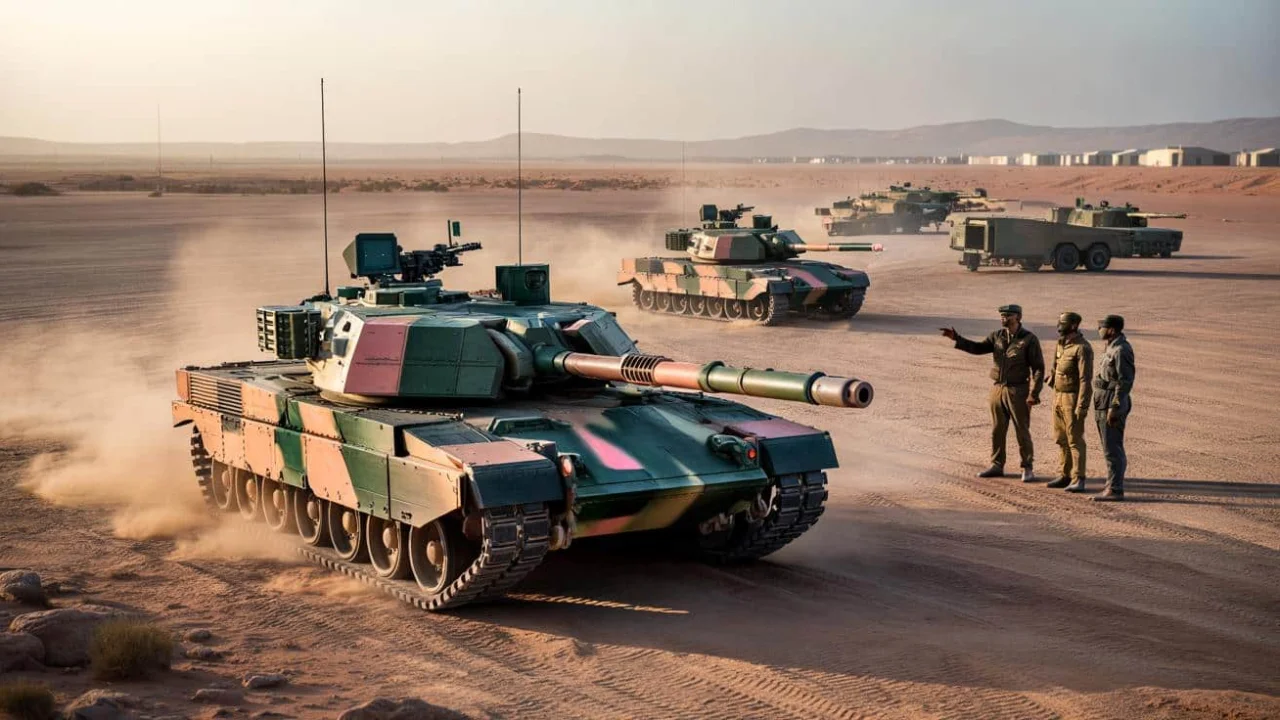
That conversation happened six months ago. Today, Ahmed and thousands of his colleagues might be looking at a completely different future. Morocco is seriously considering one of the largest tank purchases in its modern history: 400 K2 Black Panther tanks from South Korea.
For a country that has juggled American Abrams, Soviet T-72s, and Chinese-Pakistani hybrids for decades, this potential deal represents more than just new equipment. It could reshape how Morocco projects power across North Africa and addresses its complex security challenges.
The Tank Puzzle Morocco Needs to Solve
Morocco’s current armored force looks impressive on paper – roughly 1,100 main battle tanks spread across active and reserve units. But anyone who has worked with military logistics knows the hidden nightmare behind those numbers.
The Royal Moroccan Army operates at least five different tank families simultaneously. Each one demands its own spare parts, training programs, ammunition types, and maintenance expertise. When a T-72 breaks down in the Sahara, you cannot fix it with Abrams parts. When M60 crews need advanced training, they cannot learn on Chinese VT-1A simulators.
“Running several different tank families at once drives up maintenance costs, clogs logistics, and slows operational readiness,” explains a former NATO armor specialist who has worked with Moroccan forces.
The K2 Black Panther tanks could solve many of these problems by providing a single, modern platform that Morocco could build its future armored doctrine around. But the decision involves much more than just military efficiency.
What Makes the K2 Black Panther Special
South Korea’s K2 Black Panther represents one of the most advanced tank designs currently in production. Unlike older platforms that Morocco currently operates, these tanks were designed from the ground up for modern warfare scenarios.
Here are the key capabilities that have caught Morocco’s attention:
- Advanced Fire Control: The K2 can engage multiple targets simultaneously while moving at high speed
- Modular Armor: Protection systems can be upgraded without redesigning the entire vehicle
- Digital Integration: Full battlefield networking capabilities for coordinated operations
- Proven Reliability: South Korea has operated these tanks successfully since 2014
- Export Track Record: Poland has already ordered over 1,000 units, proving international appeal
| Feature | K2 Black Panther | Current Moroccan Tanks |
|---|---|---|
| Main Gun | 120mm L/55 smoothbore | Mixed: 105mm, 120mm, 125mm |
| Weight | 55 tons | 42-70 tons (varies) |
| Top Speed | 70 km/h | 45-67 km/h (varies) |
| Crew | 3 (automated loader) | 3-4 (manual loading) |
The automated loading system alone represents a significant advantage. Moroccan tank crews currently spend considerable time and energy on manual ammunition handling – time that could be better spent on tactical operations.
“The K2’s automation reduces crew fatigue and increases sustained firing rates,” notes a defense analyst familiar with both Korean and North African military requirements. “For desert operations where crews face extreme heat, that matters enormously.”
Why This Deal Matters Beyond Morocco’s Borders
A 400-tank purchase would instantly make Morocco one of the largest K2 operators outside of South Korea itself. But the implications stretch far beyond Moroccan military planning.
Regional neighbors are watching closely. Algeria, Morocco’s primary rival, operates predominantly Russian-made tanks including T-90s and upgraded T-72s. A fleet of modern K2 Black Panther tanks would significantly shift the regional balance of conventional forces.
The timing also matters geopolitically. Morocco has been diversifying its defense partnerships away from exclusive reliance on the United States and France. Previous purchases of Chinese VT-1A tanks and Turkish military equipment signal this broader strategic shift.
For South Korea, this potential deal represents validation of their defense export strategy. Korean companies have aggressively marketed the K2 to international customers, with Poland’s massive order providing crucial momentum.
“Korea is proving that you don’t need to be American, Russian, or German to build world-class tanks,” observes a European defense industry executive. “Morocco choosing K2s would cement that reputation in a strategically important region.”
The financial aspects also deserve attention. While exact pricing remains confidential, industry estimates suggest the total package could exceed $6 billion when including training, spare parts, and local maintenance facilities. That would make this one of South Korea’s largest defense exports ever.
Morocco’s military modernization comes as the country faces diverse security challenges. Tensions with Algeria persist, while Morocco also contributes to international peacekeeping operations where modern, reliable equipment provides both capability and credibility.
The K2 purchase would also support Morocco’s domestic defense industry ambitions. South Korean companies typically include technology transfer and local assembly components in major export deals, potentially helping Morocco develop indigenous armored vehicle capabilities.
However, several obstacles could still derail the deal. Financing such a large purchase requires careful budget management, especially as Morocco balances military modernization with economic development priorities. Political changes in either country could also affect the timeline.
American reactions remain another consideration. While the United States continues as Morocco’s primary security partner, Washington has generally accepted Morocco’s defense diversification as long as it doesn’t compromise NATO interoperability standards.
Training and transition challenges cannot be ignored either. Converting from multiple tank types to a unified K2 fleet would require extensive retraining for thousands of crew members, mechanics, and commanders. South Korea would likely need to establish training centers in Morocco to support this transition effectively.
FAQs
How many tanks does Morocco currently operate?
Morocco fields approximately 1,100 main battle tanks across active and reserve units, including various American, Soviet, and Chinese models.
Why is Morocco considering South Korean tanks instead of more American ones?
Morocco wants to diversify its defense suppliers and reduce dependence on any single country, while also getting advanced technology at competitive prices.
How long would it take to deliver 400 K2 Black Panther tanks?
Based on South Korea’s production capacity and similar export contracts, delivery would likely span 3-5 years from contract signing.
Would Morocco be the first African country to operate K2 tanks?
Yes, Morocco would become the first African nation to operate the K2 Black Panther if the deal proceeds.
How much would 400 K2 tanks cost Morocco?
While official figures aren’t public, industry estimates suggest the complete package including training and support could exceed $6 billion.
Could other countries in the region also buy K2 tanks?
South Korea actively markets the K2 internationally, so other nations could potentially purchase them, though each deal depends on specific requirements and political relationships.
About the Author