Maria Rossi still remembers the excitement in her hometown of Turin when BAE Systems announced they’d be expanding their Italian operations for the new fighter jet project. Her husband worked at the local aerospace supplier, and like many families, they saw this as a chance for stable, high-tech jobs for years to come.

But three years later, that optimism has curdled into frustration. The promises of shared technology and equal partnership seem hollow now, as Italian officials openly accuse their British counterparts of hoarding crucial defense secrets. For families like the Rossis, it’s not just about national pride—it’s about whether their investments in skills and infrastructure will pay off.
This is the human cost behind the diplomatic headlines. When the joint fighter jet project stumbles, real people feel the impact.

Why Italy Is Losing Patience With Britain
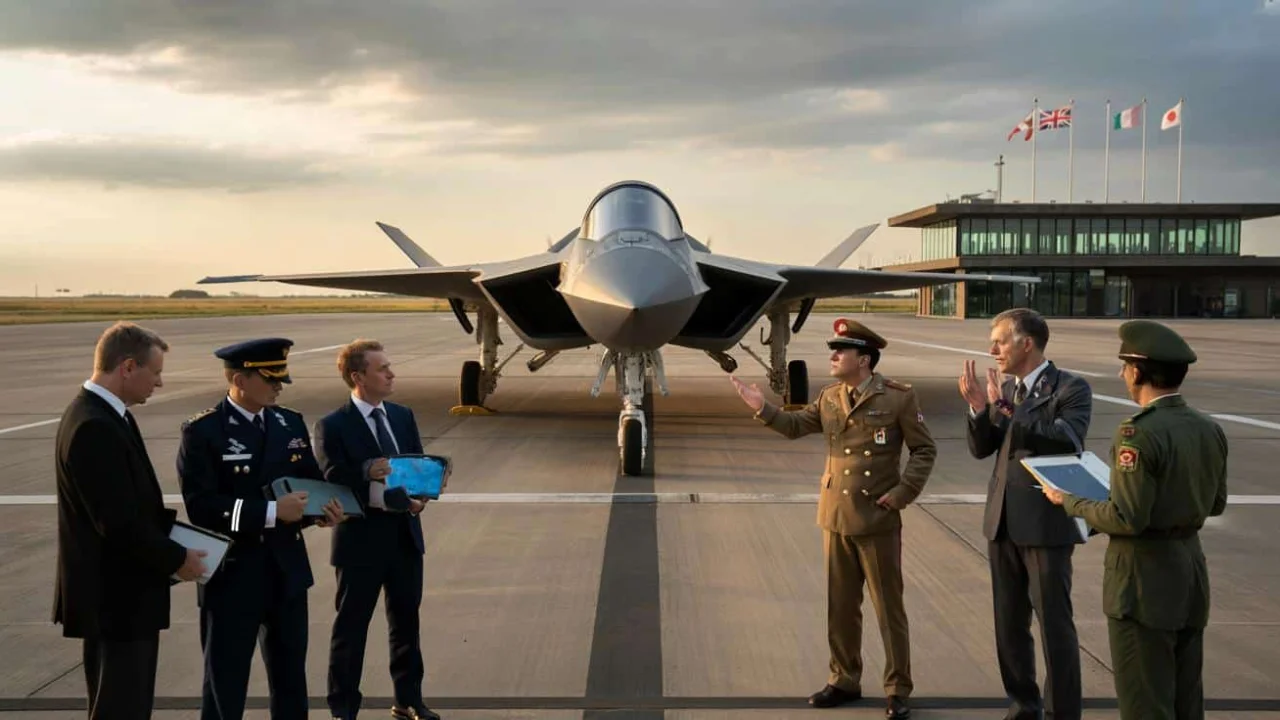
The Global Combat Air Programme (GCAP) was supposed to be different. Unlike previous defense collaborations where one partner dominated, this joint fighter jet project promised genuine equality between Britain, Italy, and Japan.
But Italian Defense Minister Guido Crosetto has shattered that illusion with unusually blunt criticism of his British counterparts. In late January, he accused London of treating the partnership like a traditional client-supplier relationship rather than an equal collaboration.
“The British stance makes no sense politically or historically,” Crosetto said during a press conference. “Withholding technology between allies is madness and ultimately benefits rival powers.”
The frustration runs deeper than diplomatic niceties. Italy has invested billions in this joint fighter jet project, upgrading facilities and training workers for what was promised to be a truly integrated partnership.

According to defense industry sources, the core dispute centers on Britain’s reluctance to share sensitive radar and electronic warfare technologies. These aren’t minor components—they’re the systems that could give the future fighter jet its decisive edge in combat.
“When you’re asking countries to invest in shared infrastructure and skilled workers, you can’t then say ‘but we’re keeping the best bits to ourselves,'” explains Dr. Alessandro Marrone, a defense analyst at the Italian Institute for International Affairs.
Breaking Down the Technology Dispute
The argument isn’t happening in a vacuum. Here’s what’s actually at stake in this joint fighter jet project:
| Technology Area | British Position | Italian Concerns | Impact on Project |
|---|---|---|---|
| Radar Systems | Limited sharing due to security | Undermines equal partnership | Could delay development by 2+ years |
| Electronic Warfare | UK-controlled development | Blocks Italian industry growth | Reduces cost-sharing benefits |
| AI Integration | Shared development model | Acceptable compromise | On track for timeline |
| Engine Technology | Joint development with Rolls-Royce | Satisfactory arrangement | Meeting milestones |
The stakes couldn’t be higher for this joint fighter jet project. The three partners have already committed over $30 billion to development, with production costs potentially reaching $100 billion over the aircraft’s lifetime.
Key concerns driving the Italian position include:
- Industrial workshare not matching initial agreements
- Limited access to critical technologies needed for domestic defense industry growth
- Concern that Britain views partners as junior members rather than equals
- Fear that technology restrictions will limit export opportunities
“Italy didn’t sign up to be a subcontractor,” notes former Italian Air Force General Claudio Graziano. “We expected to be genuine partners in developing the technologies that will define air combat for the next 40 years.”
The dispute also reflects broader concerns about technology transfer in international defense projects. Unlike civilian industries, military technology sharing involves strict export controls and national security considerations that can quickly complicate partnerships.
Real-World Consequences Beyond the Headlines
While politicians and generals trade barbs, the impact of this dispute ripples through communities across all three countries involved in the joint fighter jet project.
In northern England, BAE Systems has hired thousands of engineers specifically for GCAP development. These workers now face uncertainty about whether their specialized skills will remain relevant if the partnership fractures.
Similarly, Italian aerospace companies have retooled production lines and invested in new capabilities based on promised workshare agreements. If Britain continues restricting technology access, these investments may never pay off.
“My company spent three years training workers on advanced composite manufacturing for this project,” explains Roberto Castellani, whose firm supplies components for Italian aerospace. “If the technology-sharing disputes continue, we might have to look elsewhere for business.”
Japan faces its own challenges. As the newest partner in the joint fighter jet project, Tokyo has been more diplomatic but privately shares Italian concerns about equal access to critical technologies.
The broader implications extend beyond industrial concerns:
- Weakened NATO unity as key allies publicly dispute defense cooperation
- Potential delays in fielding next-generation combat aircraft amid rising global threats
- Risk of cost overruns as partners consider alternative development paths
- Damage to future international defense collaboration prospects
“Trust takes decades to build and moments to destroy,” warns James Black, a defense analyst at the RAND Corporation. “If partners can’t resolve these technology-sharing disputes, it sends a terrible signal about Western cooperation at a time when unity is crucial.”
The timing couldn’t be worse. With tensions rising globally and defense budgets under pressure, the three partners need this joint fighter jet project to succeed both militarily and economically.
Yet resolution requires Britain to balance legitimate security concerns with partnership obligations—a challenge that has derailed defense collaborations before.
As families like the Rossis watch from the sidelines, the question isn’t just whether politicians can resolve their differences. It’s whether the promise of genuine international cooperation in defense technology can survive the reality of national interests and security concerns.
The answer will shape not just this joint fighter jet project, but the future of allied defense cooperation for decades to come.
FAQs
What is the Global Combat Air Programme (GCAP)?
GCAP is a joint fighter jet project between Britain, Italy, and Japan to develop a sixth-generation combat aircraft by the mid-2030s, featuring advanced stealth, AI integration, and drone coordination capabilities.
Why is Italy accusing Britain of withholding technology?
Italian officials claim Britain is restricting access to critical radar and electronic warfare technologies, treating partners more like subcontractors than equal collaborators in the joint fighter jet project.
How much money is involved in this project?
The three partners have already committed over $30 billion to development costs, with total production and lifecycle costs potentially reaching $100 billion over several decades.
What happens if the partnership fails?
A failed partnership could delay next-generation fighter development by years, waste billions in investments, and force each country to pursue more expensive independent programs.
Are there similar disputes in other international defense projects?
Yes, technology-sharing disputes are common in international defense collaborations due to export controls and national security concerns, though few become as public as this joint fighter jet project controversy.
When is the new fighter jet supposed to enter service?
The joint fighter jet project aims to field operational aircraft by the mid-2030s, but technology disputes and other delays could push this timeline back significantly.
About the Author