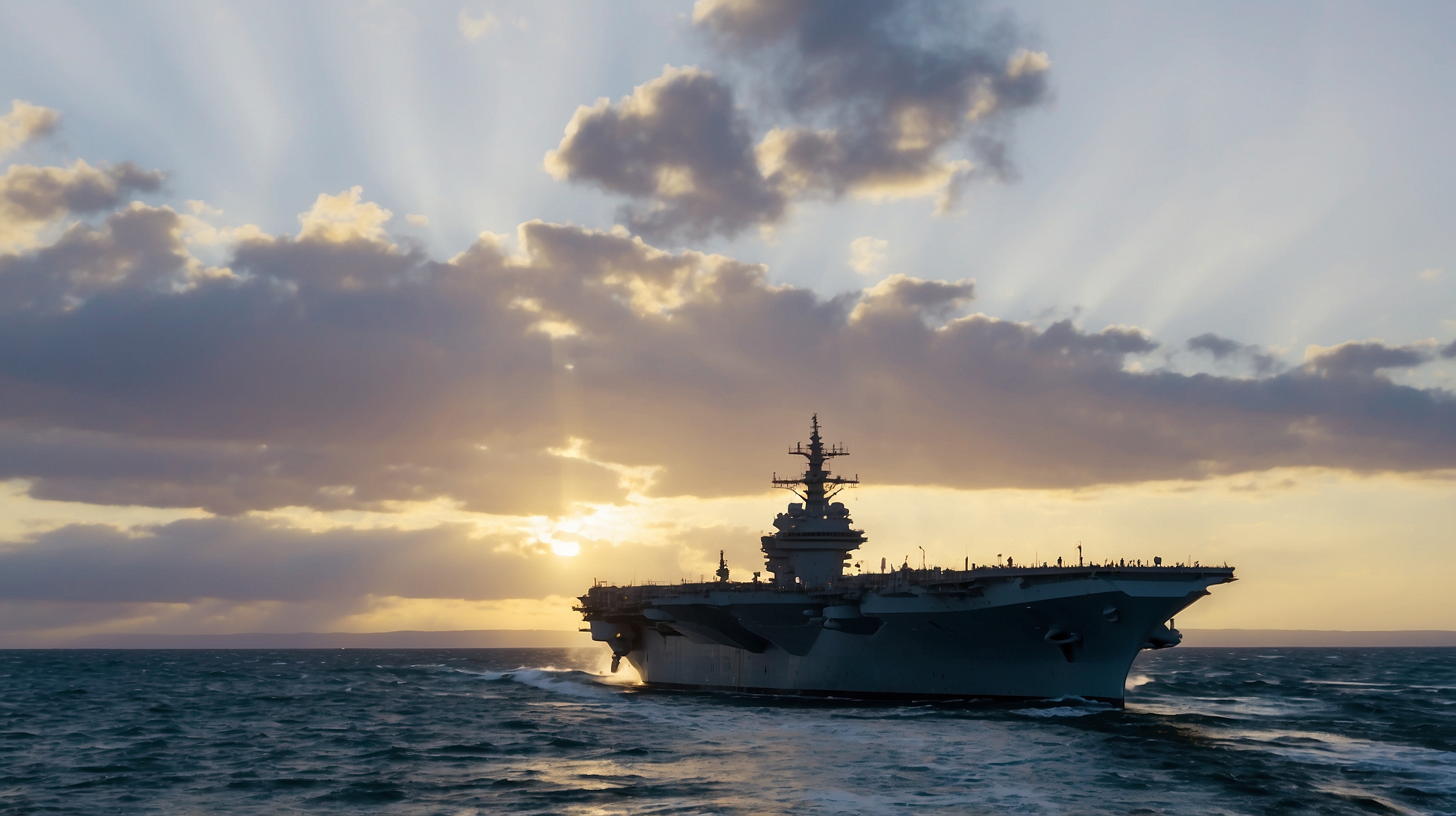

The open ocean is host to a dazzling array of modern marvels, but few are as awe-inspiring as the world’s largest aircraft carrier. Towering over 20 stories above the waterline and stretching more than three football fields in length, this floating city redefines the meaning of military dominance. Much more than just a naval vessel, it is a symbol of geopolitical influence, technological prowess, and strategic depth that projects power anywhere across the globe within days.

As nations compete for supremacy on the seas, the aircraft carrier remains the centerpiece of modern naval strategy. It brings together cutting-edge aviation capabilities, high-end digital systems, nuclear-powered propulsion, stealth, and survivability features. More than just a collection of weapons and steel, it embodies the capability to control vast swaths of ocean and influence global events from thousands of miles away. Few military assets exert the same kind of psychological, political, and tactical leverage. The sheer size and scale of operations aboard the world’s largest aircraft carrier offer a detailed glimpse into the future of maritime warfare.
Key specifications of the world’s largest aircraft carrier
| Vessel Name | USS Gerald R. Ford (CVN-78) |
| Displacement | Over 100,000 tons |
| Length | 1,106 feet (337 meters) |
| Propulsion | 2× A1B nuclear reactors |
| Crew Capacity | Up to 4,539 personnel (including air wing) |
| Aircraft Capacity | More than 75 aircraft |
| Top Speed | 30+ knots |
| Commissioned | 2017 |
How size influences tactical dominance
The enormity of the USS Gerald R. Ford is not purely for show — its size is intrinsic to its operational capacity. With a flight deck that spans nearly eight acres, the aircraft carrier facilitates simultaneous takeoff and landing operations, a critical advantage during combat missions or rapid-response deployments. The size also allows for unparalleled storage of fuel, munitions, spare parts, and aviation equipment. A key feature, the Electromagnetic Aircraft Launch System (EMALS), leverages the ship’s space to replace old steam catapults, reducing wear and tear on aircraft, and accelerating launch cycles exponentially.

The scale isn’t just vertical or horizontal — it’s systemic. Below its decks, dozens of interconnected compartments serve logistics, communication, mechanical, and intelligence operations. Combined with satellite connectivity and localized drone operations, the carrier can orchestrate multi-domain operations like few military platforms can. The vessel’s overwhelming footprint also acts as a deterrent; few adversaries wish to confront a war machine that doubles as a mobile fortress.
Technological edge that redefines what’s possible at sea
The CVN-78 boasts technological advancements that distinguish it from previous classes. Apart from the EMALS, the ship includes the Advanced Arresting Gear (AAG) system, which improves pilot safety and aircraft handling on landing. Designed with 25% fewer crew members compared to predecessors, the Ford-class carrier relies heavily on automation and integrated warfare systems. This transformation reduces manpower demands while streamlining decision-making processes during engagement scenarios.

One of the most significant upgrades is in radar and electronic warfare capabilities. The first of the class sports the dual-band radar system that fuses surveillance and missile-tracking functions, enhancing the ship’s defensive perimeter dynamically. The carrier also serves as a floating testbed for cyber resilience and electronic defense — mission-critical tools in modern combats where jammers and hacks can render lesser ships blind. With an improved nuclear power plant, the vessel generates significantly more electricity, paving the way for integration of future weapon platforms such as railguns and directed-energy weapons.
Air operations transformed by superior infrastructure
At any moment, the USS Gerald R. Ford can deploy and recover a slew of aircraft ranging from F/A-18 Super Hornets, EA-18G Growlers, E-2D Advanced Hawkeyes, to unmanned aerial vehicles. Its size enables a higher sortie rate than older carriers — up to 160 flights a day during sustained operations, and as many as 220 in surge conditions. Innovations like deck flow optimization mean quicker refueling, realignment, and rearming of aircraft without interfering with ongoing missions.

Moreover, the onboard hangars and elevators allow for rapid aircraft movement and maintenance without sacrificing operational tempo. This fluidity is vital in combat scenarios where response times are measured in seconds. Air power, long recognized as a pillar in military dominance, is amplified when deployed from a cavernous and well-equipped base like this aircraft carrier.
Crew life and operational excellence at scale
Running such a immense operation requires highly trained personnel, managed with precision. Despite the smaller crew count compared to older carriers, the USS Gerald R. Ford maintains high morale and efficiency through better living standards. Enhanced accommodations, medical facilities, recreational areas, and communication channels keep sailors mission-ready across extended deployments.
Automation aids tasks like ordnance transport, supply chain workflow, and engineering management. Digital dashboards replace analog dials, and smart diagnostics identify equipment wear ahead of time. This seamless integration between human and machine is perhaps the pinnacle of modern naval architecture, allowing the ship to remain at sea longer while retaining peak performance.
Winners and stakeholders gaining the most
| Winners | Why They Benefit |
|---|---|
| U.S. Navy | Increased operational capabilities and global presence |
| Allied Nations | Stronger joint security operations and deterrence in contested zones |
| Defense Contractors | Ongoing contracts and innovation opportunities |
| Losers | Why They’re Disadvantaged |
| Rival Naval Powers | Outmatched by advanced technology and large-scale presence |
| Insurgent Groups | Greater surveillance and immediate response capabilities |
What experts are saying about naval superiority
The Gerald R. Ford represents a transformational leap for naval dominance in the 21st century. Its capabilities outpace those of any current adversary.
— Captain Marissa L. Davis, Naval Strategy Expert
Size matters at sea, but it’s what you do with that space — the systems, the people, the tech — that truly define supremacy.
— Dr. Howard Price, Military Analyst
It’s not just a carrier. It’s an air base, a command center, a humanitarian hub, and a deterrent all in one.
— Rear Admiral (Ret.) Jonathan Greene
Frequently asked questions about the world’s largest aircraft carrier
What class is the world’s largest aircraft carrier?
The world’s largest aircraft carrier belongs to the Ford-class of carriers, specifically the USS Gerald R. Ford (CVN-78).
How many aircraft can it carry?
The carrier can support and operate more than 75 aircraft, including fighter jets, electronic warfare planes, and drones.
Is it nuclear powered?
Yes, the ship is powered by two A1B nuclear reactors, giving it nearly unlimited range and power capacity.
How many personnel are onboard?
Up to 4,539 personnel, including the ship’s company and associated air wing, operate the carrier.
When was the USS Gerald R. Ford commissioned?
The ship was commissioned into active service in July 2017.
Can the ship operate autonomously?
While not fully autonomous, the aircraft carrier uses advanced systems for automation that reduce crew workload and increase efficiency.
Is it stationed in a specific location?
The carrier is home-ported in Norfolk, Virginia but is deployed globally in mission-specific zones.
How long can it stay at sea without resupply?
Thanks to its nuclear power and massive storage, it can remain deployed for months, with periodic aerial resupply for essentials like food and parts.
About the Author