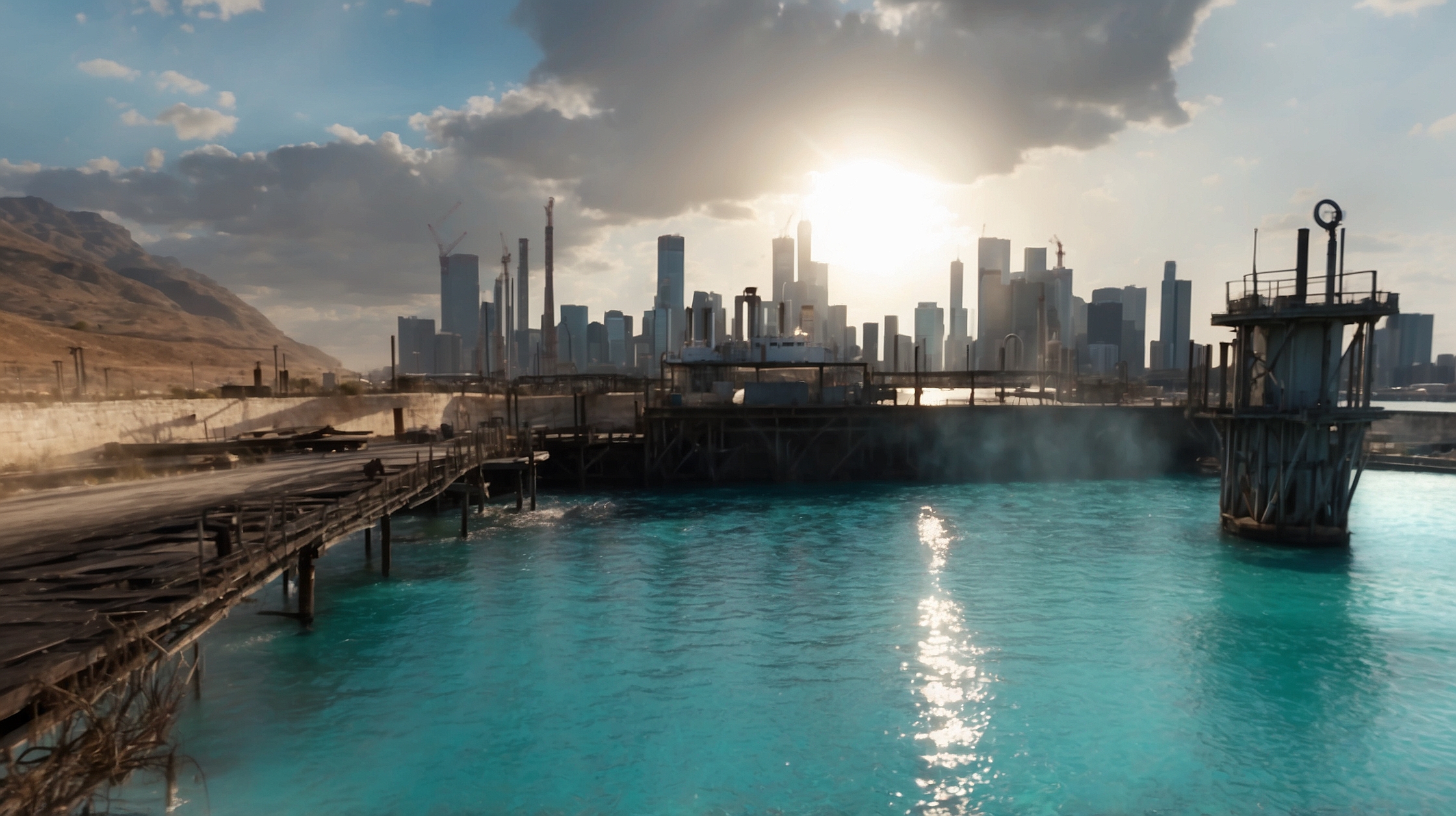
Across the globe, major cities are struggling with a silent, downward shift—**land subsidence**, or sinking of the ground, caused by both natural forces and human activities. One of the most dramatic ways this manifests is in coastal and urban regions where excessive groundwater extraction, fossil fuel pumping, and geological shifts combine to trigger gradual but irreversible lowering of land levels. But now, engineers and scientists have identified a method to both slow and, in some instances, reverse the problem. Surprisingly, part of the solution lies deep underground—within the abandoned reservoirs of long-depleted oil fields.

In a number of urban centers, particularly those located in tectonically active or resource-rich areas, a novel method of **injecting water back into depleted oil wells** is helping stabilize the terrain. The science is precise and backed by geotechnical data: refilling the subterranean voids once occupied by crude oil and gas relieves stress on geological formations and slows subsidence. This approach is transforming not just how we manage fossil fuel legacy sites, but also offering a much-needed buffer for cities wrestling with urban expansion and climate change. Here’s a closer look at how this water injection process works, its efficacy, and the broader implications for urban resilience.
Key Details at a Glance
| Problem Addressed | Urban land subsidence due to oil extraction and groundwater depletion |
| New Solution | Injecting water into old and depleted oil fields |
| Primary Locations | California (Central Valley, Long Beach), parts of Asia and the Middle East |
| Benefits | Stabilizes ground levels, reduces infrastructure risk, enhances environmental control |
| Main Risk Factors | Costs, water sourcing, unintended seismic activity |
Why oil field voids trigger land sinking
To understand how injecting water solves the problem, it’s vital to grasp the **mechanics of subsidence**. When oil or gas is extracted from underground reservoirs, the pressure below the Earth’s surface drops. These reservoirs, often resting between layers of soft rock, compact as the natural fluids are removed, causing the soil above to lose support and compress. Over time, this results in land sinking, often unevenly, which threatens buildings, water supplies, roads, and railways.

“It’s like pulling the stuffing out of a mattress. Unless the space is refilled, the top layer will slump into the empty void,” explained Dr. Alicia Moreno, a geological engineer involved in subsidence monitoring. This issue is particularly severe in regions that have seen intense oil drilling over several decades. California, for example, has areas like Long Beach that have dropped by more than 30 feet since drilling began mid-20th century.
How water injection works to prevent further collapse
The process of water reinjection involves pumping water—often recycled or desalinated—into existing wells to maintain pressure levels within the underground reservoir. This practice, known formally as **reservoir pressure maintenance**, not only reduces or halts further subsidence, but can, in certain conditions, lead to a slow uplift or rebounding of the land. When applied skillfully using advanced monitoring systems, the method can stabilize entire districts prone to collapse.

“This isn’t just about conservation,” said Jacob West, a petroleum geoscientist. “It’s a form of Earth engineering—using what we know about geology to retrofit stability beneath our cities.” Over 4,000 wells in the United States alone are estimated to be suitable for this type of reinjection stabilization, with California leading the pilot projects using this technique.
What makes some regions more vulnerable than others
Subsidence is complex and differs significantly by geography and geological makeup. Areas where oil fields coincide with **clay-rich soils**, for example, experience higher risks. Similarly, basin cities—those built on low-lying sedimentary deposits—are particularly vulnerable. Places like Jakarta, Indonesia and Mexico City are seeing urban sink rates of several inches per year, much of it due to fluid extraction both from aquifers and oil fields.

In California’s Central Valley, subsidence occurred at unprecedented levels after both water and oil extraction were performed simultaneously. In contrast, cities that instituted reinjection strategies earlier—such as parts of Houston and Los Angeles—have seen success in halting sinkage and even recovering inches in subsided zones.
The climate-era urgency for subsidence solutions
As sea levels rise due to climate change, **low-lying coastal cities have an amplified urgency** to fight land sinking. It’s no longer a matter of urban inconvenience; it’s a fundamental question of survival for tens of millions. Land subsidence amplifies the effects of flooding, storm surges, and even infrastructural failure in airports, metro stations, and highway systems.
That’s why this reservoir reinjection strategy is gaining global attention. Pilot initiatives in cities from Shanghai to Dubai are now evaluating it as part of their climate resilience planning. Governments are collaborating with oil companies, water resource authorities, and geophysical institutes to test the stability and scalability of these methods.
Winners and losers in the shifting ground
| Winners | Losers |
|---|---|
| Urban residents in high-risk sinkage zones | Cities lacking geological mapping and reinjection infrastructure |
| Environmental planners focused on adaptive reuse | Municipalities with outdated oil policy and regulation |
| Energy companies enabling sustainable transition practices | Developers building on unstable sediment soils |
Concerns and limitations of the method
While water reinjection has clear benefits, it also raises **environmental and financial concerns**. The source of injection water—often requiring treatment or desalination—can resource-costly. Additionally, injecting fluid back into the Earth carries a slight but noteworthy risk of inducing **microseismic events**, especially along fault lines already stressed due to tectonic movement.
Experts urge careful geological assessment before deployment. “We have to map not just where the voids are, but how the surrounding earth layers may react to new pressure zones,” notes Dr. Cheyenne Park, a seismology researcher. Some critics argue that without federal or international regulation, inconsistent standards could lead to accidents or unintended outcomes.
Looking ahead: policy and infrastructure upgrades
Successful application of reinjection technology relies on **collaborative infrastructure**—oil companies providing well access, water utilities ensuring supply, and city planners aligning their environmental and development priorities. Many see this as an opportunity to repurpose declining oil industries toward urban sustainability goals.
The technology also underscores the need for **updated land use policies**. Urban development should factor geological memory into zoning laws, with comprehensive maps of subterranean reservoirs integrated into future planning. The aim isn’t just land stability, but long-term security and adaptation to environmental shifts.
“We’re transforming a symbol of the past—oil infrastructure—into a stabilizer for our future.”
— Julia Kim, City Resilience Strategist
Frequently Asked Questions
What causes land subsidence in urban areas?
Land subsidence is primarily caused by the removal of underground fluids such as water, oil, or gas. This creates voids below the surface that can lead to ground sinking as the overlying materials compress into those empty spaces.
How does water injection help reverse subsidence?
Pumping water into depleted oil fields helps maintain or restore underground pressure, which supports the geological structure and slows or even halts the subsidence process.
Are there any cities currently using this method?
Yes, cities in California like Long Beach and areas in the Central Valley have implemented reinjection strategies. International examples include pilot programs in parts of Asia and the Middle East.
Is reinjected water safe for the environment?
Generally, the water is treated or comes from recycled sources. However, environmental risks exist if not properly managed, including groundwater contamination and induced seismicity.
Can this process uplift land that has already sunk?
In some cases, minor uplift has been observed after sustained water reinjection. However, most results show land stabilization rather than full reversal.
What challenges do cities face when adopting water reinjection?
Major challenges include sourcing enough clean water, infrastructure costs, inter-agency coordination, and managing the risk of unintended seismic effects.
Will this technology be widely used in the future?
Experts believe it has strong potential, especially as cities seek to adapt urban infrastructure in the face of climate threats and land instability.
What industries are involved in making this work?
Primarily oil and gas companies, water utilities, environmental engineers, and urban planners collaborate on reinjection projects to ensure safe and effective outcomes.
About the Author