Sarah Martinez had been looking forward to this Monday afternoon for weeks. Her 17-year-old son Jake was playing in what could be his final high school hockey game, and she’d taken time off work to watch him compete at the Dennis M. Lynch Arena in Pawtucket. Like dozens of other parents, she settled into the bleachers with her camera ready, expecting nothing more than the usual excitement of teenage athletes giving their all on the ice.
Instead, Sarah found herself crouched behind metal seating, shielding her younger daughter as gunshots echoed through the arena. In a matter of seconds, what should have been a celebration of high school athletics became a nightmare that would haunt this Rhode Island community forever.
The Pawtucket hockey shooting that unfolded that afternoon represents every parent’s worst fear—a safe space where families gather to support their children suddenly transformed into a scene of unimaginable violence.
When Family Tragedy Meets Public Horror
The hockey shooting occurred just before 2:30 p.m. during a boys’ game between Coventry-Johnston and the Blackstone Valley Schools cooperative team. What made this incident particularly devastating wasn’t just the violence itself, but the deeply personal nature of the attack that played out in front of dozens of unsuspecting families.
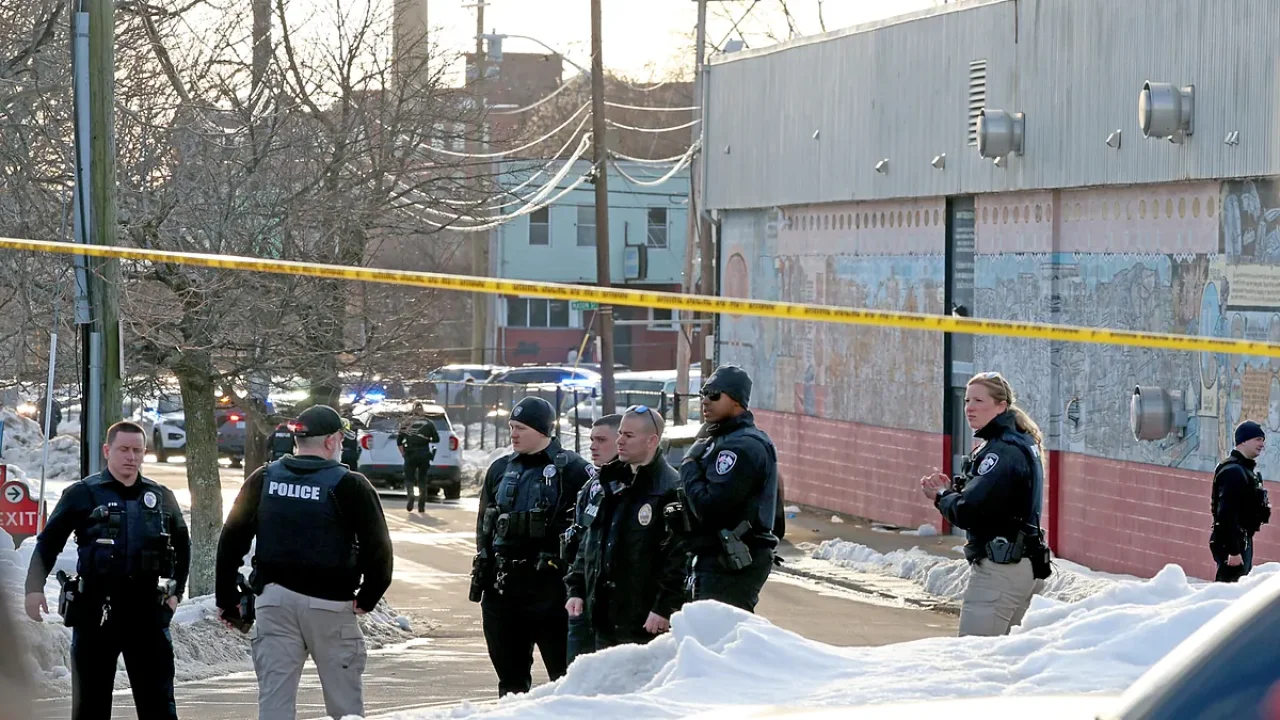
According to Pawtucket Police Chief Tina Goncalves, the gunman was found dead inside the arena from what appeared to be a self-inflicted gunshot wound. Three additional people were rushed to local hospitals in critical condition, while at least one other person sustained minor injuries.
“This wasn’t a random act of violence,” Chief Goncalves explained during a press conference. “Our preliminary investigation suggests this was a targeted attack involving family members.”
The most heartbreaking confirmation came from the shooter’s own daughter, who spoke to reporters outside the Pawtucket Police Department. Fighting back tears, she identified her father as the gunman and revealed the family’s struggle with his mental health issues.

“He shot my family,” she said, her voice barely audible. “We knew he was struggling, but we never thought it would come to this.”
Chaos on the Ice: How the Hockey Shooting Unfolded
The sequence of events that transformed a routine hockey game into a crime scene happened with terrifying speed. Witnesses described the initial confusion as the first shots rang out—many people thought they were hearing equipment hitting the boards or other typical arena sounds.
Here’s what investigators have pieced together so far:
- The shooting began around 2:25 p.m. during active gameplay
- Multiple shots were fired in quick succession
- Players immediately fled the ice, many still carrying their sticks and helmets
- Spectators scrambled for cover behind bleachers and in locker rooms
- The gunman appeared to target specific family members in the crowd
- Emergency responders arrived within minutes of the first 911 calls
One parent who witnessed the hockey shooting described the scene: “Kids were crying, parents were screaming for their children. Hockey equipment was scattered everywhere as people just ran.”
| Incident Details | Information |
|---|---|
| Location | Dennis M. Lynch Arena, Pawtucket, RI |
| Time | Approximately 2:25 p.m. |
| Teams Playing | Coventry-Johnston vs. Blackstone Valley Schools |
| Casualties | 3 dead (including shooter), 3+ hospitalized |
| Motive | Family dispute/targeted attack |
| Agencies Investigating | Local police, FBI, ATF |
The Federal Bureau of Investigation and the Bureau of Alcohol, Tobacco, Firearms and Explosives are now assisting local authorities in the investigation. Their involvement underscores the serious nature of this hockey shooting and the complex web of factors that may have contributed to the tragedy.
A Community Struggles to Process the Unthinkable
The ripple effects of the Pawtucket hockey shooting extend far beyond the arena walls. Both Coventry-Johnston and Blackstone Valley school districts immediately implemented crisis counseling services for students and families who witnessed the violence.
Parents like Maria Santos, whose son plays for the Blackstone Valley team, are grappling with how to help their children process what they experienced. “My 16-year-old keeps asking me why this happened,” Santos shared. “How do you explain that someone’s father decided to hurt his own family in front of all these kids?”
The timing of the hockey shooting makes it even more poignant. Monday’s game was part of “senior night” celebrations, meant to honor graduating players and their families. Instead of celebrating achievements and looking forward to the future, these families are now dealing with trauma that will likely affect them for years to come.
Local mental health professionals have stepped up to provide support, but they acknowledge the unique challenges this situation presents. “When violence occurs in a space that’s supposed to be safe and celebratory, it can shake people’s fundamental sense of security,” explained Dr. Jennifer Walsh, a trauma counselor working with affected families.
The broader implications of this hockey shooting are also weighing heavily on the community. Rhode Island has generally been considered one of the safer states in terms of gun violence, making this incident feel even more shocking to residents.
School officials from both districts have confirmed that all student-athletes present during the shooting have been accounted for and are physically safe. However, the psychological impact is something that will require ongoing attention and care.
As investigators continue piecing together the exact timeline and motive behind the hockey shooting, the community is left to confront difficult questions about mental health support, family violence, and how to protect public spaces where families gather.
The names and ages of the victims have not yet been released, pending notification of extended family members. What is clear is that this tragedy has left an indelible mark on everyone who was present that Monday afternoon, from the teenage players to the grandparents who came to cheer them on.
Moving forward, the challenge for this Rhode Island community will be finding ways to heal while also taking steps to prevent such violence in the future. The hockey shooting serves as a stark reminder that family disputes and mental health crises can have devastating public consequences when proper support systems aren’t in place.
FAQs
What exactly happened at the Rhode Island hockey shooting?
A gunman opened fire during a high school hockey game at Dennis M. Lynch Arena in Pawtucket, targeting his own family members before taking his own life. Three people died and several others were hospitalized.
Were any student-athletes hurt in the hockey shooting?
School officials confirmed that all student-athletes from both teams were safely accounted for, though many witnessed the traumatic event. The victims appear to have been family members of the shooter.
Why did this hockey shooting happen?
According to the shooter’s daughter, her father had been struggling with mental health issues. Police believe this was a targeted family dispute rather than a random act of violence.
What agencies are investigating the hockey shooting?
Local Pawtucket police are leading the investigation with assistance from the FBI and the Bureau of Alcohol, Tobacco, Firearms and Explosives.
How is the community responding to this tragedy?
Both school districts have implemented crisis counseling services, and local mental health professionals are providing ongoing support to families and students who witnessed the hockey shooting.
Will there be changes to security at future hockey games?
While no specific changes have been announced yet, this incident will likely prompt discussions about security measures at youth sporting events throughout Rhode Island.
About the Author