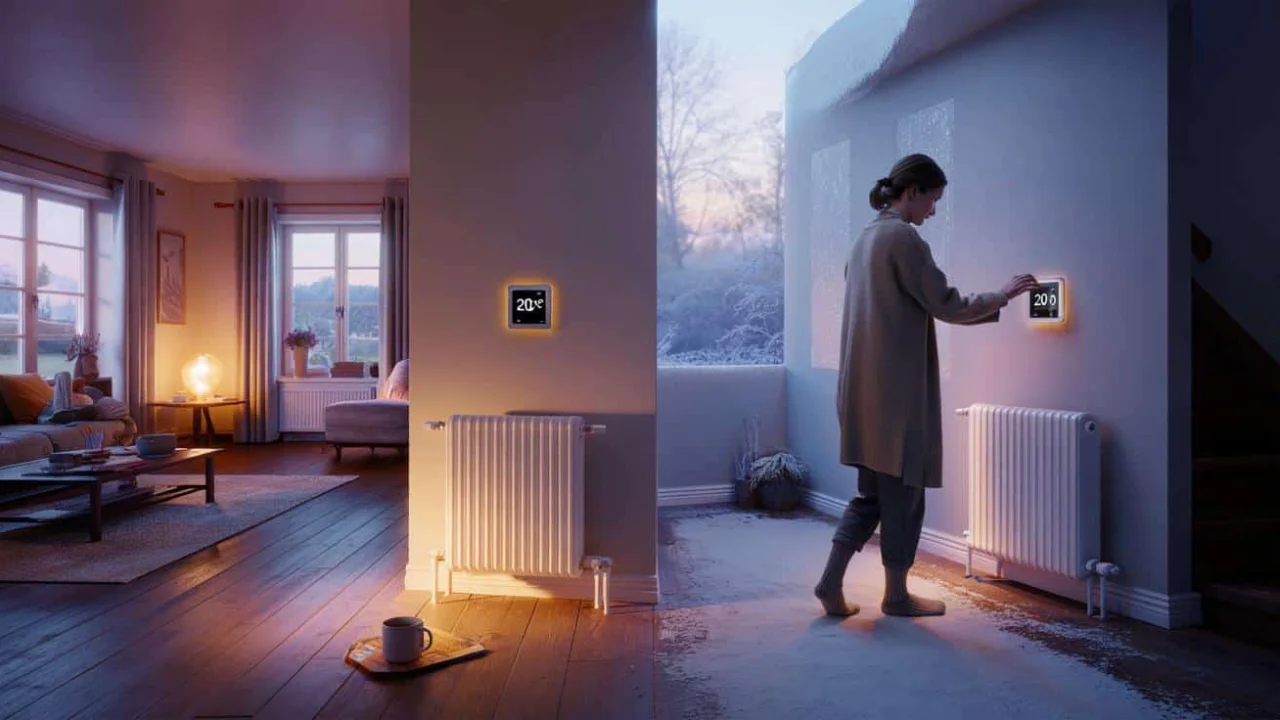
Sarah stared at her energy bill in the dim glow of her laptop screen, the numbers making her stomach drop. £347 for last month alone. Her flatmate Jake shuffled into the kitchen, wrapped in a dressing gown, and immediately reached for the thermostat. “Don’t touch it,” she said, maybe too sharply. “We agreed to keep it off until morning.”
Jake paused, hand hovering over the dial. “But it’s freezing in here. And won’t it cost more to heat the whole place from scratch tomorrow?” The same debate that had been going on for weeks, the same question echoing in households across the country: is it better to turn heating on or off, or just leave it running low?
You’ve probably had this exact argument with someone. Maybe you’re the one bundling up in blankets, convinced that switching heating on and off saves money. Or perhaps you’re team “constant low heat,” believing your boiler works more efficiently when it doesn’t have to work so hard. The truth might surprise you.

The Physics Behind Your Heating Bill
Here’s what actually happens when you leave your heating on low versus switching it on and off. Your home is basically a giant heat-losing machine. Every window, wall, and tiny gap around your door frame is constantly bleeding warmth into the outside world.
“The biggest misconception people have is that their boiler is somehow resting when it’s on a low setting,” explains Dr. Martin Hayes, a thermal efficiency consultant. “In reality, it’s working continuously to replace all that heat escaping through your building envelope.”
When you keep your house at a steady 18°C for 12 hours overnight, your heating system is actively fighting heat loss for every one of those 720 minutes. Compare this to letting the temperature drop to 12°C naturally, then heating back up for two hours in the morning.
The rate of heat loss follows a simple rule: the bigger the temperature difference between inside and outside, the faster heat escapes. So maintaining 18°C inside when it’s 2°C outside creates a constant 16-degree battle. Letting your home cool to 12°C cuts that difference in half, dramatically reducing the energy needed.

What the Numbers Actually Show
Energy efficiency studies from across Europe paint a clear picture about heating on or off strategies. The data consistently shows that intermittent heating uses less energy overall than constant low-level heating.
| Heating Strategy | Daily Gas Usage (kWh) | Monthly Cost (£) | Heat Loss Hours |
|---|---|---|---|
| Constant low (16°C overnight) | 42-48 | £180-220 | 24 hours |
| On/off with timer | 35-41 | £150-180 | 8-10 hours |
| Manual on-demand heating | 30-38 | £130-165 | 6-8 hours |
The key factors that determine whether heating on or off works better for your home include:

- How well insulated your property is
- The size of rooms you’re heating
- How long you’re away from home during the day
- Your tolerance for temperature fluctuations
- The efficiency and age of your boiler system
“Most modern homes with decent insulation will reach comfortable temperatures within 30-60 minutes,” notes heating engineer Claire Thompson. “The old idea that reheating costs more energy is based on poorly insulated houses with inefficient boilers from decades ago.”
Your boiler doesn’t actually work harder when heating from cold. Modern condensing boilers are designed to handle temperature variations efficiently. The strain comes from running continuously, not from starting up.
How This Affects Real Families
The heating on or off debate isn’t just about numbers on a bill. It’s about comfort, convenience, and family harmony. Take the Johnson family from Manchester, who switched from constant heating to a smart thermostat system last winter.
“We used to keep it on 16°C all night because we thought it was more efficient,” says Lisa Johnson, mother of two. “The kids were always too hot or too cold, and our bills were ridiculous. Now we heat for two hours in the morning and evening, and we’ve cut our costs by about 30%.”
The shift requires some adjustment. You need to plan ahead, maybe put on extra layers during cool-down periods, and resist the urge to blast the heat when you walk into a chilly room.
Smart thermostats make the heating on or off approach much more practical. You can schedule exactly when your home warms up, often starting the heating 30 minutes before you wake up or return from work. No more walking into a freezing house or paying for heat while you’re asleep.
Families with young children or elderly residents might find constant low heating more suitable for health reasons. But even then, small adjustments can make a difference. Dropping the overnight temperature by just 2-3 degrees instead of turning the heating off completely can still save money while maintaining comfort.
“The sweet spot for most households is programmable heating that matches your actual routine,” suggests energy advisor Tom Richards. “You’re not paying to heat empty rooms or maintain temperatures while everyone’s asleep under duvets.”
The environmental impact matters too. Less energy consumption means lower carbon emissions from your home. With energy prices likely to remain volatile, mastering efficient heating habits could save you hundreds of pounds annually.
Some people worry about pipes freezing or damp issues when they turn heating off completely. These are valid concerns in poorly insulated homes or during extreme cold snaps. The solution isn’t necessarily constant heating, but rather strategic timing and possibly setting a minimum temperature threshold around 12-14°C.
The heating on or off question ultimately depends on your specific situation, but for most modern homes, intermittent heating with proper timing beats constant low-level heating for both costs and efficiency. Your wallet and the planet will thank you.
FAQs
Will my boiler break if I keep turning heating on and off?
Modern boilers are designed to handle regular on/off cycles and won’t be damaged by this normal operation pattern.
How long does it take to reheat a house from cold?
Most well-insulated homes reach comfortable temperatures within 30-60 minutes, depending on the outside temperature and your heating system’s power.
Is it cheaper to heat one room or the whole house?
Heating only occupied rooms is usually more cost-effective, but this depends on your home’s layout and heating system design.
What temperature should I set for overnight heating?
Most experts recommend 16-18°C for overnight if you prefer constant heating, or letting it drop to 12-14°C if using intermittent heating.
Do I save money by turning heating off when I go to work?
Yes, turning heating off during 8+ hour absences typically saves more energy than maintaining temperature, especially in well-insulated homes.
Can turning heating on and off cause damp problems?
Occasional temperature fluctuations won’t cause damp, but ensure adequate ventilation and avoid letting your home get too cold for extended periods in winter.
About the Author