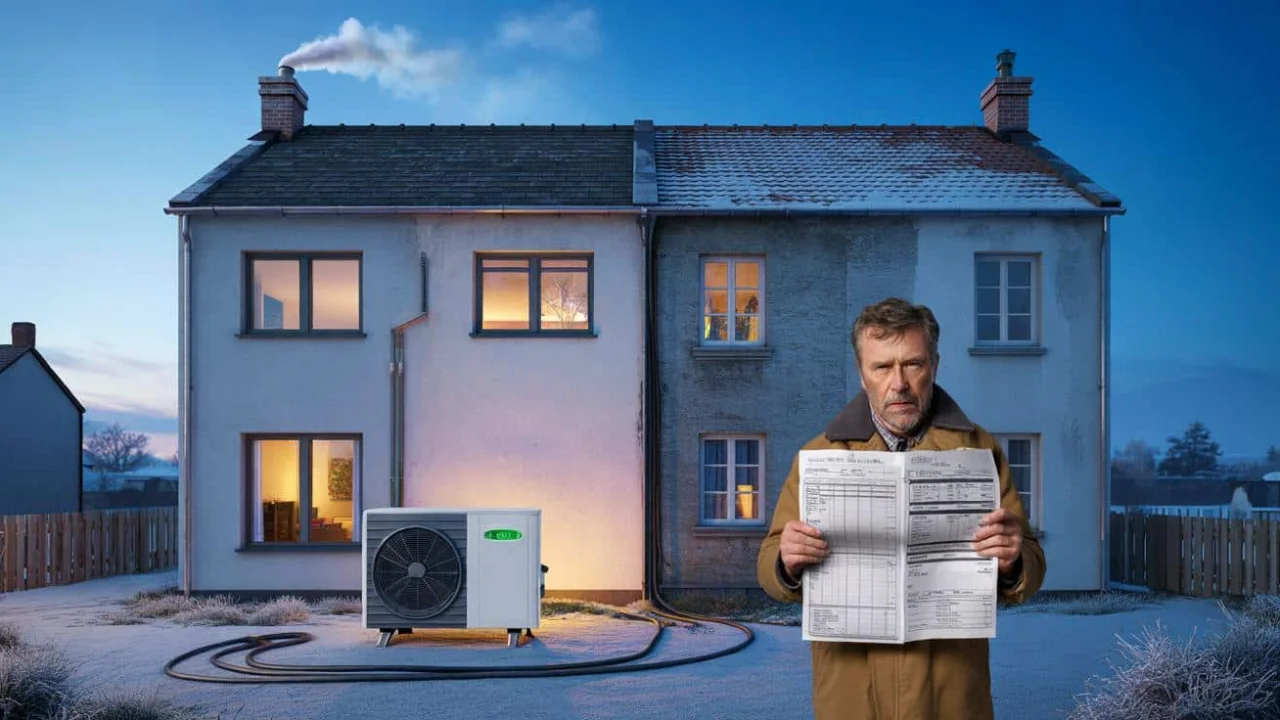
Sarah Mitchell thought she was making the smartest decision of her life when she agreed to replace her old gas boiler with a heat pump last winter. The installer promised 70% lower heating bills and a carbon footprint so small she could practically high-five polar bears. Six months later, her energy bills had actually increased, and she was wearing two jumpers indoors during February’s cold snap.

“Nobody warned me it would struggle when we actually needed it most,” Sarah told her neighbor over coffee. “The salesperson made it sound like some magical money-saving machine.”
Sarah’s story isn’t unique. Across Europe and North America, heat pumps are being marketed as the ultimate solution to both climate change and rising energy costs. Yet the gap between promise and reality is leaving many homeowners confused, frustrated, and financially stung.

The Price Shock That Nobody Mentions
Let’s start with the elephant in the room: heat pumps cost serious money upfront. While governments wave around subsidies and tax breaks, the initial investment still makes most families wince.
In the UK, a typical air-source heat pump installation runs between £8,000 and £15,000 after you factor in all the extras that nobody mentions in the brochures. Ground-source systems can easily hit £20,000 or more once you include the groundwork. Even with government grants covering £5,000, that’s still a hefty chunk of change.
American homeowners face similar sticker shock. A complete heat pump system typically costs $15,000 to $25,000 installed, though federal tax credits can knock off up to $2,000. Still, try explaining to your spouse why you’re spending the equivalent of a nice car on heating equipment.
“Most people focus on the monthly savings and forget about the massive upfront cost,” explains Mark Henderson, a heating engineer with 15 years of experience. “That payback period is often much longer than people expect, especially if their old system was still working fine.”

When Heat Pumps Work Brilliantly (And When They Don’t)
Here’s where things get complicated: heat pumps aren’t universally good or bad. Their performance swings dramatically based on factors that many installers don’t properly assess.
The technology works best in specific conditions. Modern, well-insulated homes with large radiators or underfloor heating are ideal candidates. Heat pumps also love mild climates where temperatures rarely drop below freezing for extended periods.

But older homes present challenges that can torpedo efficiency:
- Poor insulation – Victorian terraces and 1960s builds often leak heat faster than the pump can produce it
- Small radiators – Original radiators designed for high-temperature gas boilers force heat pumps to work harder
- Single-glazed windows – Heat disappears through glass faster than you can pump it in
- Exposed locations – Wind and elevation can slash performance by 20% or more
“I’ve seen identical heat pump models perform completely differently in houses just three doors apart,” says Emma Clark, an energy consultant. “One family loves theirs, the other regrets the whole investment. It all comes down to the building and the installation quality.”
| House Type | Expected Performance | Typical Issues |
|---|---|---|
| New build (post-2010) | Excellent | Minimal, high efficiency |
| Retrofitted modern home | Good to very good | May need radiator upgrades |
| 1960s-1980s house | Variable | Insulation improvements needed |
| Victorian/period property | Often poor | Major fabric upgrades required |
| Rural/exposed location | Reduced in winter | Backup heating may be needed |
The Reality Check Nobody Talks About
The heat pump industry loves throwing around impressive efficiency numbers. A coefficient of performance (COP) of 4 means four units of heat for every unit of electricity consumed. Compare that to a gas boiler’s 90% efficiency, and heat pumps look like miracle devices.
But those laboratory numbers rarely translate to real-world performance. When outdoor temperatures plummet, efficiency drops significantly. During the UK’s recent cold snaps, many heat pump owners watched their systems struggle to maintain comfortable indoor temperatures while electricity meters spun frantically.
The reliability question also deserves honest discussion. Modern heat pumps are generally well-built, but they’re complex systems with electronic controls, refrigerant circuits, and multiple moving parts. Compare that to a simple gas boiler that might run trouble-free for 15 years.
“We’re definitely seeing more service calls on heat pump systems than traditional boilers,” admits David Walsh, who runs a heating maintenance company. “It’s not that they’re unreliable exactly, but they need more attention and the parts cost more when something goes wrong.”
Seasonal performance varies dramatically too. Your heat pump might deliver impressive efficiency during mild autumn weather, then struggle when you actually need heating most during winter cold spells. This seasonal swing catches many homeowners off guard.
Installation quality makes or breaks the whole system. A poorly sized or incorrectly installed heat pump can underperform for years, leaving homeowners with buyer’s remorse and higher bills than expected. Unfortunately, the rush to meet government installation targets has led to some installers taking on jobs without proper training or experience.
The maintenance requirements also surprise people. Heat pumps need annual servicing, filter changes, and occasional refrigerant top-ups. While not excessive, it’s more involved than many homeowners expect from their heating system.
Who Should Actually Consider Heat Pumps?
Despite the challenges, heat pumps work wonderfully for the right households. If you live in a well-insulated modern home, have large radiators or underfloor heating, and rarely see prolonged freezing weather, a heat pump could slash your heating bills and carbon emissions.
Rural properties without gas connections often see the biggest benefits, especially when replacing expensive oil or LPG heating systems. The combination of lower running costs and reduced carbon emissions makes financial and environmental sense.
However, if you’re in an older, poorly insulated property, consider whether upgrading insulation and windows first might deliver better value than jumping straight to a heat pump. Sometimes the boring solutions like loft insulation and draft-proofing deliver better returns than flashy technology.
“The best heat pump customers are the ones who’ve done their homework,” notes energy advisor Lisa Thompson. “They understand the limitations, they’ve improved their home’s fabric first, and they have realistic expectations about performance and costs.”
FAQs
Do heat pumps really save money on energy bills?
They can, but it depends heavily on your home’s insulation, your current heating system, and local energy prices. Well-insulated homes see the biggest savings.
How long do heat pumps typically last?
Most heat pumps are designed to last 15-20 years with proper maintenance, similar to a gas boiler. However, some components may need replacement during that time.
Do heat pumps work in very cold weather?
Modern heat pumps can operate down to -15°C or lower, but their efficiency drops significantly in extreme cold. Some may need backup heating during the coldest days.
What’s the biggest mistake people make with heat pumps?
Installing them in poorly insulated homes without addressing the building fabric first. It’s like trying to fill a leaky bucket – the system has to work much harder than necessary.
Are heat pump installation costs coming down?
Slowly, yes. As the market grows and more installers gain experience, prices are gradually decreasing. However, they remain a significant upfront investment.
Should I wait for better technology before switching?
Heat pump technology is mature and improving incrementally rather than revolutionarily. If your current system is failing and your home is suitable, there’s no compelling reason to wait.
About the Author