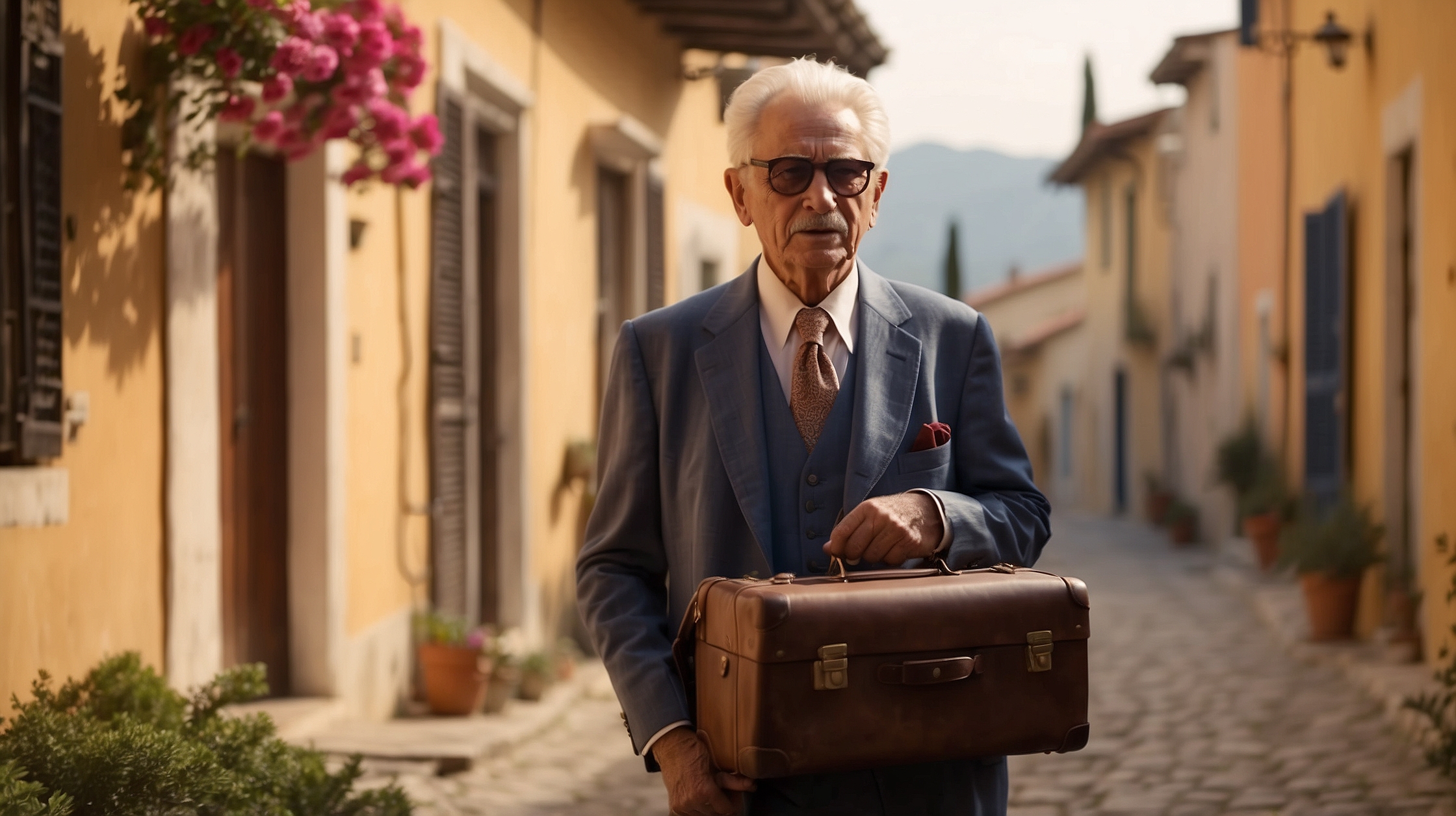

At 80 years old, Franco Di Marco wakes up each morning in a new corner of Italy, zips shut his well-worn suitcase, and begins his day. A former architect and proud U.S. citizen, Franco once owned a multi-million dollar firm in Chicago, counted some of America’s wealthiest clients among his contacts, and lived in a five-bedroom home on Lake Michigan. Now, nearly four decades after migrating to the U.S. to chase his version of the American Dream, Franco has come home to Italy — but not to settle down quietly. Instead, he carries his life in a suitcase and moves from place to place, living his retirement on the road, reconnecting with the land he once left behind.

His story illustrates an emerging retiree trend: highly mobile, international lifestyles that defy conventional expectations of aging. Franco isn’t living in poverty or fleeing hardship; he is intentionally choosing a minimalist life, driven by a desire for freedom, flexibility, and meaning in his later years. He represents a growing class of global retirees testing how modern passports, financial independence, and cross-cultural identities can create a new model for aging — one built not around permanence, but possibility.
A snapshot of a life in motion
| Full Name | Franco Di Marco |
|---|---|
| Age | 80 |
| Nationality | Dual citizen – Italy and the United States |
| Profession | Former Architect and Real Estate Developer |
| Current Lifestyle | Nomadic retirement across Italy |
| Years in the U.S. | Over 40 |
| Main Reason for Move | Reconnection with roots, freedom from materialism |
A life spanning continents and eras
Franco’s journey started in a small village in Southern Italy, where he first dreamed of buildings and city skylines. After graduating from architectural school in Milan, he took a risk and emigrated to the United States in 1973 with nothing more than a job offer and a suitcase. Over the decades, his vision and work ethic earned him a reputation for high-concept commercial developments and custom luxury homes across the Midwest.

“The U.S. gave me everything,” Franco says. “But Italy never stopped calling me.”
When he sold his firm in 2010 and his children chose careers abroad, Franco began to rediscover his Italian lineage. First, he traveled back for visits. Then came longer stretches. Finally, at age 75, he made the decision to let go of his possessions, rent out his home, and live solely on the move across the Italian countryside.

Why more retirees seek mobility, not roots
Franco is not alone. Demographers and travel economists note an uptick in Baby Boomers choosing to retire abroad or live nomadically. Rising housing costs, flexible income from pensions or investments, and digital services have made it easier than ever to live well outside the United States for a fraction of the cost. But for retirees like Franco, it’s about much more than money.
“Retirement used to mean slowing down. Now, for many, it means freedom to finally do what work prevented them from doing — seeing the world, spending time where they feel most alive.”
— Dr. Carla Vieri, GerontologistAlso Read Search warrant shows FBI investigating former Carlyle police chief amid new questions
Franco’s mobility allows him to immerse deeply in one region for weeks, then move on. He picks destinations by following cultural festivals, reconnecting with distant relatives, or simply tracing coastline roads by train.
Living out of a suitcase, with purpose
Living out of a suitcase at 80 might seem daunting. But for Franco, it’s become second nature. A wardrobe of versatile pieces, a laptop to manage his investments, and a small box of handmade architectural sketches are his only constants. He describes his lifestyle as deliberate minimalism with emotional richness.
“Everything I need fits in one bag. Everything that matters I carry here,” Franco says, touching his heart. He avoids tourist traps, often renting rooms directly from locals or relying on small community inns during the off-season.
He eats simply, often preparing meals from farmers markets. Morning walks through olive groves or hilltop hikes replace gym routines. His only splurge? Leather-bound sketchbooks and espresso from his favorite baristas around the country.
The challenges of aging on the road
This lifestyle isn’t without its challenges. Language, although not a barrier for Franco, can be an issue for others. Healthcare access is another consideration. Although Italy offers government healthcare, Franco submits paperwork every six months to maintain his temporary residency rights.
The strongest challenge, however, may be solitude. While Franco enjoys solitude, he admits missing the structure of community — church groups, weekly brunches, or long-term neighbors. Still, he finds connection in public life: morning chats over cornettos, sharing stories on long train rides, or volunteering to help maintain historical buildings during local festivals.
“There are moments I wish for a fixed address, perhaps just for a month, but then I remember all the places I haven’t seen yet.”
— Franco Di Marco
Winners and those who may struggle with this lifestyle
| Winners | Potential Strugglers |
|---|---|
| Retirees with dual citizenships | Those with limited mobility or chronic illness |
| Independent and adventurous individuals | People who rely on structured medical care |
| Minimalists seeking cultural immersion | Retirees desiring consistent communities |
| People with flexible remote income | Those with high dependence on daily assistance |
How Italy is becoming a haven for returning expats
Italy has seen a subtle return of its diaspora in recent years, especially older Italians who departed mid-century. Regions like Puglia, Sicily, and Umbria are attracting retirees with affordable homestays, cultural depth, and dynamic traditions. Some towns even offer incentives for returning residents, including tax exemptions or discounted long-term rentals in heritage homes.
“We view returning Italians as emotional ambassadors. They understand both worlds and help bridge cultures for younger generations.”
— Lucia Bergomi, Italian Ministry for Cultural Integration
For dual citizens like Franco, the paperwork is simplified. He’s even received invitations to speak at local schools and university architecture programs, sharing how his Italian upbringing fueled an American dream only to circle back home in humility and grace.
What his story means for future generations
Franco Di Marco’s story suggests that retirement is no longer a fixed chapter of rest — it can be a flexible act of renewal. With growing affordability of international living and a renewed emphasis on purpose over possessions, more retirees will find themselves packing bags, booking one-way tickets, and letting curiosity lead over comfort zones.
His choice may not suit everyone. But what makes Franco’s path remarkable is the shift in thinking it represents: old age can be mobile, meaningful, and deeply human. And for this octogenarian architect, carrying your world in a suitcase might be the blueprint to happiness after all.
Frequently Asked Questions
Is it legal to live nomadically in Italy as a retiree?
Yes, if you’re a citizen or legal resident. Retirees like Franco with dual citizenship can travel freely and live in various regions without restrictions.
How does healthcare work for retirees abroad?
Italy offers national healthcare. Retirees may register based on residency status. Franco submits healthcare paperwork semiannually to access services.
How can someone fund a nomadic retirement?
Through a mix of retirement savings, Social Security, pensions, and investments. Franco uses passive income from his company shares and real estate in Chicago.
What are the biggest challenges of this lifestyle?
Health access, frequent travel fatigue, social isolation, and navigating foreign bureaucracies top the list.
Do many American retirees choose Italy?
Yes, especially those with Italian heritage or love for the culture. Affordable rural areas are particularly attractive.
Can families or couples do this too?
Absolutely. While Franco travels solo, many retired couples choose similar rotating residences with seasonal stops.
What should you pack for such a minimalist lifestyle?
Essentials only: versatile clothing, medications, tech gear, ID/passports, and personal mementos. Franco also carries sketchbooks as part of his identity.
Is a return to the home country common among retirees?
Yes, especially among immigrants who spent decades abroad. It’s often a form of reconnection and closure.
About the Author