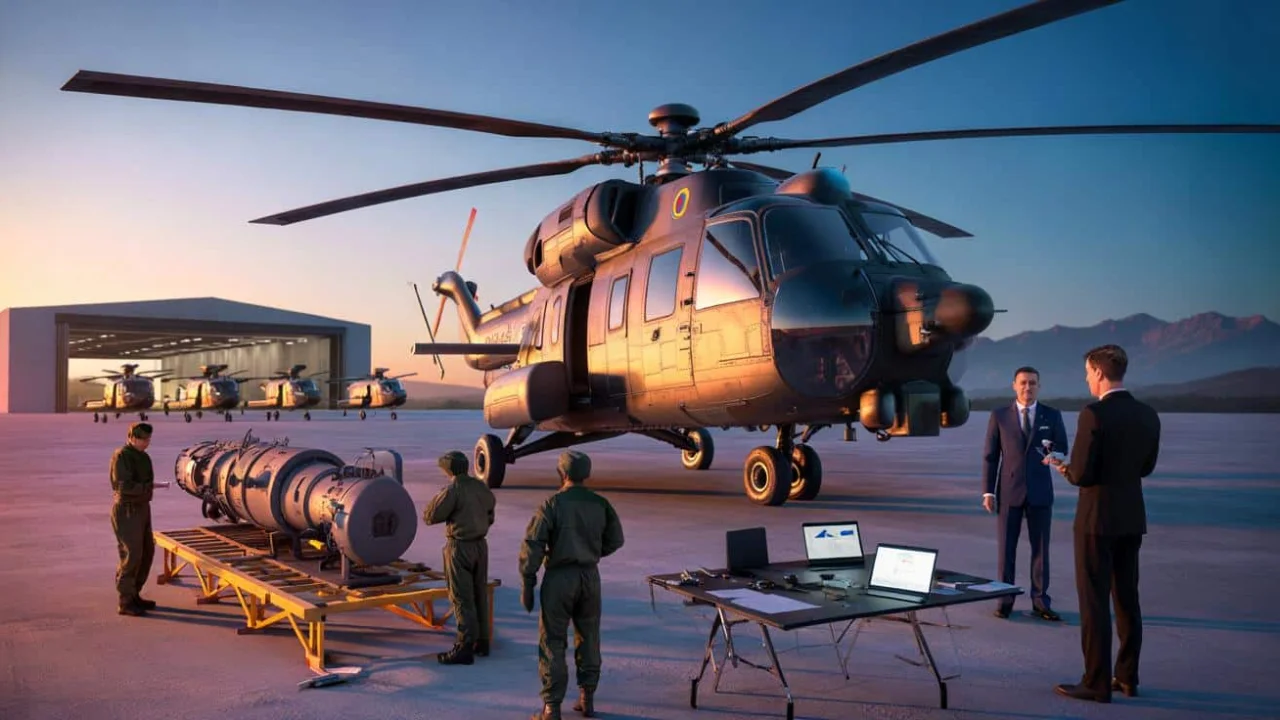
Maria Popescu still remembers the sound that changed everything. Three years ago, the 34-year-old rescue coordinator was trapped in her office during devastating floods in southern Romania when she heard the distinctive whir of helicopter blades cutting through the storm. That rescue helicopter, an aging Soviet-era aircraft held together by decades of repairs and hope, managed to evacuate her team just minutes before the building was engulfed.

Today, Maria works with equipment that’s constantly breaking down, requiring parts that cost more than her monthly salary. She knows that somewhere in Bucharest, officials are making decisions about spending €1 billion on new helicopters. For her, it’s not just about numbers on a budget sheet—it’s about whether future rescue teams will have reliable aircraft when lives hang in the balance.
This personal story reflects a much larger transformation happening across Romania’s defense sector, where the country is positioning itself to become a regional helicopter manufacturing hub through an ambitious deal involving H225M Caracal helicopters.
Romania’s Billion-Euro Helicopter Gamble Under EU Framework
Romania has officially submitted its request to purchase H225M Caracal helicopters through the European Union’s SAFE mechanism, a new framework designed to strengthen Europe’s defense industrial base through coordinated procurement. The numbers behind this deal are staggering: Romania could access approximately €16 billion under this EU program, with roughly €1 billion specifically allocated for medium-lift helicopter acquisition.
The H225M Caracal, manufactured by Airbus Helicopters, represents a significant technological leap from Romania’s current fleet. These twin-engine helicopters have proven themselves in combat zones and rescue operations across multiple continents, serving with French forces and various international operators.
“For the first time in decades, Romania has a real opportunity to modernize its entire helicopter fleet in one coordinated effort rather than through small, fragmented purchases,” explains defense analyst Alexandru Marinescu. “The EU funding mechanism removes the traditional financial barriers that have plagued our military procurement for years.”
The timing couldn’t be more critical. Romania’s existing helicopter inventory consists largely of Soviet-era aircraft that require increasingly expensive maintenance and suffer from parts shortages. Many of these helicopters have exceeded their recommended service life, creating operational risks and limiting mission capabilities.
Local Assembly Plans Could Transform Romania’s Industrial Landscape
What makes this deal particularly intriguing is Romania’s push for local assembly capabilities. The country isn’t simply looking to buy helicopters off the shelf—it wants to build them on Romanian soil, creating jobs and developing indigenous aerospace expertise.
Here are the key components of Romania’s local assembly strategy:
- Establishment of H225M Caracal assembly lines in Romania
- Technology transfer agreements with Airbus Helicopters
- Development of local supplier networks for components
- Training programs for Romanian aerospace workers
- Potential export capabilities for regional markets
The following table outlines the projected timeline and investment breakdown:
| Phase | Timeline | Investment (€ millions) | Key Milestones |
|---|---|---|---|
| Initial Procurement | 2026-2028 | 400 | First 12-16 helicopters delivered |
| Assembly Setup | 2027-2029 | 300 | Local facility construction, equipment installation |
| Local Production | 2029-2032 | 300 | Additional units assembled in Romania |
“This isn’t just about replacing old helicopters,” notes former Romanian Air Force colonel Marius Gheorghiu. “We’re talking about creating a sustainable industrial ecosystem that could serve the entire region’s helicopter needs for decades to come.”
The local assembly component builds on Romania’s existing relationship with Airbus, which already operates a facility in Brașov. However, the H225M Caracal project would represent a significant expansion of this partnership, potentially creating thousands of jobs in high-tech manufacturing.
Real-World Impact Beyond Military Applications
While the primary focus is military modernization, the implications extend far beyond Romania’s armed forces. The H225M Caracal helicopters are versatile aircraft capable of performing multiple roles, from search and rescue operations to medical evacuations and disaster response.
Emergency services across Romania are watching this deal closely. Current rescue operations often face delays due to helicopter breakdowns or limited availability. Maria Popescu and thousands of emergency responders could soon have access to modern, reliable aircraft that can operate in challenging weather conditions and reach remote areas more effectively.
The economic ripple effects could be substantial. Local assembly operations would require:
- Specialized manufacturing facilities
- Skilled technicians and engineers
- Supply chain partnerships with Romanian companies
- Maintenance and support infrastructure
“We’re not just buying helicopters—we’re investing in Romania’s future as a regional aerospace manufacturing center,” emphasizes defense procurement specialist Dr. Elena Radu. “The technology transfer and industrial partnerships could position us as a key player in European helicopter production.”
The deal also aligns with broader European Union objectives to reduce dependence on non-European defense suppliers and strengthen the continent’s strategic autonomy. Romania’s geographical position makes it an ideal location for serving both NATO allies and potential export markets in Eastern Europe and the Balkans.
However, challenges remain. The complex negotiations involve multiple stakeholders, including EU officials, Airbus executives, and Romanian government agencies. Success depends on finalizing technology transfer agreements, securing adequate financing, and establishing realistic production timelines.
Industry observers are particularly interested in how this deal might influence other Eastern European countries’ helicopter modernization programs. If Romania successfully establishes local H225M Caracal assembly capabilities, it could become a regional hub for helicopter production and maintenance, serving neighboring countries’ needs while strengthening European defense industrial cooperation.
The next 18 months will be crucial as negotiations advance and final contracts are signed. For emergency responders like Maria Popescu, the wait continues, but the prospect of modern, reliable helicopters offers hope for more effective rescue operations and ultimately, more lives saved.
FAQs
What makes the H225M Caracal helicopter special?
The H225M Caracal is a twin-engine, medium-lift helicopter capable of carrying up to 29 troops or 11 tons of cargo, with advanced avionics and proven combat reliability.
How will local assembly benefit Romania’s economy?
Local assembly could create thousands of high-tech manufacturing jobs, develop supplier networks, and position Romania as a regional aerospace manufacturing hub.
When will the first helicopters be delivered?
Based on current timelines, initial deliveries could begin in 2026-2028, with locally assembled units following by 2029.
Will these helicopters be used only for military purposes?
No, the H225M Caracal is versatile and can perform search and rescue, medical evacuation, disaster response, and other civilian emergency services.
How does the EU SAFE mechanism work?
The SAFE mechanism provides coordinated EU funding for defense procurement projects that strengthen European industrial capabilities and reduce dependence on non-European suppliers.
Could Romania export helicopters to other countries?
Yes, if local assembly capabilities are successfully established, Romania could potentially serve export markets in Eastern Europe and the Balkans region.
About the Author