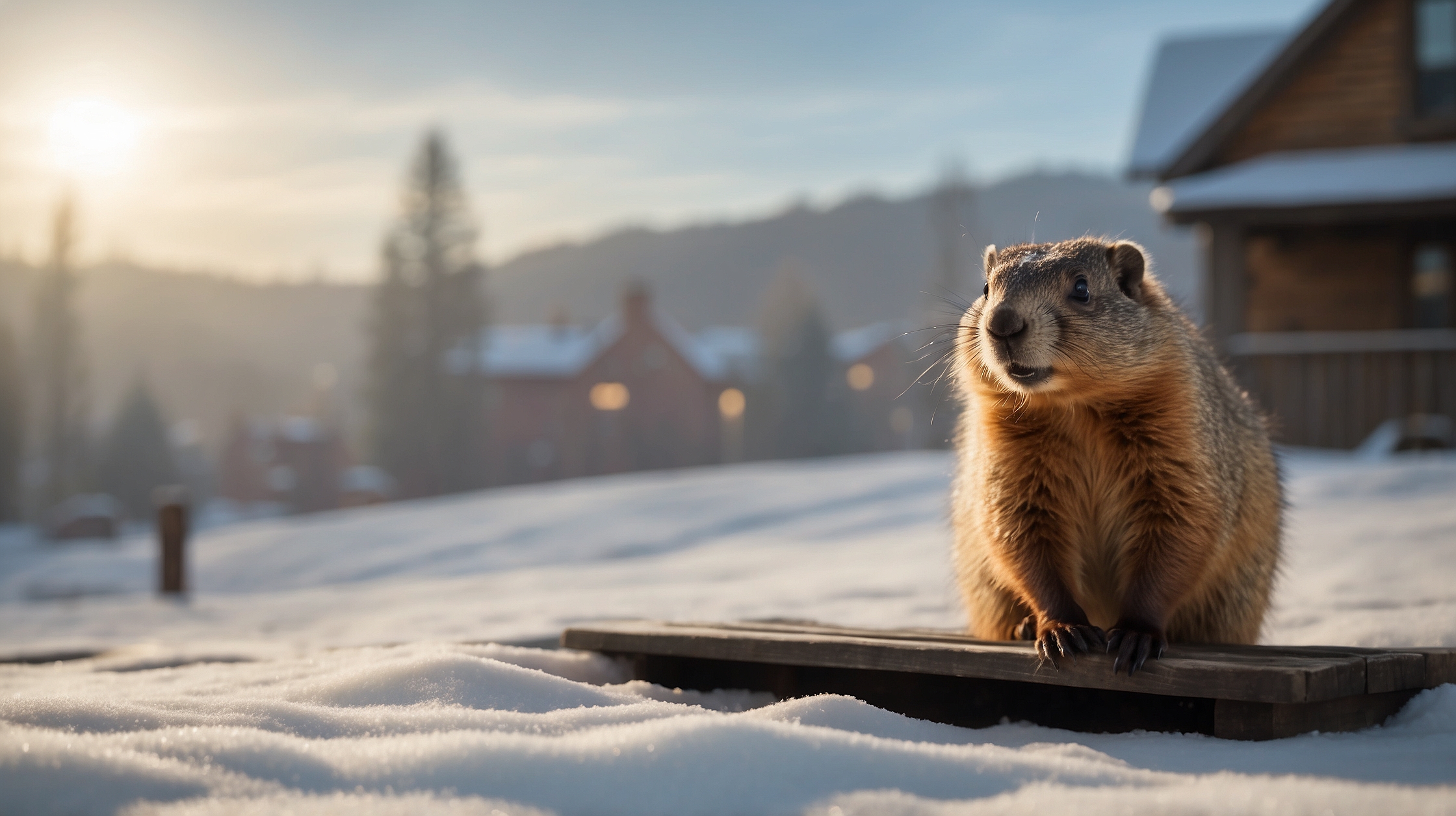

As February arrives, one peculiar tradition captures the imagination of millions across the United States—**Groundhog Day**. Held annually on February 2nd, this quirky event centers on Punxsutawney Phil, the world-famous groundhog seer from Pennsylvania. The ceremony combines folklore, superstition, and a pinch of meteorology to “predict” the outcome of winter. In 2026, all eyes are once again on Phil, as countless Americans wonder: will he see his shadow, and what will it mean for the rest of the season?

This time-honored ritual dates back to the 1800s and thrives as a cultural moment that bridges old-world beliefs and modern media participation. Whether you’re a skeptic or a follower, Phil’s annual prediction is often treated as a fun barometer of seasonal change. As climate shifts become more pronounced, people are increasingly curious about what events like Groundhog Day suggest about our changing weather, even if symbolically.
Overview of Groundhog Day 2026
| Date | February 2, 2026 |
| Location | Punxsutawney, Pennsylvania |
| Start Time | Approximately 7:20 AM EST |
| Forecast Significance | If Phil sees his shadow: 6 more weeks of winter. If not: early spring. |
| Organizing Club | Punxsutawney Groundhog Club |
| Tradition Age | 140+ years |
What Punxsutawney Phil’s shadow really means
The heart of the tradition lies in a simple superstition—**if Punxsutawney Phil sees his shadow**, he retreats into his burrow and we brace for **six more weeks of winter**. **If he does not see his shadow**, folklore insists we’re in for an early spring. The spectacle is more about entertainment and community than meteorological precision, but it remains a charming seasonal milestone for many.

Phil is pulled from his burrow on Gobbler’s Knob and held up before an eagerly-awaiting crowd. His “prediction” is then interpreted by a select group known as the **Inner Circle**, clad in black coats and top hats. The prediction is announced to cheers, groans, and media coverage reaching audiences well beyond Pennsylvania.
Modern-day relevance and media evolution
In 2026, Groundhog Day means more than folklore—it serves as a lighthearted moment that connects multiple generations. Thanks to viral videos, livestreams, and trending hashtags, Phil’s emergence has become a **digital spectacle** that’s followed by everyone from schoolchildren to weather enthusiasts and pop culture fans. Even TV networks and meteorologists chime in, adding their own spin to the age-old tale.

In recent years, Groundhog Day has evolved into an opportunity to discuss broader topics like **climate change, weather unpredictability**, and the impact of folklore on science. While Phil’s prediction doesn’t replace a NOAA forecast, it still fascinates millions looking for levity or a spark of nature-fueled nostalgia in the dead of winter.
How accurate is Punxsutawney Phil?
Over the decades, Punxsutawney Phil has developed a reputation—but not necessarily for accuracy. According to analysis from weather historians, his predictions have been right roughly **39% of the time** since official records began. That’s lower than a random coin toss, but it hardly dents the enthusiasm of his fans.

Some years, Phil contradicts local or national forecasts altogether, proving the unpredictable nature of using an animal to forecast climate. Still, the event remains rooted in tradition and serves more as entertainment than empirical meteorology.
“Phil brings warmth to winter hearts, but his forecasts are more spiritual than scientific.”
— Dr. Liza Bennett, Climatologist
What changed this year
2026 sees subtle but meaningful shifts in how Groundhog Day is celebrated. In-person attendance on Gobbler’s Knob is expected to exceed 20,000, thanks in part to warmer weather and hybrid tourism models introduced post-2020. Additionally, the Inner Circle has partnered with local sustainability groups to incorporate **eco-friendly practices**, such as reduced print material and digital tickets.
There’s also a noticeable rise in **student engagement and classroom observance**, making Groundhog Day a fun teaching tool on folklore, Earth science, and critical thinking—all part of Phil’s unexpected societal contribution.
Winners and losers of Phil’s predictions
| Winners | Losers |
|---|---|
| Local tourism businesses | Winter sports operators (if early spring) |
| Retailers of spring gear | Snow equipment sellers |
| School educators and students | Event skeptics |
| Social media platforms | Those affected by false weather expectations |
The impact on travel and local business
For the town of Punxsutawney, Groundhog Day is far from a frivolous holiday. It’s a serious **economic driver**, drawing guests, media, and investment into a town of less than 6,000 residents. From hotels and restaurants to groundhog-themed merchandise, February 2nd brings a welcome surge to the local economy.
“There’s no other day quite like it. The eyes of the world are on Punxsutawney, if only for a moment—and we make it count.”
— Sarah Hollen, Chamber of Commerce Director
Can weather trends support Phil’s prediction?
Although Phil’s forecast isn’t scientific, it’s interesting to observe whether actual weather patterns line up. In recent years, early February has brought unseasonably warm temperatures to parts of the Northeast. In 2025, for example, both New York and Philadelphia logged **springlike highs in the mid-60s**, supporting Phil’s “no shadow” call that year.
For 2026, preliminary forecasts suggest a **mixed bag**, with potential for continued mild temperatures mixed with snowstorms. It remains to be seen whether Phil’s intuition will match reality.
How to see Groundhog Day 2026 in person
If you’re planning a trip to see Punxsutawney Phil in action, anticipate extreme popularity and book in advance. Local hotels, Airbnbs, and nearby cities like Pittsburgh fill up quickly. Visitors begin arriving the night before and often attend events leading up to the sunrise ceremony on Gobbler’s Knob.
For those unable to get a spot in person, the Inner Circle now offers **high-definition livestreams** with behind-the-scenes looks at Phil’s preparation, Inner Circle rituals, and interviews with long-time fans. It brings Groundhog Day into your living room—fur, tradition, and all.
Short FAQs
What is Groundhog Day?
Groundhog Day is a U.S. tradition where a groundhog predicts the weather on February 2nd. If it sees its shadow, winter continues; if not, spring is expected early.
Who is Punxsutawney Phil?
Punxsutawney Phil is the groundhog from Pennsylvania who has been the central figure of the weather-predicting tradition for over 140 years.
How are Phil’s predictions interpreted?
The Inner Circle, a group of local dignitaries, “interprets” Phil’s movements and announces whether he saw his shadow.
Is there any scientific basis to Phil’s prediction?
No. Phil’s prediction is based on tradition and has no scientific foundation. Accuracy has been historically lower than 40%.
Can I attend Groundhog Day in person?
Yes. Visitors are welcome at Gobbler’s Knob, but planning ahead is essential due to crowd size and early morning timing.
Why do people still follow Groundhog Day?
It’s a cultural tradition that blends community celebration, old folklore, and a touch of whimsy during the cold winter season.
Has Phil ever predicted something notably accurate?
There’ve been years when Phil’s prediction aligned with warm or cold trends, but these occurrences are largely coincidental.
How old is the Groundhog Day tradition?
The tradition began in the 1880s, inspired by Pennsylvania Dutch folklore and originally based on European Candlemas practices.
About the Author