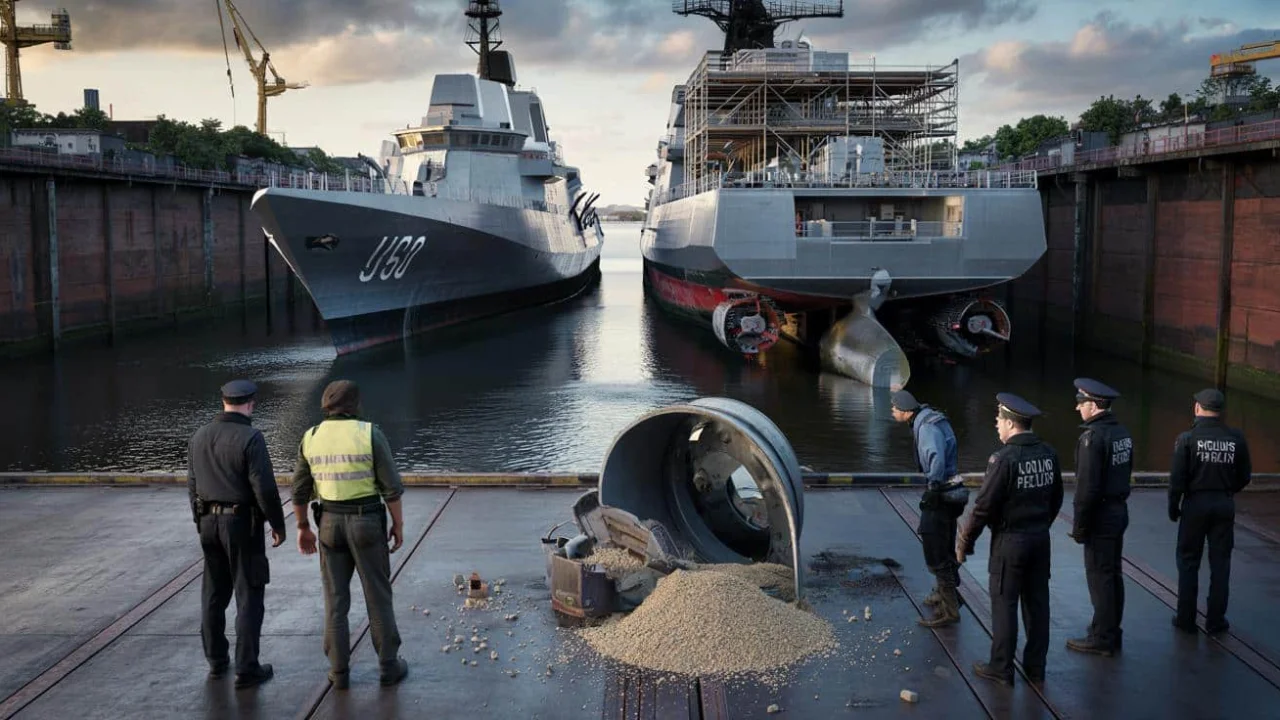
Maria Schneider was working her night shift at the Hamburg docks when she noticed something odd. The usually pristine engine compartment of a brand-new German navy corvette had tiny stones scattered across the floor. “At first, I thought someone had accidentally tracked in gravel from outside,” she later told investigators. But this wasn’t construction debris or a careless mistake.

Those innocent-looking pebbles were part of what prosecutors now believe was a deliberate act of sabotage against Germany’s naval fleet. What started as routine quality control has exploded into an international security incident that’s shaking Europe’s defense community to its core.
The discovery has led to the arrest of two men suspected of orchestrating a plot to sabotage not just one, but two German navy corvettes under construction at Hamburg’s historic shipyard.
When Gravel Becomes a Weapon of War
German prosecutors have arrested a 37-year-old Greek citizen and a 54-year-old Romanian national in connection with the German navy sabotage case. Both men were working as subcontractors at the renowned Blohm + Voss shipyard when they allegedly carried out their plot.
The target? Two K130-class corvettes named Emden and Köln – vital components of Germany’s Baltic Sea defense strategy. These aren’t just any ships; they’re sophisticated coastal patrol vessels designed to protect German waters and support NATO operations in one of Europe’s most strategically sensitive regions.

“What makes this case so alarming isn’t just the sabotage itself, but how easily these individuals gained access to critical naval infrastructure,” explains maritime security expert Dr. Klaus Weber. “These ships represent millions of euros in investment and years of engineering expertise.”
The sabotage method was surprisingly simple yet potentially devastating. Investigators discovered approximately 20 kilograms of loose gravel deliberately placed inside the propulsion systems of the corvettes. While it might sound harmless, this foreign material could have caused catastrophic engine failure once the ships were operational.

The Emden corvette had already experienced suspicious delays in its delivery schedule, which maritime officials initially attributed to routine construction issues. Only when engineers conducted thorough inspections did they uncover the deliberate sabotage.
Breaking Down the Security Breach
The scope of this German navy sabotage plot reveals troubling vulnerabilities in Europe’s naval construction security. Here’s what we know about the operation:

| Aspect | Details |
|---|---|
| Suspects | Greek citizen (37) and Romanian national (54) |
| Target Vessels | K130 corvettes Emden and Köln |
| Location | Blohm + Voss shipyard, Hamburg |
| Method | 20kg gravel placed in propulsion systems |
| Access Method | Subcontractor employment at shipyard |
| Potential Damage | Complete engine failure, mission compromise |
The suspects gained access through what appeared to be legitimate employment with a subcontracting firm specializing in industrial systems. This cover allowed them to work directly on the ships’ most critical components without raising immediate suspicion.
Key elements of the alleged sabotage include:
- Strategic placement of gravel in engine compartments
- Targeting of propulsion systems on both corvettes
- Use of subcontractor credentials to avoid security screening
- Coordination between suspects across multiple work shifts
- Potential links to broader international sabotage network
“The sophistication of this operation suggests these weren’t lone wolves acting on impulse,” notes former naval intelligence officer Captain Stefan Mueller. “This required planning, coordination, and detailed knowledge of ship construction processes.”
German security services are now investigating whether the plot extends beyond these two individuals. The involvement of citizens from different EU countries has raised concerns about a potential cross-border sabotage network targeting European naval assets.
Ripple Effects Across European Naval Security
This German navy sabotage case is sending shockwaves through NATO and European Union defense circles. The implications extend far beyond two damaged corvettes in Hamburg.
Naval construction facilities across Europe are now reviewing their security protocols. The ease with which the suspects gained access to critical military infrastructure has exposed gaps that hostile actors could exploit on a much larger scale.
Germany’s Defense Ministry has ordered comprehensive security audits of all naval construction projects. Other European nations are following suit, recognizing that their own shipbuilding facilities could be similarly vulnerable.
“This incident has been a wake-up call for the entire European naval community,” says maritime policy analyst Dr. Emma Richardson. “We’re seeing immediate changes in how contractors are vetted and monitored at sensitive military facilities.”
The financial impact is already substantial. The Emden corvette’s delivery has been delayed by months while engineers completely rebuild the compromised propulsion system. Similar work on the Köln is expected to cost millions of additional euros and push back operational deployment schedules.
Beyond immediate costs, the case is forcing a broader rethink of naval security in an era of hybrid warfare. Traditional threats from enemy submarines or missiles are being joined by subtler forms of attack that can cripple vessels before they ever leave port.
The timing is particularly sensitive given ongoing tensions in the Baltic region. German naval forces play a crucial role in NATO’s eastern flank defense, and any compromise of these capabilities could have strategic implications far beyond Hamburg’s shipyard.
Intelligence agencies are also examining whether this sabotage attempt connects to other suspicious incidents affecting European military infrastructure. Recent years have seen unexplained equipment failures and construction delays at defense facilities across the continent.
“What we’re seeing is the evolution of warfare itself,” explains Dr. Weber. “Why sink a ship at sea when you can disable it during construction with a handful of gravel?”
The investigation continues as prosecutors work to determine the full scope of the alleged plot and whether additional suspects remain at large. Meanwhile, European naval forces are adapting their security measures to address threats they never imagined just months ago.
FAQs
What exactly did the saboteurs do to the German navy ships?
They allegedly placed approximately 20 kilograms of loose gravel inside the propulsion systems of two corvettes, which could have caused catastrophic engine failure once the ships became operational.
How did the suspects gain access to the military vessels?
Both men were working as legitimate subcontractors at the Blohm + Voss shipyard in Hamburg, giving them direct access to the ships during construction without raising immediate suspicion.
What ships were targeted in this sabotage plot?
The suspects allegedly targeted two K130-class corvettes named Emden and Köln, which are important coastal patrol vessels for Germany’s Baltic Sea operations.
Could this sabotage have been detected before the ships went to sea?
Yes, the sabotage was discovered during routine quality control inspections before the ships were delivered to the German navy, preventing potential disasters at sea.
Are there concerns about similar attacks on other European naval facilities?
Absolutely. This incident has prompted security reviews at naval construction facilities across Europe, as defense officials worry about potential vulnerabilities at other shipyards.
What’s the current status of the investigation?
German prosecutors have arrested two suspects and are investigating whether they were part of a larger international sabotage network targeting European military infrastructure.
About the Author