Picture this: you’re a soldier stationed at a forward operating base when the piercing wail of an alarm cuts through the morning calm. Somewhere in the distance, a small buzzing sound grows louder—another suicide drone heading straight for your position. Traditional air defense systems are too slow, too expensive, or simply can’t lock onto something so small and fast.
This nightmare scenario plays out daily in conflict zones around the world. But in a quiet workshop in eastern France, engineers believe they’ve created the answer: a sleek, jet-like interceptor that can chase down these aerial threats at breathtaking speeds.
Meet the Fury ALM drone—a game-changing piece of technology that’s already turning heads among military officials worldwide and could revolutionize how we defend against the growing swarm of cheap, deadly drones filling modern battlefields.

What Makes the Fury ALM Drone So Special
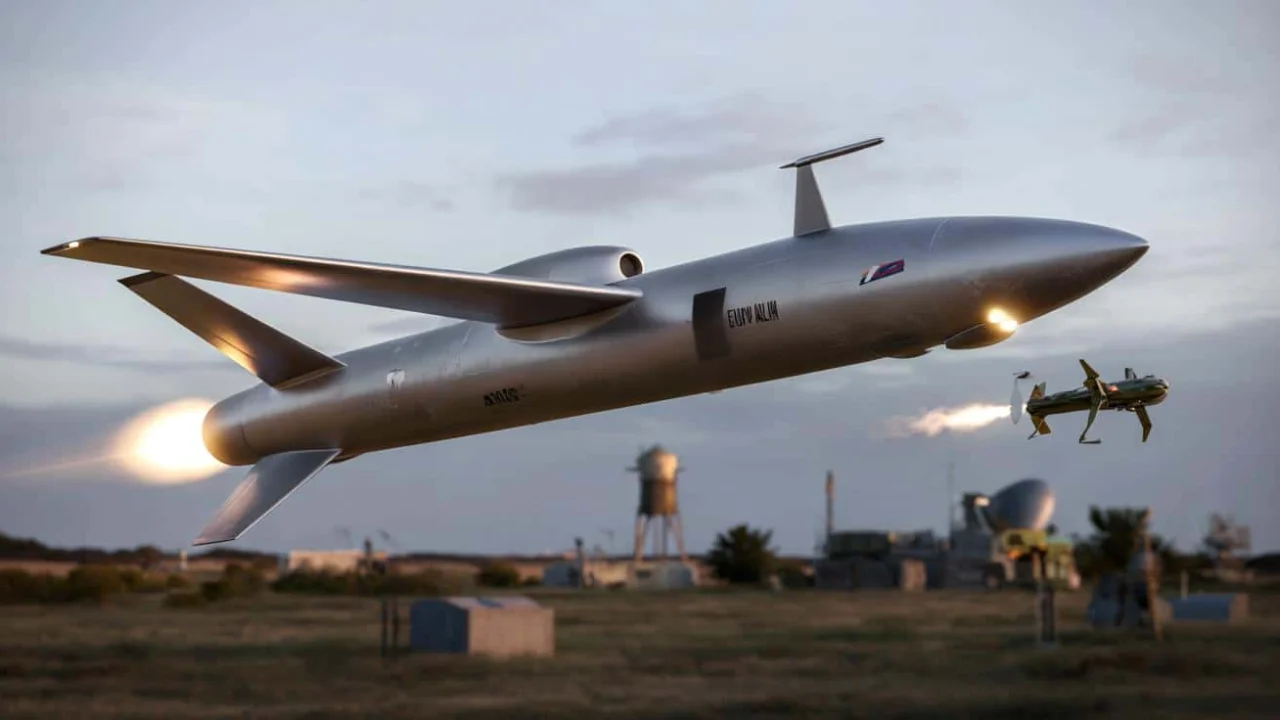
The Fury ALM drone doesn’t look like your typical quadcopter buzzing around a park. Developed by ALM Meca, a small French company based in Alsace, this interceptor resembles a miniature fighter jet more than anything else. At just 1.1 meters long with a wingspan barely over a meter, it packs an incredible punch in a compact frame.
What sets the Fury ALM apart is its blistering speed. While most combat drones lumber along at relatively modest velocities, this French creation can rocket through the sky at up to 700 kilometers per hour—nearly three times faster than the small propeller-driven drones terrorizing troops in Ukraine and the Middle East.
“We needed something that could get close to an incoming kamikaze drone at extreme speed, then destroy it without needing a direct collision,” explains a company spokesperson. “Traditional defense systems are either too slow or too expensive to deal with swarms of cheap suicide drones.”
The engineering team accomplished something remarkable: they developed this entire system in less than a year. That’s lightning-fast in the defense industry, where new weapons typically take decades to develop.
Technical Specifications and Combat Capabilities
ALM Meca describes their creation as “the best of missile and drone”—a hybrid that combines the reusability of a drone with the devastating effectiveness of a cruise missile. Here’s what makes the Fury ALM such a formidable interceptor:
| Specification | Details |
|---|---|
| Length | 1.1 meters |
| Wingspan | Just over 1 meter |
| Maximum Speed | 700 km/h (435 mph) |
| Primary Role | High-speed interceptor |
| Target | Suicide drones and loitering munitions |
| Development Time | Less than 12 months |
The Fury ALM’s key innovation lies in its destruction method. Rather than ramming into enemy drones like a kamikaze itself, it carries an active explosive payload that can detonate in proximity to its target. This approach means the drone can potentially engage multiple threats during a single mission.

Key combat features include:
- Ultra-fast interception capability against small, agile targets
- Proximity-kill explosive system for maximum effectiveness
- Compact design that’s difficult for enemies to detect and track
- Potential for autonomous operation with minimal human oversight
- Cost-effective alternative to traditional missile defense systems
“The traditional approach of using expensive missiles against cheap drones is economically unsustainable,” notes a defense industry analyst. “The Fury ALM could flip that equation, making it cost-prohibitive for enemies to launch drone swarms.”
Real-World Impact on Modern Warfare
The emergence of the Fury ALM drone comes at a crucial moment in military history. Suicide drones and loitering munitions have fundamentally changed how wars are fought, turning cheap commercial components into deadly weapons that can strike with precision anywhere on the battlefield.
Countries worldwide are scrambling to develop effective countermeasures. Traditional air defense systems, designed to intercept large aircraft and missiles, often struggle against small, slow-moving drones that can fly under radar coverage and overwhelm defensive networks through sheer numbers.
The Fury ALM addresses several critical gaps:
Speed Advantage: Most military drones can’t match the velocity needed to catch fast-moving suicide drones. The Fury’s 700 km/h capability gives it a decisive edge in pursuit scenarios.
Economic Efficiency: Instead of firing million-dollar missiles at thousand-dollar drones, the Fury offers a more proportional response that doesn’t bankrupt defense budgets.
Operational Flexibility: The system can potentially operate from forward bases with minimal infrastructure, bringing air defense capabilities closer to the front lines where they’re needed most.
Foreign militaries are already showing serious interest in the French innovation. While ALM Meca hasn’t disclosed specific customers, industry sources suggest several NATO allies are evaluating the system for potential procurement.
“What we’re seeing is a paradigm shift,” explains a former air force colonel. “The future belongs to systems that can think and move fast enough to counter threats in real-time, not the massive, expensive platforms we’ve relied on for decades.”
The implications extend beyond military applications. As drone technology becomes more accessible to non-state actors and terrorist groups, civilian airports, government buildings, and critical infrastructure face increasing threats from aerial attacks. The Fury ALM’s technology could eventually adapt to protect these vulnerable targets.
However, the system isn’t without potential drawbacks. Critics worry about the proliferation of autonomous weapons systems and the ethical implications of machines making life-and-death decisions without human intervention. There are also questions about how the Fury would perform against more sophisticated adversaries with advanced electronic warfare capabilities.
Despite these concerns, the Fury ALM drone represents a significant leap forward in defensive technology. As military conflicts increasingly involve swarms of small, cheap drones, having an interceptor that can match their speed and agility while delivering decisive firepower could prove invaluable for protecting troops and assets on tomorrow’s battlefields.
FAQs
What is the Fury ALM drone?
The Fury ALM is a high-speed interceptor drone developed by French company ALM Meca, designed to hunt down and destroy suicide drones and loitering munitions at speeds up to 700 km/h.
How fast is the Fury ALM compared to other military drones?
The Fury ALM can reach 700 km/h, making it roughly three times faster than most small propeller-driven combat drones currently used in conflicts like Ukraine.
How does the Fury ALM destroy its targets?
Unlike kamikaze drones that crash into targets, the Fury ALM carries an active explosive payload that detonates in proximity to enemy drones, potentially allowing it to engage multiple threats per mission.
Who developed the Fury ALM and how long did it take?
ALM Meca, a small French defense company based in Alsace, developed the entire system in less than one year—remarkably fast for military technology.
Which militaries are interested in the Fury ALM?
While specific customers haven’t been disclosed, industry sources indicate several foreign militaries and NATO allies are evaluating the system for potential procurement.
What makes the Fury ALM cost-effective compared to traditional air defense?
The Fury provides a more proportional response to cheap drone threats, avoiding the expensive problem of using million-dollar missiles to stop thousand-dollar suicide drones.
About the Author