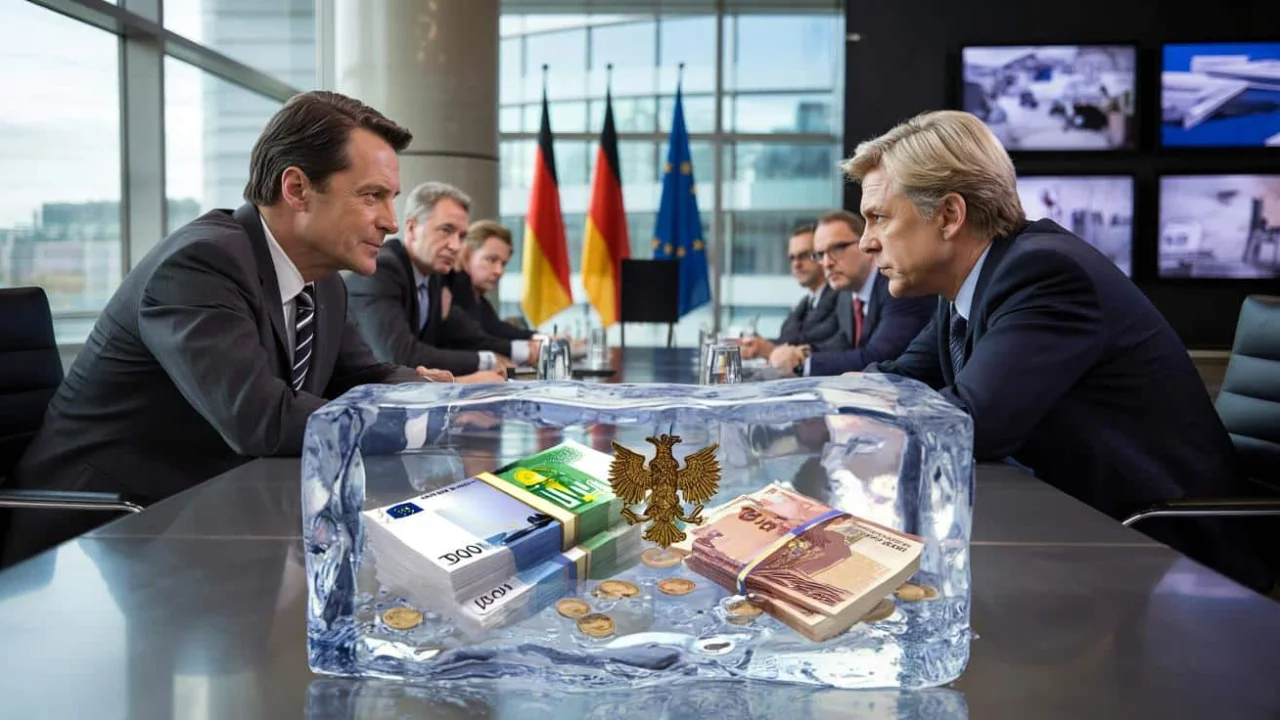
Maria Petrova never expected her small savings account in Brussels to become part of Europe’s biggest geopolitical fight. As a Ukrainian refugee working at a local bakery, she watches the news every night, hoping for updates about her hometown near Kharkiv. What she doesn’t realize is that just a few kilometers away, in the gleaming towers of Brussels’ financial district, sit billions of euros in frozen Russian assets that could help rebuild her country.
The money belongs to Russia’s central bank, locked away since the invasion began. Now, Germany wants Belgium to unlock those funds for Ukraine’s reconstruction. But Belgium is nervous, and Maria’s future might depend on this high-stakes diplomatic chess match.
This isn’t just about numbers on a spreadsheet. It’s about turning Putin’s own money against him, and one small European nation suddenly holds the key to Europe’s biggest financial weapon against Moscow.
Germany Cranks Up the Pressure
German Chancellor Friedrich Merz isn’t taking no for an answer. He’s been working the phones, meeting with Belgian officials, and making public statements about why Belgium needs to get on board with using frozen Russian assets for Ukraine’s war effort.
The plan sounds straightforward enough. Take the roughly 235 billion euros in Russian central bank reserves that have been sitting frozen since 2022, use the interest and profits they generate, and channel that money into loans for Ukraine. Germany sees this as perfect justice – making Russia pay for the destruction it caused.
“Using frozen Russian assets is an appropriate instrument to help end this war by increasing financial pressure on the Kremlin,” Merz said during a recent press conference. “We cannot allow Putin to keep his money safe while Ukrainian cities burn.”
But Belgium isn’t just being difficult for the sake of it. They’re worried about something much bigger than politics – they’re concerned about protecting Europe’s entire financial system.
The Numbers Game That Could Change Everything
Here’s where things get complicated. Most of those frozen Russian assets aren’t sitting in some government vault. They’re held by Euroclear, a Brussels-based financial giant that handles trillions of euros in transactions every day. If something goes wrong with this plan, it could shake confidence in Europe’s financial infrastructure.
| Key Figures | Amount/Details |
|---|---|
| Total Frozen Russian Assets | €235 billion |
| Proposed Loan Package | €140 billion |
| Assets Held by Euroclear | Majority of frozen funds |
| Annual Interest Generated | Estimated €3-5 billion |
Belgium’s concerns aren’t unreasonable. They’re asking tough questions about what happens if Russia retaliates, if other countries lose faith in European financial institutions, or if the legal challenges drag on for years.
The European Commission wants to use these frozen Russian assets as collateral for massive loans to Ukraine. Think of it like using someone’s seized car as security for a loan, except the car is worth hundreds of billions and belongs to a nuclear power that’s already at war.
Financial experts point out several key issues Belgium is grappling with:
- Legal liability if Russia successfully challenges the seizure in international courts
- Potential retaliation against Belgian financial institutions operating globally
- Risk of setting a precedent that could undermine international financial law
- Technical challenges in converting frozen assets into usable funds for Ukraine
“Belgium isn’t trying to protect Russia,” explains Dr. Sarah Henderson, a sanctions expert at the Brussels Institute for European Studies. “They’re trying to protect the integrity of the European financial system that processes trillions in transactions every day.”
What This Means for Real People
While diplomats argue in Brussels conference rooms, the stakes couldn’t be higher for ordinary people. Ukraine needs massive funding to keep its government running, pay salaries to teachers and doctors, and eventually rebuild destroyed cities and infrastructure.
Without access to these frozen Russian assets, that money has to come from somewhere else – likely European taxpayers. German citizens are already contributing billions in aid to Ukraine, and public support could wane if the economic burden keeps growing.
For Ukrainians like Maria, the delay in accessing these funds means continued uncertainty about whether there will be a country left to return to. Every month of delay is another month that hospitals remain damaged, schools stay closed, and basic infrastructure crumbles under the weight of war.
The ripple effects extend beyond Ukraine’s borders. If Belgium continues to resist and the plan falls apart, it could signal to Putin that Europe lacks the unity and determination to sustain long-term pressure on Russia.
“This is about more than money,” says Professor James Mitchell from the London School of Economics. “It’s about whether Europe can act decisively when it matters most.”
European businesses are watching too. If the frozen Russian assets program succeeds, it could become a template for future sanctions regimes. If it fails, it might embolden other authoritarian regimes to believe they can weather European financial pressure.
Belgium faces a genuine dilemma. Support the plan, and they risk potential legal and financial complications that could affect their role as a major European financial center. Oppose it, and they become the country that blocked Europe’s most ambitious attempt to make Russia pay for the war.
The clock is ticking. Ukraine’s budget needs are immediate, and every day of delay makes the eventual reconstruction more expensive and complicated. Germany’s pressure campaign reflects the urgency European leaders feel about getting this money moving.
Meanwhile, Putin is undoubtedly watching this European debate with interest. If Belgium’s resistance leads to the plan’s collapse, it would represent a significant victory for Moscow – proof that European unity has limits when real money is on the line.
The outcome of this dispute will shape not just Ukraine’s future, but Europe’s credibility as a global financial power capable of using economic tools to defend its values and security interests.
FAQs
What are frozen Russian assets exactly?
These are Russian central bank reserves and other state funds that European countries froze and blocked from use after Russia invaded Ukraine in 2022.
Why is Belgium reluctant to use these frozen Russian assets?
Belgium hosts Euroclear, which holds most of the frozen funds, and worries about legal risks and potential damage to Europe’s financial infrastructure if the plan goes wrong.
How much money are we talking about?
Approximately 235 billion euros in frozen Russian assets, with plans to use the interest and profits to back 140 billion euros in loans for Ukraine.
What happens if Belgium doesn’t agree?
The entire plan could collapse, forcing European taxpayers to cover Ukraine’s funding needs and potentially signaling weakness to Putin.
Is this legal under international law?
That’s the big question Belgium is worried about – there could be legal challenges that drag on for years and create uncertainty in global financial markets.
When will this be decided?
European leaders are pushing for a decision soon, as Ukraine’s budget needs are immediate and the war shows no signs of ending quickly.
About the Author