Marie spent three years searching for work after her factory closed in eastern France. She had skills in precision manufacturing, but every interview seemed to lead nowhere. Then last month, something changed. A France Travail counselor called her about opportunities in defense manufacturing – roles she’d never considered before.

“They told me companies were desperate for people with my background,” Marie recalls. “Suddenly, I wasn’t just another unemployed worker. I was exactly what they needed.”
Marie’s story reflects a quiet revolution happening across France’s job market. As geopolitical tensions rise and military budgets expand, the country’s employment agency is making an unprecedented move that could reshape how thousands of people find work.

France Travail’s Bold Military Strategy
France Travail, the public employment service that replaced Pôle emploi, is launching something entirely new: a dedicated recruitment division focused exclusively on defense industry jobs. What makes this remarkable isn’t just the specialized focus – it’s that they’re putting a serving general in charge.
This isn’t your typical government bureaucracy move. Labour Minister Jean-Pierre Farandou confirmed that a military officer will lead this national unit, with the appointment expected within weeks. The message is clear: France is treating defense recruitment like a military operation.

“We’re not just filling job openings anymore,” explains a senior France Travail official. “We’re building the workforce that will determine France’s strategic independence for the next decade.”
The timing couldn’t be more critical. French defense spending has surged to record levels, and companies from Dassault to Thales are scrambling to hire. But here’s the problem: traditional recruitment methods aren’t keeping pace with demand.

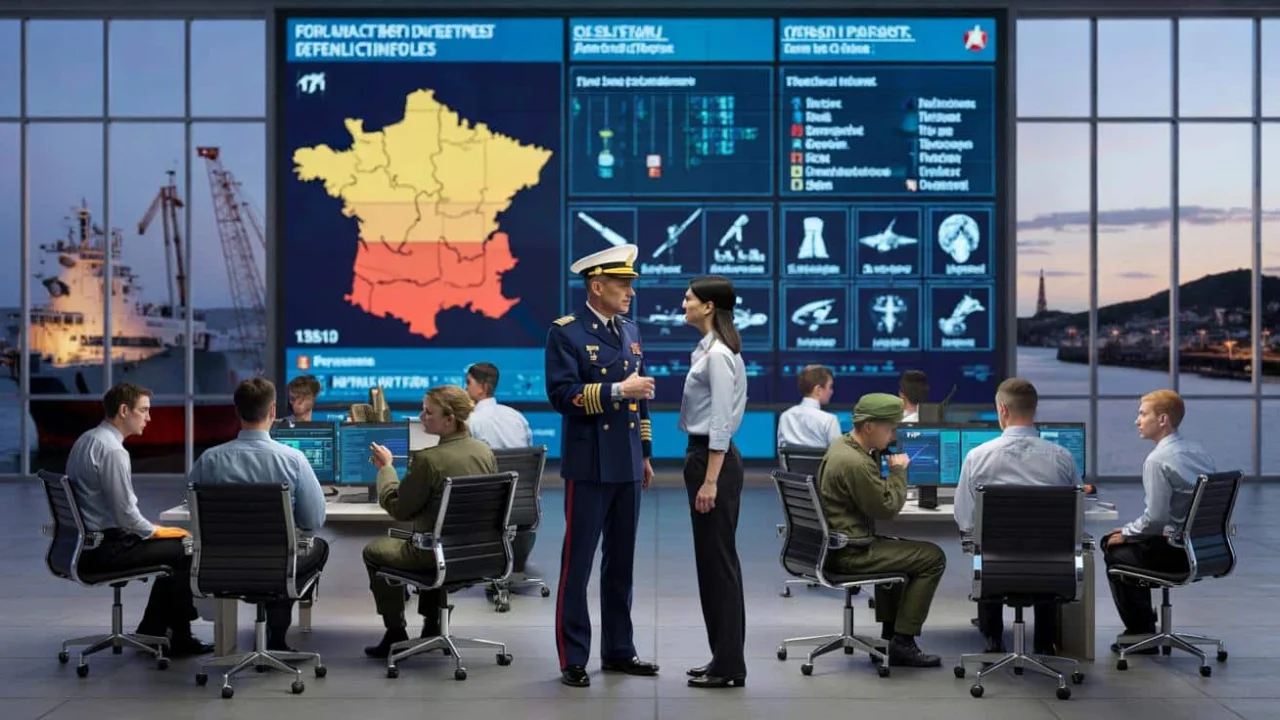
The new division will function as a central command center, coordinating between defense contractors, military needs, and civilian job seekers. Instead of fragmented hiring across different regions, France Travail defence recruitment will create a unified pipeline.
What This Means for Job Seekers and Employers
The scope of this initiative extends far beyond what most people imagine when they think “defense jobs.” We’re not just talking about building fighter jets or missiles. The defense recruitment strategy covers an enormous range of positions:

- Cybersecurity specialists and IT professionals
- Advanced manufacturing technicians
- Supply chain and logistics coordinators
- Research and development engineers
- Quality control and testing specialists
- Administrative and support staff
“People think defense work means wearing a uniform,” notes recruitment specialist Claire Dubois. “In reality, most defense industry jobs look exactly like civilian roles, just with higher security clearances and better pay.”
Here’s how the new system will work in practice:
| Traditional Process | New Defense Division Process |
|---|---|
| Companies post jobs individually | Centralized needs assessment across all defense contractors |
| Job seekers apply randomly | Targeted matching based on security clearance potential |
| Training decided company by company | Coordinated training programs aligned with national needs |
| Regional variations in opportunities | National mobility and placement strategy |
The division will also tackle a persistent problem: many qualified candidates never consider defense work because they don’t understand what’s available. The military leadership brings credibility and insider knowledge to translate complex requirements into clear career paths.
Real Impact on Communities and Careers
This shift could transform entire regions of France. Areas with declining traditional industries – like the manufacturing zones where Marie worked – suddenly have new prospects. Defense contractors are often willing to invest heavily in training, making them attractive to workers from other sectors.
The ripple effects extend beyond individual careers. Communities hosting defense facilities tend to see broader economic development. Suppliers, service providers, and supporting businesses all benefit from increased defense activity.
“We’re seeing towns that were written off after factory closures now becoming recruitment hotspots,” observes economic development consultant Paul Moreau. “Defense companies bring not just jobs, but high-value jobs that anchor communities.”
For young people, the implications are particularly significant. Traditional career guidance rarely highlighted defense opportunities, partly because counselors didn’t understand the sector. A military-led recruitment division changes that dynamic completely.
The security aspect also matters more than many realize. Defense industry workers typically receive thorough background checks, which becomes valuable currency in today’s job market. Once someone has defense-level clearance, they become attractive to many employers beyond the military sector.
However, challenges remain. Defense work isn’t for everyone – the security requirements, potential travel demands, and sometimes irregular schedules can be demanding. The new division will need to balance ambitious recruitment goals with realistic candidate assessment.
“We need to be honest about what defense careers involve,” admits a France Travail regional director. “But for people who fit the profile, these are some of the most stable and rewarding jobs available in France today.”
Regional offices are already preparing for increased defense-focused activity. Training programs are being redesigned, partnerships with technical schools are expanding, and counselors are receiving specialized briefings on defense industry needs.
The appointment of a military leader sends another important signal to job seekers: this isn’t a temporary initiative. France is making a long-term commitment to building its defense workforce, which means career stability for those who enter the sector.
As Marie discovered, sometimes the best opportunities come from directions we never expected. Her precision manufacturing skills, once seemingly obsolete, are now exactly what France’s defense industry desperately needs. The new recruitment division aims to create thousands more success stories like hers.
FAQs
Will this division only hire for military positions?
No, the focus is on civilian defense industry jobs with companies like Airbus, Thales, and Dassault, not military service roles.
Do you need special qualifications to work in defense?
Many positions require standard technical or professional skills, but you’ll need to pass security clearance checks.
Will this affect regular France Travail services?
The defense division is additional to existing services – regular job placement continues as normal.
Are these jobs only in major cities?
Defense facilities are located throughout France, often providing opportunities in smaller towns and industrial regions.
How long does defense industry security clearance take?
Processing times vary, but the new division aims to streamline the clearance process for qualified candidates.
Will training be provided for career changers?
Yes, defense companies often provide extensive training, especially for workers transitioning from other manufacturing or technical backgrounds.
About the Author