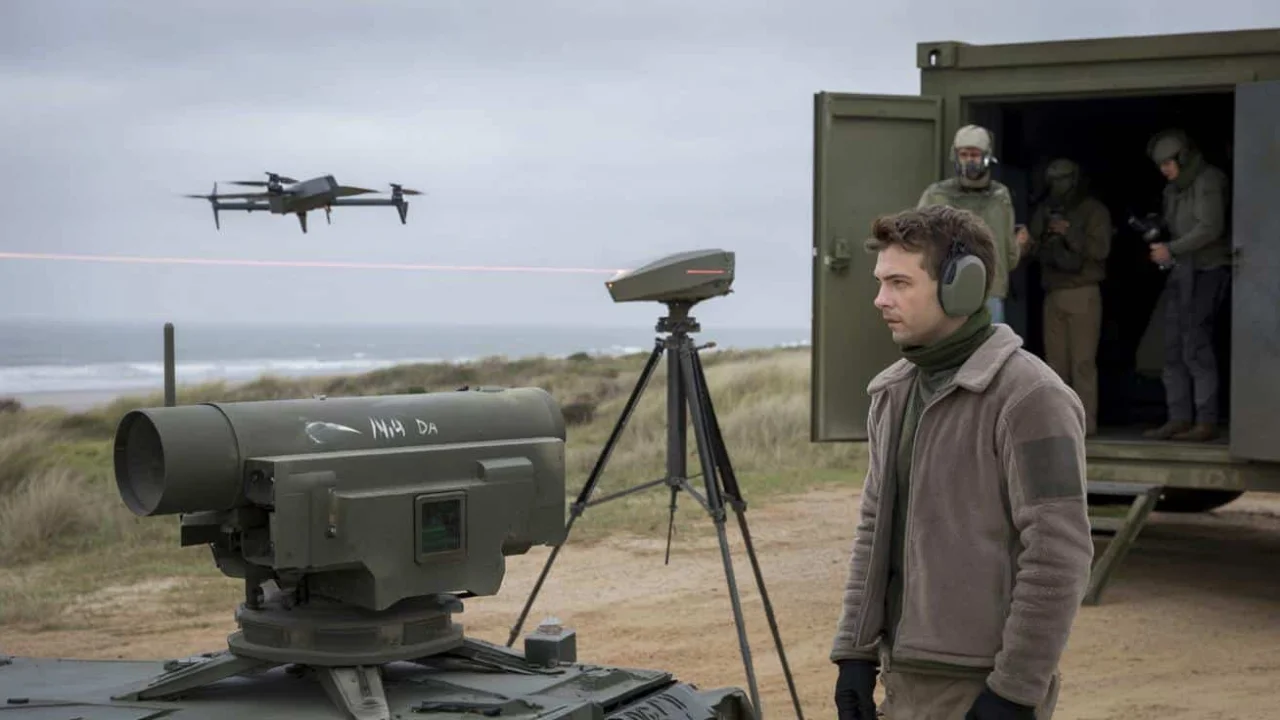
The alarm doesn’t sound like in the movies. No dramatic siren, no red flashing lights. On a grey morning in Biscarrosse, in southwest France, a discreet buzz appears on screens inside a military container. A small drone, no bigger than a pizza box, is flying toward a protected zone. Outside, the Atlantic wind whips the dunes. Inside, a young operator in a fleece jacket leans forward, eyes locked on the radar trace.
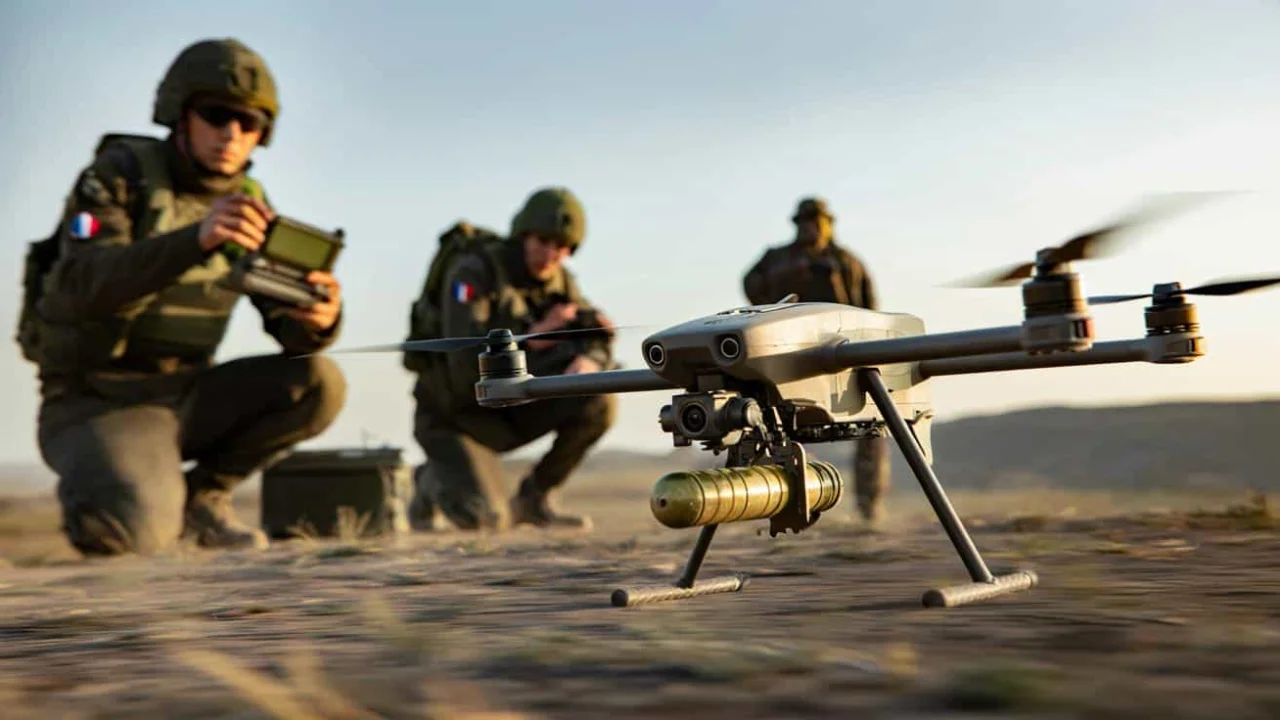
A few years ago, nobody would have cared about a flying gadget like this. Today, that same “toy” could carry explosives, film a sensitive site, or jam communications. The threat has evolved faster than anyone expected.
In a corner of the test range, a new system silently boots up, waiting for its moment. A last line of defense that, if needed, will answer with a laser beam capable of burning through metal and circuits in seconds.
Why France Is Racing to Build Better Drone Defenses
French military officers don’t talk about drones like a distant, hypothetical risk anymore. They talk about them the way firefighters talk about cigarettes in dry forests. One spark in the wrong place, and everything can go up.
The war in Ukraine changed everything. Cheap quadcopters dropping grenades on trenches. Swarms confusing anti-aircraft radars. Commercial models hacked to become kamikazes. What started as hobbyist toys became weapons of war overnight.

“We watched consumer drones evolve from Christmas gifts to legitimate military threats in less than five years,” says Colonel Marc Dubois, who oversees France’s counter-drone testing program. “The technology gap closed faster than we anticipated.”
On French soil, the concern is different but just as real. Major sporting events, nuclear facilities, military installations, busy airports. Each location presents unique vulnerabilities that traditional air defenses weren’t designed to handle.

France antidrone defenses now operate on multiple levels, from detection systems that can spot drones kilometers away to close-range interceptors that can physically destroy incoming threats. The latest addition to this arsenal represents a significant technological leap: laser-based weapons that can disable drones with pinpoint accuracy.
Breaking Down France’s New Anti-Drone Arsenal
The French military has been quietly testing several layers of drone defense systems across the country. Each system serves a specific purpose in what experts call a “layered defense strategy.”

Here’s how France’s current anti-drone capabilities stack up:
| Defense Layer | Detection Range | Response Method | Target Types |
|---|---|---|---|
| Early Warning Radar | 10-15 km | Alert and tracking | All drone sizes |
| Electronic Jamming | 2-5 km | Signal disruption | Remote-controlled drones |
| Net Interceptors | 500m-2km | Physical capture | Small to medium drones |
| Laser Defense | 100m-1km | Thermal destruction | Any size drone |
The laser system represents the most advanced technology in France’s anti-drone arsenal. Unlike traditional weapons that fire projectiles, these directed-energy systems can engage multiple targets rapidly without ammunition constraints.
“The beauty of laser defense is precision,” explains Dr. Sophie Laurent, a defense technology researcher at the French Institute of Strategic Research. “You can disable a drone’s electronics or sensors without the collateral damage risk of explosive projectiles.”
Key advantages of France’s laser-based anti-drone systems include:
- Silent operation with no audible signature
- Virtually unlimited “ammunition” as long as power is available
- Precise targeting that minimizes collateral damage
- Rapid engagement of multiple successive targets
- Lower long-term operational costs compared to missile systems
The testing phase in Biscarrosse has shown promising results. French engineers have successfully engaged various drone types, from small consumer quadcopters to larger fixed-wing models designed for surveillance missions.
Real-World Impact and What’s Next
France’s accelerated development of anti-drone defenses isn’t happening in isolation. The technology has immediate applications across multiple sectors that affect ordinary citizens.
Airport security stands to benefit significantly from these advances. Charles de Gaulle and other major French airports have experienced costly shutdowns due to unauthorized drone activity. Enhanced detection and neutralization capabilities could prevent future disruptions that strand thousands of passengers.
Major events like the upcoming Paris Olympics require sophisticated airspace protection. Traditional methods of clearing airspace around stadiums and venues may not be sufficient against determined actors using multiple small drones.
“We’re preparing for scenarios where hostile actors might use swarm tactics,” says General Philippe Martin, who oversees France’s counter-drone strategy. “Our systems need to handle not just single threats, but coordinated attacks involving dozens of devices.”
The energy sector also benefits from improved drone defense capabilities. French nuclear facilities have reported numerous unauthorized drone overflights in recent years. While most appear to be harmless curiosity flights, the potential for reconnaissance or actual attack makes robust defense systems essential.
France antidrone defenses are expected to become fully operational across critical infrastructure within the next two years. The military plans to deploy mobile laser systems that can be rapidly positioned wherever threats emerge.
Commercial applications may follow military deployment. Private security companies are already expressing interest in scaled-down versions of the technology for protecting corporate facilities, private events, and high-value installations.
The economic impact extends beyond security. French defense contractors involved in developing these systems are positioning themselves to export the technology to allied nations facing similar drone threats. Early interest has come from European Union partners and NATO allies.
“This isn’t just about defending France,” notes defense analyst Marie Rousseau. “We’re developing capabilities that could become a significant export industry while strengthening relationships with security partners worldwide.”
However, challenges remain. Legal frameworks for using directed-energy weapons in civilian areas need refinement. Questions about electromagnetic interference with other systems require ongoing study. Training operators to use sophisticated laser targeting systems effectively takes time.
The testing continues at Biscarrosse and other French military facilities. Each successful engagement brings the technology closer to full deployment. For now, that young operator in the fleece jacket continues monitoring screens, knowing that if a real threat appears, France has more options than ever before to respond effectively.
FAQs
How do laser anti-drone systems actually work?
They focus high-energy beams on specific components of drones, typically heating up electronics or sensors until they fail and cause the drone to crash or return to base.
Are these laser systems dangerous to people or aircraft?
Modern military laser systems are designed with safety protocols that prevent accidental targeting of manned aircraft or ground personnel, though they require trained operators.
When will France’s new anti-drone defenses be fully deployed?
The military expects full operational capability across critical infrastructure within two years, with mobile systems available for rapid deployment to emerging threats.
Can these systems stop drone swarms?
Yes, laser systems can engage multiple targets in rapid succession, making them particularly effective against coordinated swarm attacks that might overwhelm traditional missile defenses.
Will this technology be available for civilian use?
Scaled-down versions may become available for private security applications, though strict regulations will likely govern civilian access to directed-energy weapons.
How much do these laser defense systems cost?
While specific costs remain classified, military officials indicate that operational expenses are significantly lower than missile-based systems since lasers don’t require ammunition replacement.
About the Author