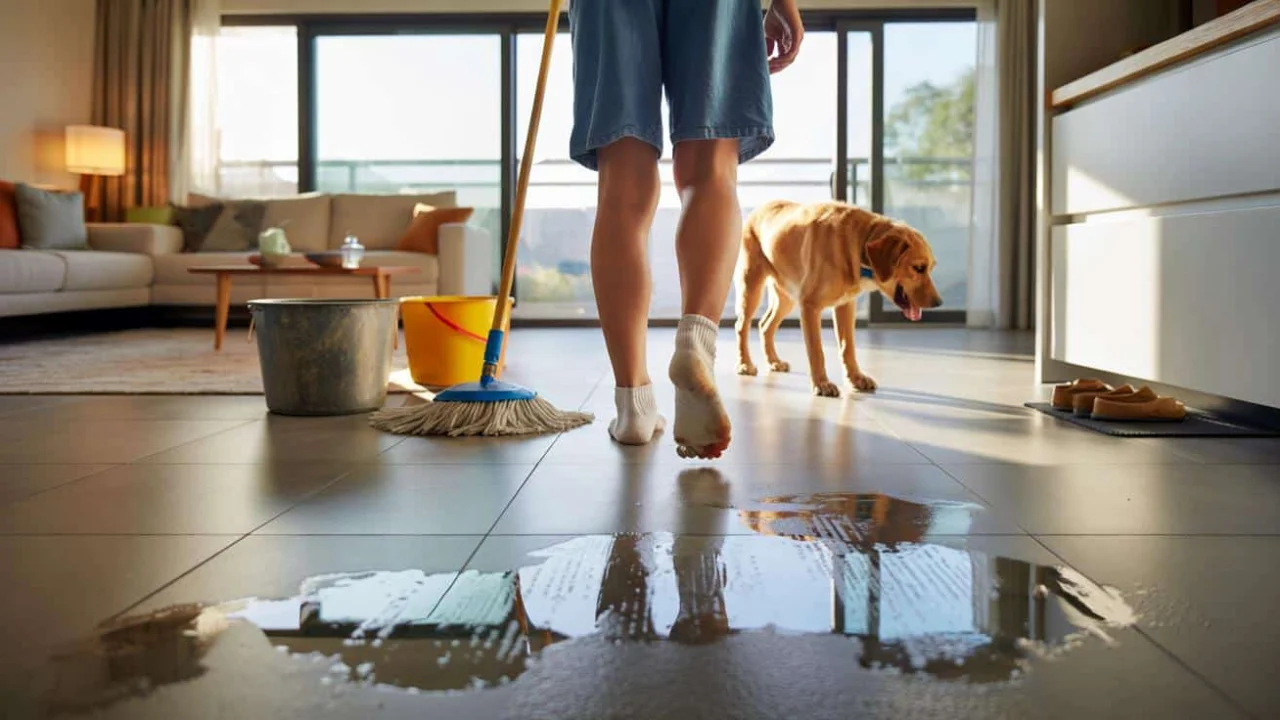
Sarah stares down at her kitchen floor, mop still dripping in her hand. Twenty minutes ago, it gleamed like a showroom. Now, under the afternoon light streaming through her window, she can see streaks, smudges, and what looks suspiciously like the same footprints she thought she’d just scrubbed away.

She sighs, leans the mop against the counter, and wonders if she’s losing her mind. This happens every single time. The floors never stay clean, no matter how hard she scrubs or how expensive the cleaning product.
If this sounds familiar, you’re not alone. Millions of people wrestle with this same maddening cycle every week, convinced they’re doing something wrong or that their floors are somehow cursed.

The hidden culprits making your floors dirty again
The truth about why floors never stay clean has less to do with your technique and more to do with what’s happening at the microscopic level. Every time you mop, you’re creating the perfect conditions for dirt to return faster and stick harder.
“Most people are actually making their floors dirtier when they think they’re cleaning them,” says Maria Rodriguez, a professional cleaning consultant with 15 years of experience. “They’re spreading a thin film of soap residue that acts like a magnet for every speck of dust and dirt.”
Here’s what really happens when you mop. You start with relatively clean water and cleaning solution. But as you work through each room, that water becomes a cocktail of dirt, hair, food particles, and dissolved grime. By the time you reach your last room, you’re essentially painting the floor with dirty water.
The cleaning product residue is the real villain. Even after the floor appears dry, a microscopic layer of soap, detergent, and dissolved dirt remains. This sticky film grabs onto dust particles, pet hair, and skin cells floating in the air. Within hours, your “clean” floor has collected a new layer of grime.

The science behind why some floors get dirty faster
Different floor types present unique challenges that explain why your floors never stay clean. Understanding these differences can help you adjust your approach and finally win the war against constantly dirty surfaces.
| Floor Type | Main Problem | Why It Happens |
|---|---|---|
| Tile and Grout | Grout lines trap dirt | Porous surface absorbs cleaning residue |
| Laminate | Shows every streak | Smooth surface highlights residue buildup |
| Hardwood | Water damage and dulling | Excess moisture penetrates protective finish |
| Vinyl/LVP | Static attraction | Synthetic material attracts dust and pet hair |
The timing of your cleaning also matters more than you think. Mopping during peak activity hours means fresh dirt gets tracked across damp floors immediately. Morning cleaners often see their work undone by lunchtime foot traffic.

“I tell my clients that timing is everything,” explains cleaning expert James Chen. “Mopping right before everyone leaves for work or school gives the floor time to properly dry and set without immediate contamination.”
Environmental factors play a huge role too. Homes with poor air filtration, high humidity, or lots of fabric surfaces tend to have more airborne particles settling on freshly cleaned floors. Pet dander, cooking oils, and even fabric softener residue from laundry rooms can create invisible films that attract dirt.
- Humidity above 50% slows drying time and increases stickiness
- Cooking oils become airborne and settle on nearby floors
- Pet dander creates static that pulls in more particles
- Fabric softener residue from laundry areas spreads through air circulation
- Poor ventilation traps cleaning product vapors that resettle on surfaces
How daily life sabotages your clean floors
Even when you nail the cleaning process, modern life conspires against your efforts. The average household generates surprising amounts of microscopic debris that makes floors never stay clean for long.
Consider what happens in a typical day. Family members track in pollen, road salt, and microscopic soil particles on their shoes. Pets shed skin cells and bring in outdoor contaminants on their paws. Cooking releases oil particles that settle on nearby surfaces. Even showering creates humidity that helps airborne particles stick to floors.
“People underestimate how much invisible dirt their daily activities generate,” notes residential cleaning specialist Lisa Park. “A single cooking session can put enough oil particles in the air to make floors feel tacky within hours.”
The way we move through our homes also spreads contamination. Socks pick up residue from one room and deposit it in another. Bare feet leave natural oils that attract dust. Even houseplants contribute by shedding microscopic organic matter and creating humidity pockets.
High-traffic areas suffer the most. Hallways, kitchen entrances, and spaces near exterior doors get hit with constant contamination. These zones need different cleaning strategies than low-traffic bedrooms or formal dining areas.
The solution isn’t more frequent mopping – it’s smarter cleaning techniques that break the cycle of residue buildup. This means changing your water more often, using less cleaning product, and focusing on thorough rinsing instead of just spreading soapy water around.
Prevention also matters enormously. Strategic placement of door mats, regular vacuuming before mopping, and controlling humidity levels can dramatically extend the time between deep cleanings. Some households find that daily spot-cleaning with microfiber cloths prevents the need for full mopping sessions more than twice a week.
Breaking the dirty floor cycle for good
The key to floors that actually stay clean lies in changing your entire approach. Instead of fighting the symptoms, address the root causes that make floors never stay clean in the first place.
Start with your water. Use two buckets – one for cleaning solution and one for rinsing your mop. This prevents you from spreading dirty water around. Change the water when it looks cloudy, not when you’re finished with all the rooms.
Less cleaning product works better than more. Most people use three to four times the recommended amount, creating the sticky residue film that attracts dirt. A few drops of dish soap in a bucket of warm water often works better than expensive floor cleaners.
“The biggest mistake I see is people thinking more product equals cleaner floors,” says professional cleaner David Kim. “The opposite is usually true. Less soap means less residue and floors that stay cleaner longer.”
FAQs
Why do my floors feel sticky after mopping?
Sticky floors usually result from too much cleaning product or not rinsing properly. The soap residue attracts dirt and makes floors feel tacky.
How often should I change my mop water?
Change your water when it becomes visibly dirty or cloudy, typically after cleaning 2-3 rooms depending on how dirty they were initially.
Is it better to mop with hot or cold water?
Warm water works best for most cleaning tasks, but avoid very hot water on hardwood floors as it can damage the finish.
Should I vacuum before mopping?
Always vacuum or sweep first. Mopping over loose dirt and debris just spreads it around and makes your cleaning water dirty faster.
Why do my dark floors show footprints so easily?
Dark floors highlight soap residue and natural oils from feet. Using less cleaning product and ensuring thorough rinsing helps reduce this problem.
How can I make my floors stay cleaner longer?
Use door mats, clean spills immediately, vacuum regularly, and control humidity levels in your home to slow down dirt accumulation.
About the Author