Picture this: you’re a soldier crouched behind cover, enemy positions just over the ridge. Your unit spots the targets, but you don’t have the firepower to take them out. Miles away, artillery crews are ready to help, but they can’t see what you see. For decades, getting that critical targeting information from your eyes to their guns meant radio calls, coordinates shouted over static, and precious time ticking away while the enemy moved.
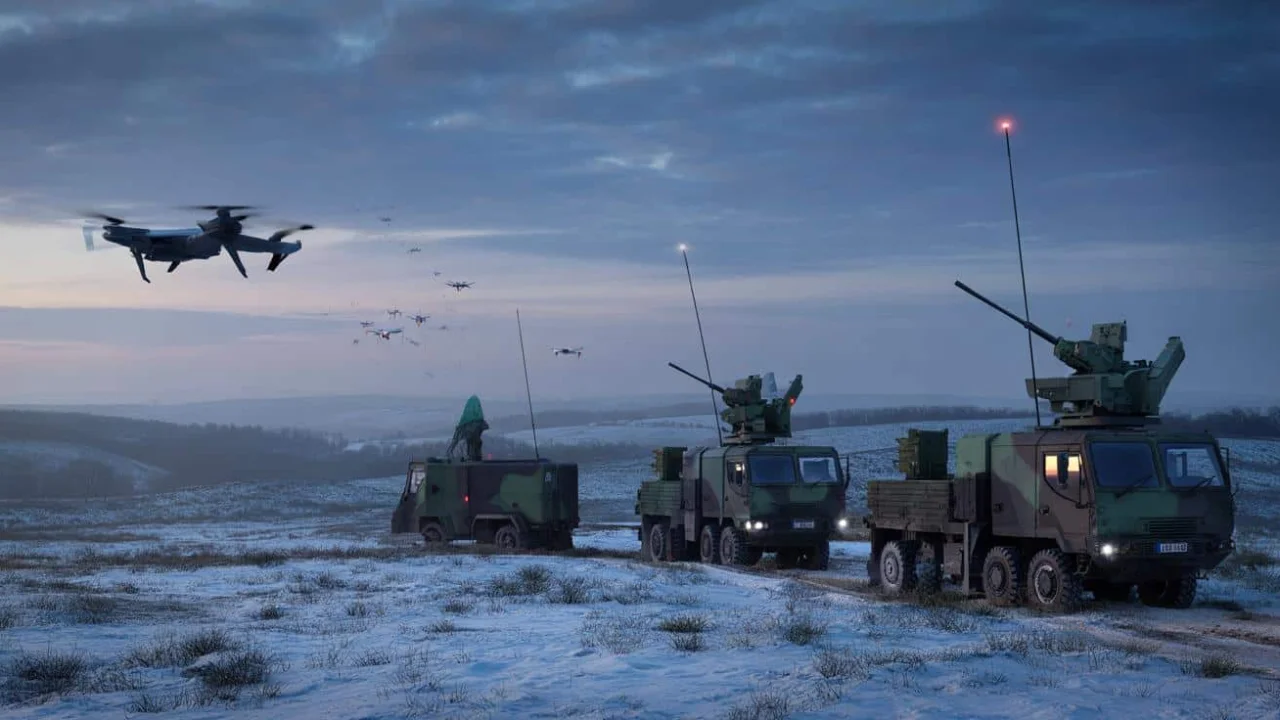
Last week in Colorado, something remarkable happened that could change all of that forever. For the first time, Army artillery crews successfully fired on targets using fire mission data shared directly from Marine Corps systems. No radio chatter, no delays, no miscommunication. Just seamless, instant data sharing that could save lives on future battlefields.
The live-fire demonstration was more than just a successful test – it was proof that America’s military branches are finally learning to speak the same digital language when it matters most.
When Different Branches Finally Talk the Same Language
The breakthrough happened during “Ivy Sting 4,” an ambitious Army experiment designed to connect forces across all domains of warfare. At a windswept range in Colorado, an Army M777 howitzer crew executed a real fire mission using targeting information generated entirely by Marine Corps systems.
Here’s what made this test so significant: the Marines spotted the target, processed the data through their systems, and instantly transmitted that fire mission data to Army artillery units. The Army crews received the information, fired their rounds, and then pushed their own data back to the Marine systems in real-time.
“This mission proved that Army and Marine Corps fire control systems, historically incompatible, can now share rich, time-sensitive data in both directions,” explained Colonel James Martinez, who observed the exercise. “We’re not just talking about coordinates anymore – we’re talking about complete tactical pictures.”
The bidirectional data flow was crucial. It wasn’t enough for the Army to simply receive Marine targeting data. They had to prove they could send their own fire mission data back, creating a complete loop that keeps both forces informed about what’s happening on the battlefield.
The Technical Breakthrough That Made It Possible
For years, the biggest obstacle wasn’t willingness to cooperate – it was the technology itself. Army and Marine Corps fire control systems were built by different contractors, used different protocols, and essentially couldn’t communicate without human translators.
The recent exercise showcased several key technological achievements:

- Real-time data sharing: Fire mission data now flows between systems in seconds, not minutes
- Compatible formatting: Both branches can read and process each other’s targeting information
- Bidirectional communication: Data flows both ways, keeping everyone updated
- Joint battlefield picture: All units see the same tactical situation simultaneously
- International compatibility: Systems also worked with Australian and UK forces
| Traditional Method | New Data Sharing |
|---|---|
| Radio calls for coordinates | Instant digital transmission |
| 5-10 minutes to process | Under 30 seconds |
| Voice confirmation needed | Automatic verification |
| Single-service systems | Multi-service compatibility |
| Limited battlefield awareness | Complete tactical picture |
“What we achieved in Colorado represents years of behind-the-scenes work to break down digital barriers between our forces,” said Major Sarah Chen, a fire control systems specialist. “The technology finally caught up to what we’ve always wanted to do tactically.”
The exercise also included forces from Australia and the UK, proving that this fire mission data sharing capability extends beyond just American forces. International partners were able to integrate their systems and participate in the same real-time information network.
What This Means for Future Combat Operations
This successful data sharing test isn’t just a cool technical achievement – it could fundamentally change how American forces fight together. In future conflicts, the ability to instantly share fire mission data across service branches could be the difference between mission success and failure.
Consider the practical implications: Marine reconnaissance teams operating behind enemy lines could instantly transmit target data to Army artillery stationed dozens of miles away. Navy ships could share targeting information with Air Force pilots and Army missile units simultaneously. The entire battlefield becomes one connected network instead of separate service silos.
“We’re moving toward a future where it doesn’t matter which uniform you’re wearing – if you can see the target and I have the weapon to engage it, we can make that connection instantly,” explained Lieutenant Colonel David Rodriguez, who participated in the exercise planning.
The speed advantage alone could be game-changing. Traditional methods of coordinating fires between different services often took 10-15 minutes. The new system demonstrated coordination times under 30 seconds. In combat, those saved minutes could mean the difference between hitting a moving target and watching it escape.
Beyond speed, the shared fire mission data creates unprecedented situational awareness. Every participating unit sees the same battlefield picture, knows what targets are being engaged, and can avoid dangerous conflicts or coordinate more complex operations.
For military families, this advancement represents something deeply personal: better coordination means more effective operations, which could lead to shorter deployments and fewer casualties. When forces can work together more efficiently, they can accomplish their missions faster and come home sooner.
“My son’s unit deployed last year, and I remember thinking about all the coordination challenges they faced,” said retired Master Sergeant Patricia Williams. “Knowing that future deployments might benefit from this kind of seamless communication gives me hope that we’re making their jobs safer and more effective.”
The success also sends a strong message to potential adversaries. America’s military branches are becoming more integrated and capable of rapid, coordinated responses across multiple domains. The demonstration showed that U.S. forces and key allies can share critical fire mission data instantly, making them more unpredictable and dangerous to enemies.
Looking ahead, military leaders plan to expand these capabilities to more units and more scenarios. The Colorado test was just the beginning of what could become standard operating procedure for joint operations worldwide.
FAQs
What is fire mission data and why does it matter?
Fire mission data includes target locations, threat assessments, and tactical information needed to coordinate artillery and missile strikes. Sharing this data quickly between military branches can save lives and improve mission effectiveness.
How long did it take to develop this capability?
The technology has been in development for several years, with the recent Colorado exercise representing the first successful live-fire demonstration of seamless data sharing between Army and Marine Corps systems.
Will this technology be used in actual combat operations?
Yes, military leaders plan to integrate these capabilities into standard operating procedures for joint operations, making cross-service coordination faster and more effective in real combat situations.
Can enemy forces intercept or jam these data transmissions?
While specific security details aren’t publicly available, military data networks typically use encryption and anti-jamming technologies to protect communications from enemy interference.
How does this affect military spending and budgets?
By enabling different service branches to use existing equipment more effectively together, this technology could actually reduce costs by minimizing the need for duplicate capabilities across services.
When will average soldiers and Marines start using these systems?
The military is gradually expanding these capabilities to more units, with full deployment timelines depending on training requirements and equipment upgrades across different commands.
About the Author