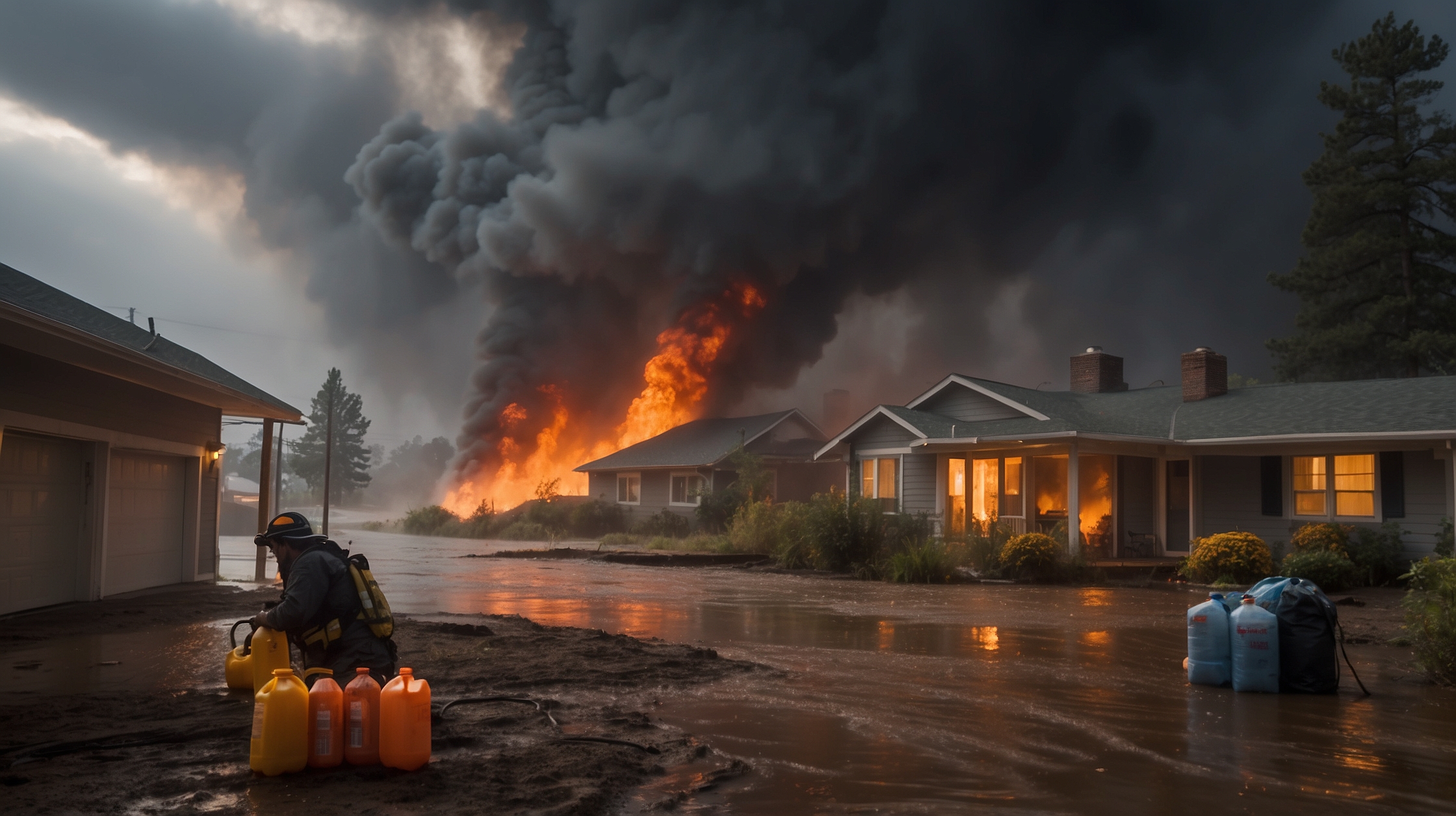
Disasters can strike with little to no warning, leaving homeowners scrambling to salvage their properties, finances, and peace of mind. Whether it’s a wildfire, hurricane, or flash flood, nature’s fury doesn’t discriminate. But while the event itself is out of your control, your preparedness isn’t. Taking proactive steps today can help you minimize damages and financial losses tomorrow—often saving you thousands of dollars or more in repair and recovery costs.

With climate change increasing the frequency and severity of natural disasters across the U.S., smart planning is not just advisable—it’s essential. Beyond stocking up on food and tracking storm alerts, certain disaster prep tactics can significantly cut your recovery time, reduce your insurance claims, and even score you valuable tax or insurance incentives. Here are the top 9 disaster prep moves every homeowner and renter should consider now, before it’s too late.
At-a-glance preparation guide and cost-benefit summary
| Disaster Prep Strategy | Average Cost | Potential Savings or Benefit |
|---|---|---|
| Install sump pump with battery backup | $500–$1,500 | Prevents basement flooding & $10K+ in damage |
| Home insurance review and upgrade | $0–$200 (if added riders) | Up to $30K+ in better claims coverage |
| Anchor large furniture and appliances | $50–$150 | Reduces injury and damage during earthquakes |
| Fire-resistant landscaping | $500–$3,000 | Improves home survival rate in wildfires |
| Create digital inventory of possessions | Free | Faster, more complete insurance claims |
| Trim overhanging trees near home | $150–$500 | Prevents roof and siding damage in storms |
| Upgrade to wind-rated hurricane windows | $2,000–$5,000 | Reduces storm damage and may lower premiums |
| Back-up critical files and documents | Free–$10/month (cloud service) | Safeguards vital info post-disaster |
| Community response training (CERT) | Often free | Enhances overall emergency preparedness |
Why disaster preps pay off long-term
It’s easy to overlook the value of disaster preparation—until disaster forces your hand. Insurance companies regularly report that policyholders who implement **mitigation measures** see drastically fewer claims, or less severe losses when they do file. Upgrades may also result in **lower premiums**, especially in high-risk zones. In many states, insurers give discounts for wind mitigation, storm shutters, and bolt-down structural reinforcements.

Plus, local and federal **tax credits or rebates** may be available for certain upgrades. For example, energy-efficient and fire-resistant roofing or insulation may qualify you for long-term savings on property taxes or home insurance bills. Whether you live in fire-prone California, hurricane-heavy Florida, or flood-risk Louisiana, the returns easily justify the upfront expense.
How to storm-proof your home and wallet
From fires in the West to hurricanes on the Gulf Coast, every disaster type carries specific risks. Here’s how to prepare your home to withstand nature’s toughest tests:

1. Flood-proofing measures for basements and first floors
Flood damage can destroy years of equity in hours. Installing a **sump pump** with a backup battery or generator is a lifesaver during power outages. Raising electrical outlets, adding floor drain plugs, and using water-resistant materials in your basement can also help minimize losses. According to FEMA, just one inch of water inside a home can cost an average of $25,000 in damage.
2. Secure coverage before disaster strikes
Evaluate your **homeowners insurance** regularly. Many base policies don’t cover floods or earthquakes. Adding a **rider for natural disasters** or even switching to a comprehensive all-risk policy could mean the difference between full recovery and financial ruin. Update your property values, document assets, and make sure your policy matches current home replacement costs.

3. Invest in fire-resistant landscaping
If you live in wildfire-prone areas, clear **defensible space** around your home by removing dry brush and choosing fire-resistant plants. Install gravel rather than mulch near foundations and use ember-resistant vent covers. The cost upfront is minimal compared to the complete loss these measures could prevent.
4. Prepare a home inventory for claims
Take photos or videos of your **furnishings, electronics, and valuables**, and back them up digitally. An itemized home inventory dramatically speeds up the insurance claim process and helps you prove value. There are also mobile apps that guide you through this process efficiently.

5. Protect documents and digital information
Birth certificates, home deeds, and insurance policies should be stored in a **fireproof and waterproof safe** or uploaded to secure cloud storage. Cloud services often offer affordable plans for backing up important files, which can be retrieved even if your home is damaged or destroyed.
6. Anchor your belongings
In earthquake-prone zones or areas facing strong winds, anchoring heavy furniture can save lives. Use safety straps to secure bookshelves, appliances, and large TVs to walls. Anchor gas lines and water heaters firmly to reduce leak or explosion risks in the event of seismic movement.
7. Strengthen doors and windows
Storm shutters, impact-rated glass, and reinforced garage doors are vital for hurricane or tornado zones. These upgrades not only reduce wind and debris damage but could also qualify you for insurance discounts.
Winners and losers of disaster prep investments
| Group | Outcome |
|---|---|
| Homeowners who invest early | Lower recovery costs, quicker claims, higher safety |
| Renters with no insurance | High risk of losing everything with no compensation |
| Insurers aware of mitigation steps | Fewer high-cost claims, improved risk management |
| Homeowners without flood coverage | Can face full-pay restoration due to FEMA limits |
What changed this year
In 2024, multiple states updated building resilience standards and amended insurance guidelines to encourage more homeowners to adopt mitigative upgrades. Federal funding through resilience grants and state-funded rebate programs saw a boost, aimed at helping middle-income families better protect their homes against disaster exposure. Some cities have even mandated fireproofing construction for new homes in high-risk areas.
Expert endorsements for smart preparedness
Stronger insurance and physical upgrades don’t just protect your house—they safeguard your financial future in the aftermath of severe weather.
— Lisa Raymond, Risk Analyst
Time and again, we’ve seen that a few simple steps—like a sump pump or reinforced attic vent—can be the difference between rebuilding and total loss.
— Jeff McCullen, Home Safety Advisor
Every dollar spent on disaster mitigation saves you an average of six dollars in disaster recovery.
— FEMA Preparedness Study
FAQs on disaster preparedness tips
How much should I budget for disaster prep?
Depending on your region and what hazards apply, a budget of $500 to $2,000 can cover the most impactful preparations like a sump pump, fireproof landscaping, and updated insurance coverage.
Is renters insurance worth it for disaster protection?
Absolutely. Renters insurance covers your personal belongings in the event of most disasters, and often costs less than $20/month. It’s essential since your landlord’s policy won’t cover your property.
What is the best way to inventory my belongings?
Use your smartphone to photograph each room, and try inventory apps that help catalog items by category, value, and photo. Store it in the cloud or an encrypted flash drive for access from anywhere.
Do I need both flood and earthquake insurance?
Standard homeowners policies do not cover either. If you live in an at-risk zone, you need to purchase separate policies for flood and earthquake coverage.
Are there government grants for disaster-proofing my home?
Yes. FEMA and many states offer rebates or low-interest loans for qualifying mitigation projects like elevating homes or reinforcing structures. Check with your local disaster management office.
How can I lower my home insurance premiums?
Installing protective upgrades like impact-rated windows, smoke alarms, reinforced roofs, and sump pumps may qualify you for insurance discounts. Contact your insurer to ask what mitigation steps help reduce rates.
What should be in my emergency go-bag?
Include bottled water, non-perishable food, flashlights, batteries, a first-aid kit, medications, durable clothes, an emergency radio, documents, and some cash.
About the Author