Picture this: a Swedish fighter pilot sits in the cockpit of a Gripen, watching as political squabbles thousands of miles away might reshape the entire future of European air power. What started as Europe’s grand vision for military unity is now fracturing into competing camps, with Sweden’s Saab potentially jumping ship to partner with Airbus instead.
It sounds like corporate drama, but this split could determine whether your country’s air force gets the cutting-edge jets it needs to defend European skies in 2040. The stakes couldn’t be higher.
Welcome to the messy reality of the FCAS next generation fighter program, where political tensions are threatening to derail Europe’s most ambitious military project in decades.
Why Europe’s Fighter Dream Is Falling Apart
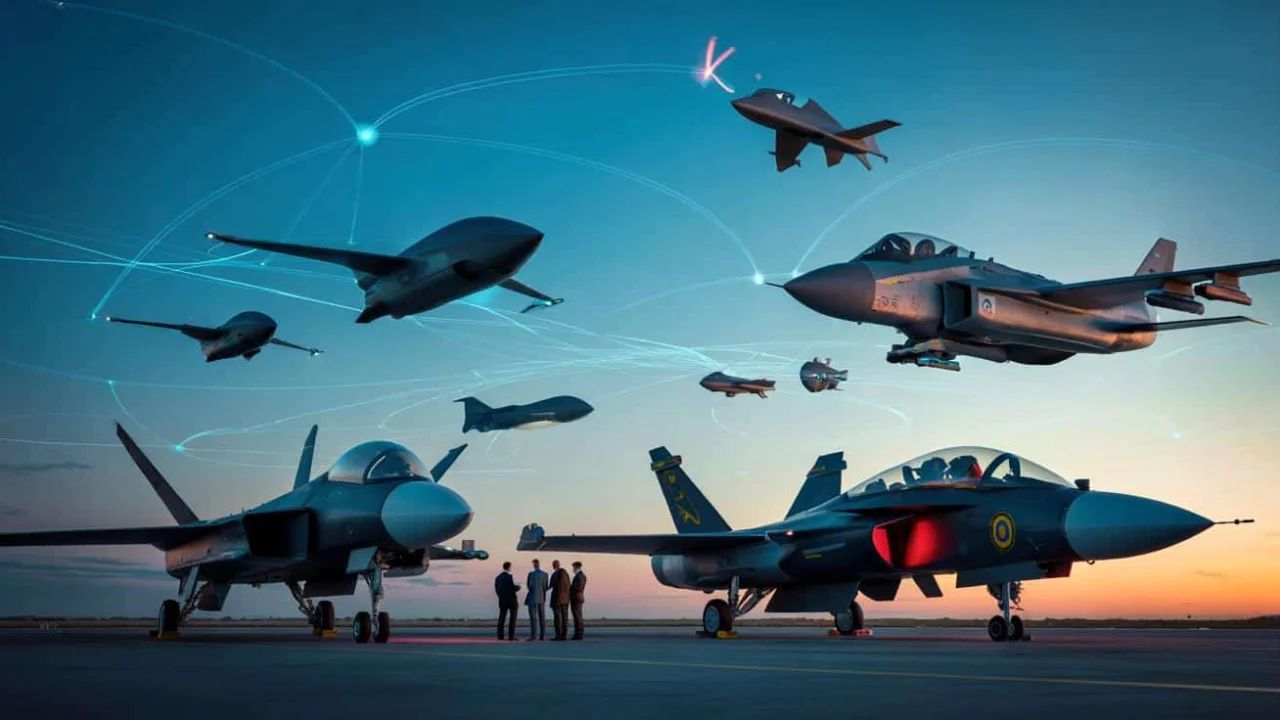
The Future Combat Air System was supposed to be Europe’s answer to American and Chinese military dominance. France, Germany, and Spain launched this massive project to create not just a fighter jet, but an entire ecosystem of connected aircraft, drones, and weapons that would dominate battlefields from 2040 onward.
But now Sweden’s Saab is openly considering a partnership with Airbus Defense and Space, completely separate from the existing FCAS framework. This isn’t just corporate maneuvering – it’s a sign that Europe’s defense unity is cracking under pressure.

“We would absolutely consider working with Airbus on a new fighter program if FCAS continues to stall,” said Michael Johansson, Saab’s CEO, in a recent interview that sent shockwaves through defense circles.
The problem lies in how the FCAS next generation fighter program is structured. France’s Dassault Aviation leads the New Generation Fighter aircraft itself, while Airbus represents German and Spanish interests across multiple parts of the program. This division has created a power struggle that’s paralyzing progress.
Breaking Down What’s Really at Stake
The FCAS next generation fighter isn’t just about replacing today’s jets. Here’s what the program actually includes:
- New Generation Fighter (NGF) – The main manned aircraft
- Remote Carriers – Unmanned companion drones
- Combat Cloud – Advanced networking and data systems
- Advanced sensors and weapons – Next-gen radar and missile systems
- Industrial workshare – Jobs and technology spread across partner nations

The financial commitment is staggering. Here’s how the costs break down:
| Country | Financial Commitment | Industrial Role | Key Companies |
|---|---|---|---|
| France | €4.5 billion | Overall leadership, NGF prime contractor | Dassault Aviation, Safran |
| Germany | €4.5 billion | Sensors, electronics, engines | Airbus Defence, MTU Aero Engines |
| Spain | €2.5 billion | Unmanned systems, support | Airbus España, Indra |
But money isn’t the only issue. The real fight is over technology transfer and industrial control. Germany wants access to French stealth and flight control technologies, while France fears losing its competitive edge.
“The Germans are essentially asking for our crown jewels in exchange for funding,” explained a French defense official who requested anonymity. “That’s not partnership – that’s industrial espionage with extra steps.”
What This Means for Your Country’s Defense
If you live in Europe, this dispute directly affects your national security. Current fighter jets like the Eurofighter Typhoon and Rafale will need replacing by 2040. Without FCAS, European nations face three unpalatable choices:
First, they could buy American F-35 fighters, making Europe dependent on U.S. technology and potentially limiting operational independence. Second, they might develop separate national programs, which would be enormously expensive and technologically inferior. Third, they could patch together ad-hoc partnerships that lack the scale and resources of the original FCAS vision.
Saab’s potential partnership with Airbus represents a fourth option – a Nordic-German alternative that could attract other nations frustrated with Franco-German squabbling. Sweden already operates highly capable Gripen fighters and has expertise in advanced radar and electronic warfare systems.
“If Saab and Airbus team up, they could create a genuine alternative to FCAS,” said defense analyst Maria Andersson. “Sweden brings innovation and Germany brings industrial capacity. That’s a powerful combination.”
The timing couldn’t be worse for European defense unity. With ongoing tensions over Ukraine and growing concerns about China’s military expansion, Europe needs advanced fighters more than ever. Yet political disputes are preventing the continent from developing them.
For taxpayers, the stakes are personal too. The FCAS next generation fighter program represents one of the largest public investments in European history. If it fails, those billions in development costs become sunk investments with no aircraft to show for them.
Meanwhile, defense industry workers across Europe are watching nervously. The program promises to sustain hundreds of thousands of jobs in high-tech manufacturing, engineering, and support services. A collapse would devastate communities from Toulouse to Munich to Seville.
“My entire career has been built around European defense cooperation,” said Hans Mueller, an engineer at Airbus Defence in Germany. “If FCAS falls apart, it’s not just about jets – it’s about whether Europe can still do big projects together.”
The irony is painful. Europe created FCAS precisely to avoid dependence on foreign military technology. But political infighting might force European nations to buy American jets anyway, undermining the very independence the program was meant to secure.
What happens next will depend on whether political leaders can rise above national interests to save their shared vision. If not, Saab’s partnership with Airbus might be just the beginning of Europe’s defense fragmentation.
FAQs
What is the FCAS next generation fighter program?
FCAS is a European project to develop advanced fighter jets and supporting systems to replace current aircraft by 2040, involving France, Germany, and Spain.
Why is Saab considering partnering with Airbus instead?
Saab is frustrated with the slow progress and political disputes within FCAS, seeing an Airbus partnership as a potentially faster path to developing new fighters.
How much money is at stake in this dispute?
The three FCAS partner nations have committed over €11 billion to the program, with total development costs expected to reach €100 billion or more.
What happens if FCAS fails completely?
European nations would likely have to buy American F-35 fighters or develop expensive national programs, undermining European defense independence.
When are the new fighters supposed to enter service?
The FCAS next generation fighter is planned to enter service around 2040, replacing current Rafale and Eurofighter aircraft.
Could other countries join a Saab-Airbus partnership?
Yes, other European nations frustrated with FCAS delays might find a Swedish-German alternative attractive, potentially including Nordic and Eastern European countries.
About the Author