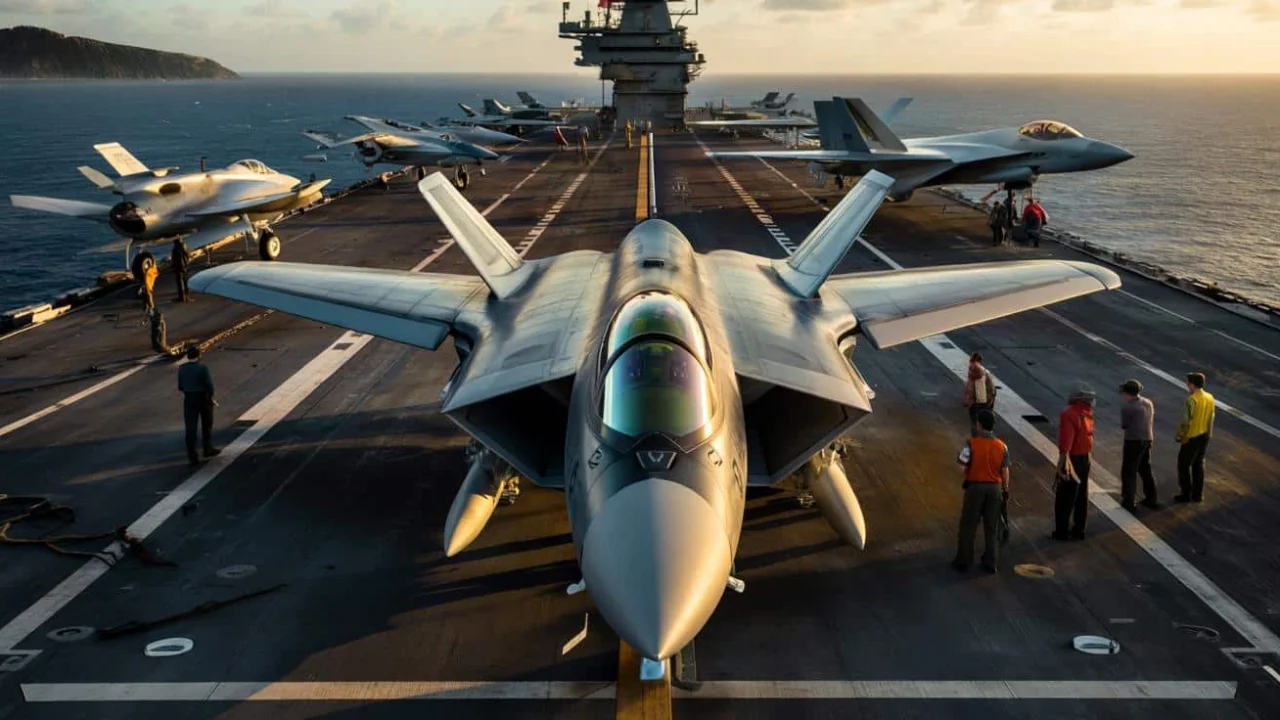
Captain Sarah Mitchell still remembers the moment she realized her F/A-18 Super Hornet was outmatched. Flying over the Pacific during a training exercise last year, her radar lit up with simulated enemy contacts that could engage her from distances she couldn’t even dream of reaching. “It was a wake-up call,” she told her squadron mates later. “We’re flying some of the best jets in the world, but the competition isn’t standing still.”
That sobering reality is exactly why Congress just handed the US Navy’s F/A-XX program the biggest financial boost it’s ever seen. With $897.26 million in fresh funding, lawmakers are essentially telling the Pentagon: stop dragging your feet and build the future of carrier aviation.
For pilots like Captain Mitchell and thousands of others who depend on American naval air superiority, this isn’t just another defense contract. It’s about staying alive in an increasingly dangerous world where adversaries are closing the technology gap faster than anyone expected.

Congress Forces the Navy’s Hand on Next-Generation Fighter
The F/A-XX program was limping along with pocket change before Congress stepped in. The Pentagon had requested a measly $74 million for 2026 – barely enough to keep the lights on, let alone develop a sixth-generation fighter capable of dominating the skies for the next 30 years.
But lawmakers saw through the Defense Department’s cautious approach. They’ve now injected nearly $900 million into the program with one clear message: pick a winner between Boeing and Northrop Grumman, and do it now.
“This funding isn’t just about keeping studies going,” explained defense analyst Mark Thompson. “Congress is forcing the Navy to make real decisions and move toward an actual development contract.”
The timing couldn’t be more critical. China’s naval aviation capabilities are advancing at breakneck speed, with new carrier-based fighters entering service and rumors swirling about their own sixth-generation programs. Meanwhile, Russia continues modernizing its naval air forces despite ongoing conflicts.

What This Massive Investment Actually Buys
The F/A-XX program represents far more than just another fighter jet. This sixth-generation aircraft will need to operate in environments where stealth, electronic warfare, and long-range engagement capabilities determine who lives and who dies.
| Program Aspect | Details |
|---|---|
| Congressional Funding | $897.26 million for 2026 |
| Original Pentagon Request | $74 million |
| Primary Competitors | Boeing and Northrop Grumman |
| Expected Timeline | Engineering development contract selection |
| Key Requirements | Sixth-generation capabilities, carrier operations |
The key capabilities this funding will help develop include:

- Advanced stealth technology beyond current fifth-generation fighters
- Extended range for operations in the vast Pacific theater
- Integration with unmanned wingman aircraft
- Next-generation sensors and electronic warfare systems
- Enhanced survivability in contested environments
“The F/A-XX isn’t just replacing the Super Hornet,” noted aviation expert Jennifer Walsh. “It’s designed to operate in threat environments we can’t even fully imagine yet.”
Both Boeing and Northrop Grumman have been working on competing designs, each bringing different strengths to the table. Boeing leverages decades of Super Hornet experience and carrier integration knowledge, while Northrop Grumman brings cutting-edge stealth expertise from the B-21 Raider program.
Real Stakes for American Naval Power
This isn’t just about having the coolest fighter jet on the block. The F/A-XX program directly impacts America’s ability to project power globally and protect allies who depend on US naval aviation for their security.
Consider what’s at stake in the Pacific alone. China operates two aircraft carriers now, with more under construction. Their J-35 carrier fighter is approaching operational status, and intelligence suggests they’re already working on next-generation capabilities.
For Navy families, this funding means their pilots will have the tools they need to come home safely. For allies like Japan, South Korea, and Australia, it means continued US commitment to maintaining technological superiority in their region.
“Every month we delay this program is a month our adversaries use to close the gap,” warns former Navy pilot and current defense consultant Tom Rodriguez. “Congress finally understands that hesitation has real consequences.”
The program also carries significant economic implications. Whichever company wins the contract will likely employ thousands of engineers, technicians, and manufacturing workers for decades. The technological advances developed for the F/A-XX will inevitably spin off into civilian applications, from advanced materials to electronic systems.
Beyond the immediate military applications, the F/A-XX program serves as a crucial test of American aerospace innovation. Can US companies still develop world-leading military aircraft in an era of increasing international competition and rising development costs?
The congressional funding boost suggests lawmakers believe the answer is yes – but only if the Pentagon stops playing it safe and commits to making hard decisions. The $897.26 million comes with strings attached, essentially forcing the Navy to move from endless studies to actual hardware development.
“This is Congress telling the Pentagon to fish or cut bait,” explained defense budget specialist Amanda Chen. “They’re not interested in funding another decade of feasibility studies while other nations deploy real aircraft.”
For pilots currently flying missions around the world, this funding represents hope that they’ll soon have aircraft capable of maintaining American air superiority. For defense industry workers, it signals major contracts and steady employment ahead. For taxpayers, it’s a significant investment in maintaining the technological edge that has kept America secure for generations.
The F/A-XX program now faces a critical juncture. With substantial funding secured and congressional pressure mounting, the Navy must finally choose between Boeing and Northrop Grumman’s competing visions for the future of carrier aviation. That decision will shape American naval air power for decades to come.
FAQs
What is the F/A-XX program?
It’s the US Navy’s next-generation carrier-based fighter aircraft program, designed to replace the F/A-18 Super Hornet with sixth-generation capabilities.
How much funding did Congress approve for the F/A-XX program?
Congress added $897.26 million to the 2026 defense budget specifically for the F/A-XX program, far exceeding the Pentagon’s $74 million request.
Which companies are competing for the F/A-XX contract?
Boeing and Northrop Grumman are the primary competitors, each bringing different technological strengths to their proposed designs.
When will the Navy choose a winning contractor?
The congressional funding comes with requirements for the Navy to move toward an engineering and manufacturing development contract, forcing a decision in the near term.
Why is the F/A-XX program so important?
It’s crucial for maintaining US naval aviation superiority, especially in the Pacific where China is rapidly advancing its own carrier-based fighter capabilities.
What makes this a sixth-generation fighter?
The F/A-XX will feature advanced stealth, extended range, integration with unmanned aircraft, next-generation sensors, and enhanced survivability beyond current fifth-generation fighters.
About the Author