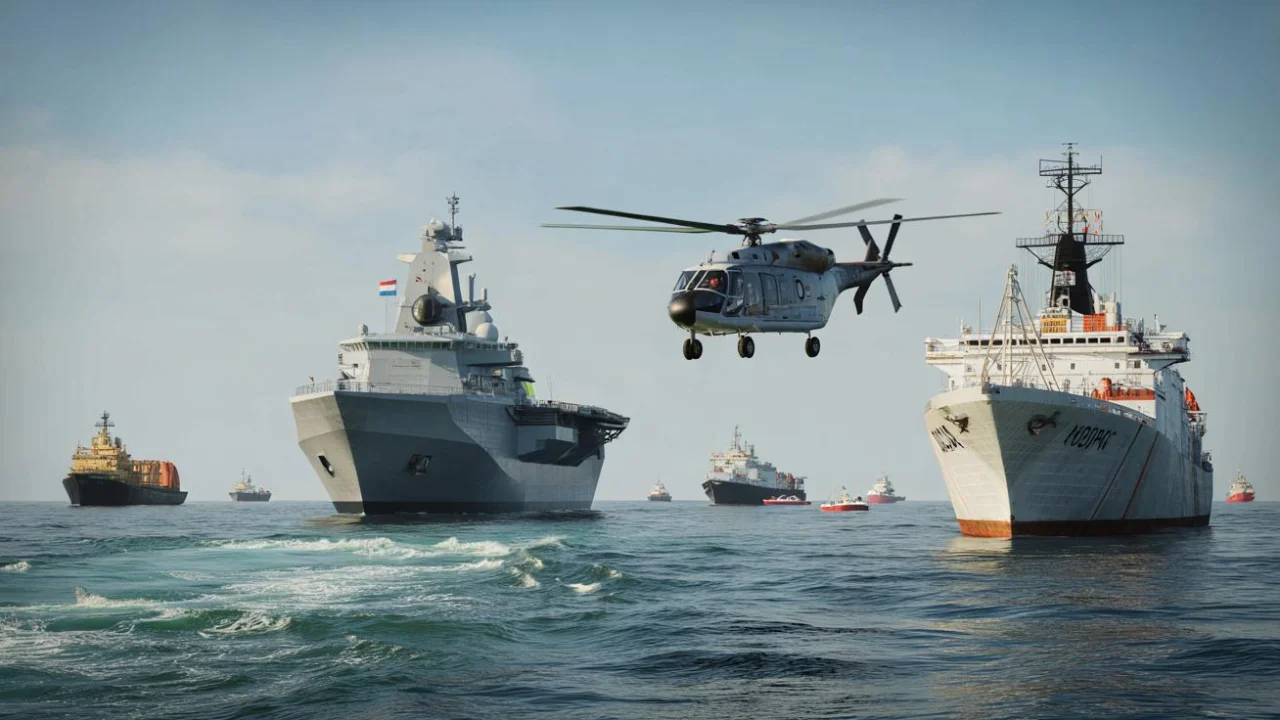
Picture this: you’re a fisherman heading out for your morning catch in the North Sea when you spot something unusual. A sleek warship cuts through the grey waters alongside what looks like a research vessel, while overhead, the rhythmic thrum of helicopter blades breaks the morning calm. This isn’t a scene from a thriller movie—it’s the reality of modern maritime security, where every foreign vessel gets a very close look from watchful eyes.

That’s exactly what happened in early February when the Dutch navy monitors closely tracked a Russian research ship making its way through one of Europe’s busiest shipping lanes. For the crew aboard both vessels, it was a tense few days of cat-and-mouse that highlights just how seriously NATO countries take maritime security in these troubled times.
The encounter wasn’t random. When foreign ships—especially Russian ones—enter European waters these days, they’re met with the kind of attention usually reserved for celebrities at award shows. Every move gets documented, every course change noted, and every transmission monitored.

When the Dutch Navy Monitors Russian Movements
The Dutch Ministry of Defence confirmed that the Royal Netherlands Navy conducted a comprehensive monitoring operation of the Russian research vessel Akademik Ioffe as it transited through North Sea waters between February 5-7. The operation wasn’t subtle—it was designed to send a clear message.
The amphibious transport ship HNLMS Johan de Witt served as the primary escort vessel, maintaining a steady presence alongside the Russian ship throughout its journey past Dutch territorial waters. An NH90 maritime combat helicopter from De Kooy Naval Air Base provided aerial surveillance, creating what military experts call a “layered monitoring approach.”
“This type of close escort sends multiple signals,” explains maritime security analyst Captain Sarah Henderson. “It demonstrates our capability, shows we’re watching, and ensures the vessel knows it’s not operating unobserved in our neighborhood.”
The monitoring took place in international waters, meaning the Russian vessel had every legal right to be there. However, the Dutch navy monitors such transits as part of standard NATO protocols, especially given the current geopolitical climate following Russia’s invasion of Ukraine.

Unlike dramatic naval confrontations you might see in movies, this operation was conducted with professional restraint. The Akademik Ioffe wasn’t stopped, boarded, or harassed—just very closely accompanied, photographed, and tracked throughout its journey.
Key Details of the North Sea Monitoring Operation
The surveillance operation reveals the sophisticated nature of modern naval monitoring. Here’s what we know about how the Dutch navy monitors foreign vessels:

- Primary escort vessel: HNLMS Johan de Witt (amphibious transport ship)
- Aerial support: NH90 maritime combat helicopter
- Duration: 3 days (February 5-7, 2025)
- Location: International waters off the Dutch coast
- Method: Close escort with continuous surveillance
- Documentation: Extensive photography and tracking data collected
The Akademik Ioffe represents a class of vessel that operates in a gray area between pure scientific research and potential military intelligence gathering. These ships often carry sophisticated equipment capable of mapping seafloor topography, monitoring underwater cables, and collecting oceanographic data that could have strategic value.
| Vessel Details | Akademik Ioffe | HNLMS Johan de Witt |
|---|---|---|
| Type | Research/Oceanographic | Amphibious Transport |
| Flag State | Russia | Netherlands |
| Primary Function | Scientific Research | Naval Operations |
| Monitoring Capability | Advanced sensors | Military surveillance |
| Operating Area | International waters | NATO patrol zones |
“Research vessels like the Akademik Ioffe operate with dual-use technology,” notes Dr. Michael Torres, a naval intelligence specialist. “The same equipment used for legitimate oceanographic research can also gather data relevant to submarine warfare and underwater infrastructure.”
The North Sea location adds another layer of significance to this monitoring operation. This maritime corridor hosts critical underwater infrastructure including internet cables, gas pipelines, and wind farm installations that are vital to European energy and communications networks.
Why This Maritime Chess Game Matters to Everyone
You might wonder why a research ship passing through international waters deserves military attention, but the implications reach far beyond maritime borders. The Dutch navy monitors such activities because modern conflicts often begin with information gathering, not gunfire.
The North Sea hosts some of Europe’s most critical infrastructure. Underwater cables carrying internet traffic, natural gas pipelines supplying energy to millions of homes, and offshore wind farms generating renewable electricity all lie beneath these waters. Any detailed mapping of this infrastructure could potentially be used for disruptive purposes.
“Every piece of data collected about our underwater infrastructure is potentially valuable to hostile actors,” explains cybersecurity expert Dr. Elena Vasquez. “That’s why we treat these ‘research’ missions with appropriate seriousness.”
For ordinary citizens, this vigilance means continued protection of the digital and energy systems we rely on daily. Your internet connection, heating system, and electricity supply all depend partly on infrastructure that passes through or near these monitored waters.
The monitoring also serves broader NATO security interests. When the Dutch navy monitors Russian vessels, they’re contributing to a comprehensive intelligence picture that helps alliance partners understand Russian naval capabilities, patterns, and intentions.
Commercial shipping companies operating in the area also benefit from this surveillance. The presence of military vessels provides an additional layer of security in waters that see thousands of cargo ships, tankers, and container vessels each month.
Regional fishing communities, while initially concerned about military activity in their traditional fishing grounds, generally support these monitoring operations. “We’d rather have our navy keeping an eye on things than wonder what foreign ships are doing out there,” says Jan Koeman, a North Sea fishing captain.
The economic implications extend beyond immediate security concerns. Maintaining confidence in North Sea shipping lanes and infrastructure security helps preserve the region’s role as a critical hub for European and global trade.
FAQs
Why does the Dutch navy monitor Russian ships in international waters?
Even in international waters, NATO countries track foreign military and research vessels to ensure maritime security and protect critical underwater infrastructure like internet cables and gas pipelines.
Is it legal for Russian ships to transit through the North Sea?
Yes, all nations have the right of innocent passage through international waters, but other countries also have the right to monitor and escort such vessels for security purposes.
What makes the Akademik Ioffe significant compared to other ships?
As a research vessel, it carries sophisticated sensors that can map underwater terrain and infrastructure, potentially gathering intelligence that could be used for military or disruptive purposes.
How common are these monitoring operations by the Dutch navy?
The Dutch navy regularly monitors foreign military and research vessels passing through North Sea waters, though they don’t always publicize these operations.
Could this type of monitoring escalate tensions with Russia?
These operations are conducted according to international maritime law and are considered routine security measures rather than provocative actions.
What other countries participate in North Sea maritime monitoring?
Multiple NATO allies including the UK, Norway, Denmark, and Germany coordinate maritime surveillance activities in the North Sea region.
About the Author