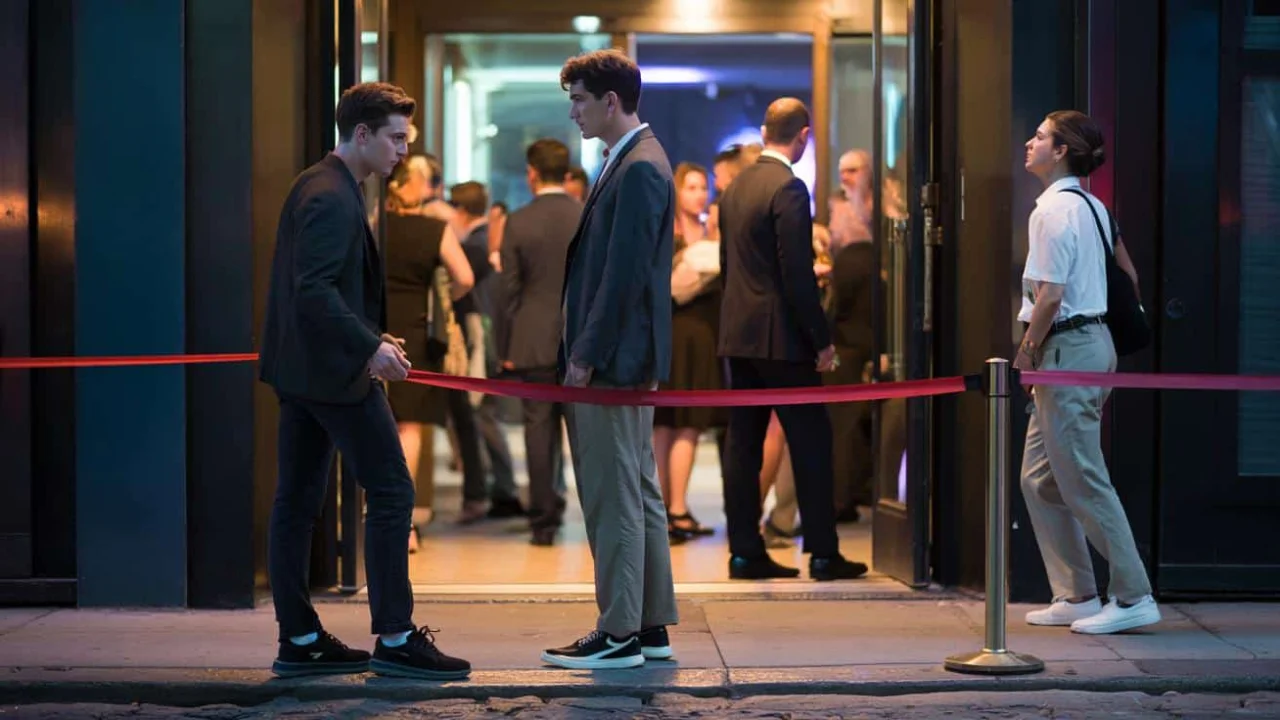
You’re standing at the velvet rope, smoothing down your shirt, when the security guard’s eyes drop to your sneakers. He doesn’t frown, he doesn’t shout. He just tilts his head, half-apologetic, and says those three words that sting way more than they should: “Dress code, sorry.”

The music is pulsing behind him, your friends are already inside, and suddenly your outfit feels louder than the DJ. You thought you were “smart casual”. The door thought you were “not tonight”.
That tiny gap between what we consider acceptable and what a place expects from us can shut doors in a very literal way. Sometimes it’s about status, sometimes about tradition, sometimes just habit. And yet, a simple shirt or pair of shoes can quietly change the outcome of an evening, a job interview, or a family event.

Why dress codes still decide who gets in — and who waits outside
Walk down any busy street on a Friday night and you see it: different doors, different uniforms, different worlds. Sneakers and hoodies streaming into the gig venue, suits queuing outside the rooftop bar, a line of ironed shirts at the private club.
Dress codes sound old-fashioned, but they haven’t gone anywhere. They’ve just become less clearly written and more silently enforced. One place says “smart casual” with a wink, another means “no trainers, no logo caps, no visible sportswear”.

“People underestimate how much clothing communicates before you even speak,” explains workplace consultant Sarah Martinez. “Dress codes aren’t just about fabric and colors — they’re about showing you understand the rules of that particular space.”
From weddings to job interviews, from restaurants to religious sites, clothes still act like a quiet ticket. Or a quiet filter. The difference is that modern dress codes often hide behind vague language, leaving us to guess what “business casual” or “cocktail attire” actually means.

Some establishments use dress codes to maintain a certain atmosphere. Others use them to signal exclusivity. But for most people, the real challenge isn’t understanding why these rules exist — it’s figuring out what they actually want you to wear.
The unwritten rules that everyone expects you to know
Every venue type comes with its own invisible handbook. Here’s what different dress codes really mean when they’re being honest:

- Smart casual: Clean jeans are usually fine, but torn ones aren’t. Polo shirts work, graphic tees don’t.
- Business casual: Think office-appropriate, but you can skip the tie. Dark jeans might work, but check first.
- Cocktail attire: Dress like you’re going somewhere special, but not as formal as a wedding.
- Black tie optional: Most people will wear suits, some will wear tuxedos. Don’t be the only one in khakis.
- No dress code: There’s still probably a dress code, it’s just not written down.
“The biggest mistake people make is taking dress codes at face value,” says etiquette expert James Chen. “When a restaurant says ‘no dress code,’ they still don’t want you showing up in beach shorts and flip-flops.”
| Venue Type | Typical Requirements | Common Rejections |
|---|---|---|
| Upscale Restaurants | Collared shirts, closed-toe shoes | Athletic wear, flip-flops, tank tops |
| Nightclubs | Dress shoes, no sportswear | Sneakers, baseball caps, jerseys |
| Business Events | Professional attire, conservative colors | Casual wear, loud patterns, revealing clothing |
| Religious Sites | Modest coverage, respectful appearance | Shorts, sleeveless tops, revealing outfits |
The trickiest part is that these rules shift depending on location, time of day, and even season. A polo shirt that gets you into a country club during the day might not work for their evening dining room.
Technology hasn’t made this easier. Dating apps and social media have created new dress code confusion. People see others dressed casually in fancy locations online, then show up expecting the same treatment.
The real cost of getting it wrong
When dress codes backfire, the consequences ripple out in unexpected ways. You don’t just miss the event — you feel foolish, excluded, and often angry at yourself for not knowing better.
Job interviews are where dress code mistakes hurt most. Show up overdressed and you seem out of touch with company culture. Show up underdressed and you appear unprofessional or disrespectful.
“I’ve seen qualified candidates lose opportunities because they misread the dress code signals,” notes career counselor Maria Rodriguez. “It’s not fair, but first impressions still matter enormously in professional settings.”
Wedding dress codes create their own drama. Guests agonize over what “garden party attire” means, while couples get frustrated when half their guests show up in shorts to what they considered a formal event.
The social cost goes beyond just one occasion. Word spreads quickly in tight communities about who “doesn’t get it” when it comes to appropriate dress. In networking situations, professional circles, or social groups, clothing choices become part of your reputation.
Young professionals face particular challenges. They’re often building their wardrobes on tight budgets while navigating workplaces with unspoken dress expectations. One wrong outfit choice can feel like a career setback.
But there’s also a financial burden. Meeting various dress codes means maintaining multiple wardrobes — work clothes, evening wear, casual options, and seasonal variations. For many people, this represents a significant ongoing expense.
“The hidden cost of dress codes is that they favor people who can afford versatile wardrobes,” observes social researcher Dr. Patricia Williams. “If you can only afford one ‘nice’ outfit, you’re limited in where you can comfortably go.”
Some establishments are recognizing this and relaxing their requirements. But plenty others maintain strict standards, viewing them as essential to their brand identity.
The key is learning to read between the lines. When in doubt, it’s usually safer to err slightly on the formal side than to show up underdressed. A quick phone call to ask about expectations rarely hurts and often helps.
Most importantly, remember that dress codes reflect the values and expectations of specific spaces — they’re not personal judgments about you. Understanding this helps take the sting out of occasionally getting it wrong.
FAQs
What should I do if I’m turned away for dress code violations?
Stay polite, ask specifically what needs to change, and see if there are nearby options to fix the issue quickly.
How can I find out a venue’s real dress code expectations?
Check their website, call ahead, or look at photos of other guests on their social media pages.
Is it better to overdress or underdress when unsure?
Generally, slightly overdressing is safer than underdressing, especially for professional or formal events.
Can dress codes legally discriminate based on clothing choices?
Private venues can set most dress requirements, but they cannot discriminate based on protected characteristics like religion or gender.
What’s the most common dress code mistake people make?
Assuming “no dress code” means anything goes — most places still have basic standards even when unstated.
How do I build a versatile wardrobe for different dress codes?
Focus on classic pieces in neutral colors that can be dressed up or down with accessories and layering.
About the Author